
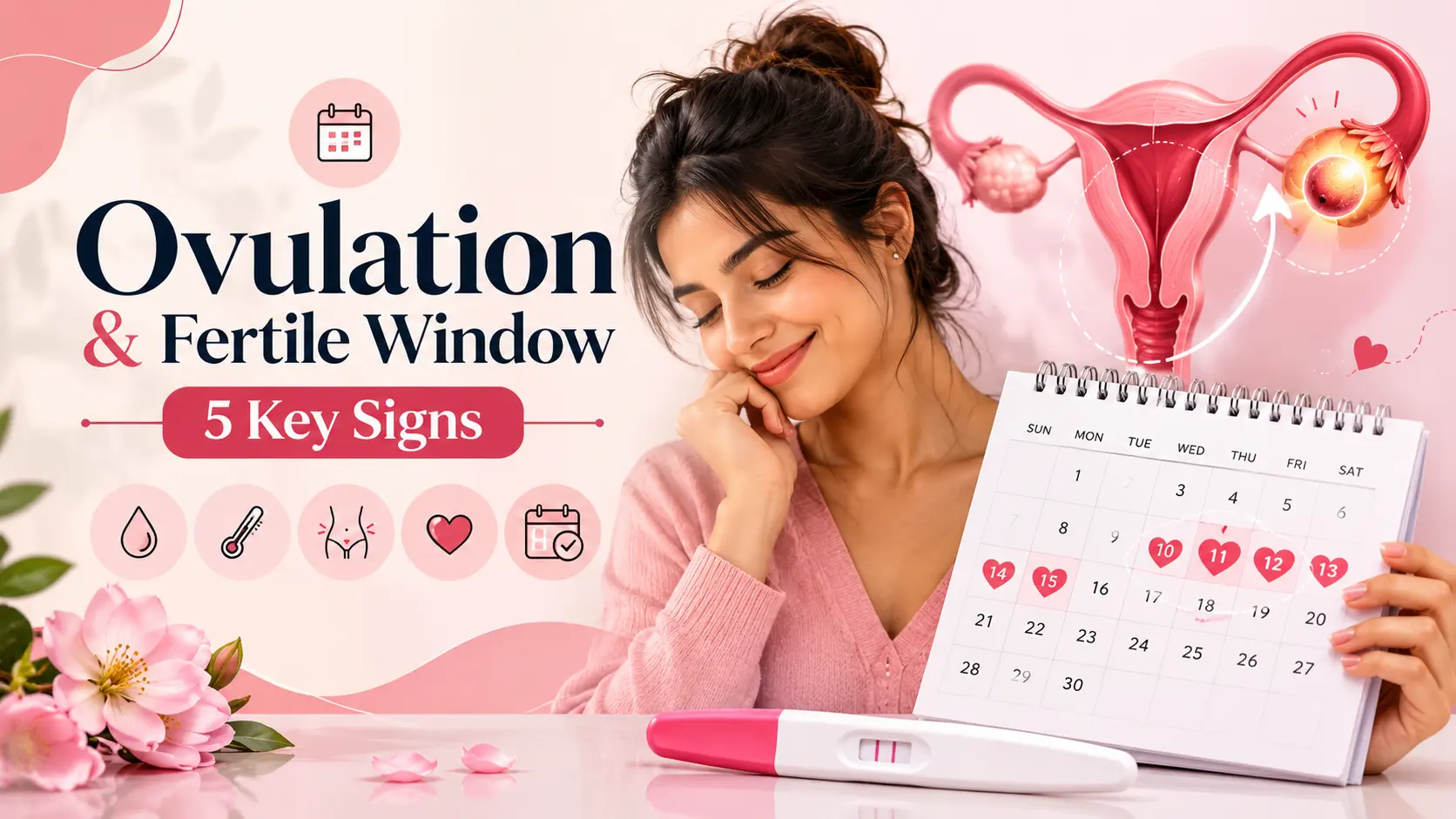
If you are trying to conceive, timing is everything. Missing your fertile window by just a day or two can mean waiting another full month before your next real chance at pregnancy. And yet, many women have never been taught to read the natural signs their body gives out around ovulation.
Your body sends out surprisingly consistent signals when you are about to ovulate. Recognising these ovulation symptoms, or ovulation ke lakshan as they are commonly called, can shift you from guessing to knowing when you are most fertile. In this guide, the specialists at Delhi IVF explain what happens during ovulation, the five most reliable signs to look out for, and when ovulation problems require professional support.
What is Ovulation and the Fertile Window?
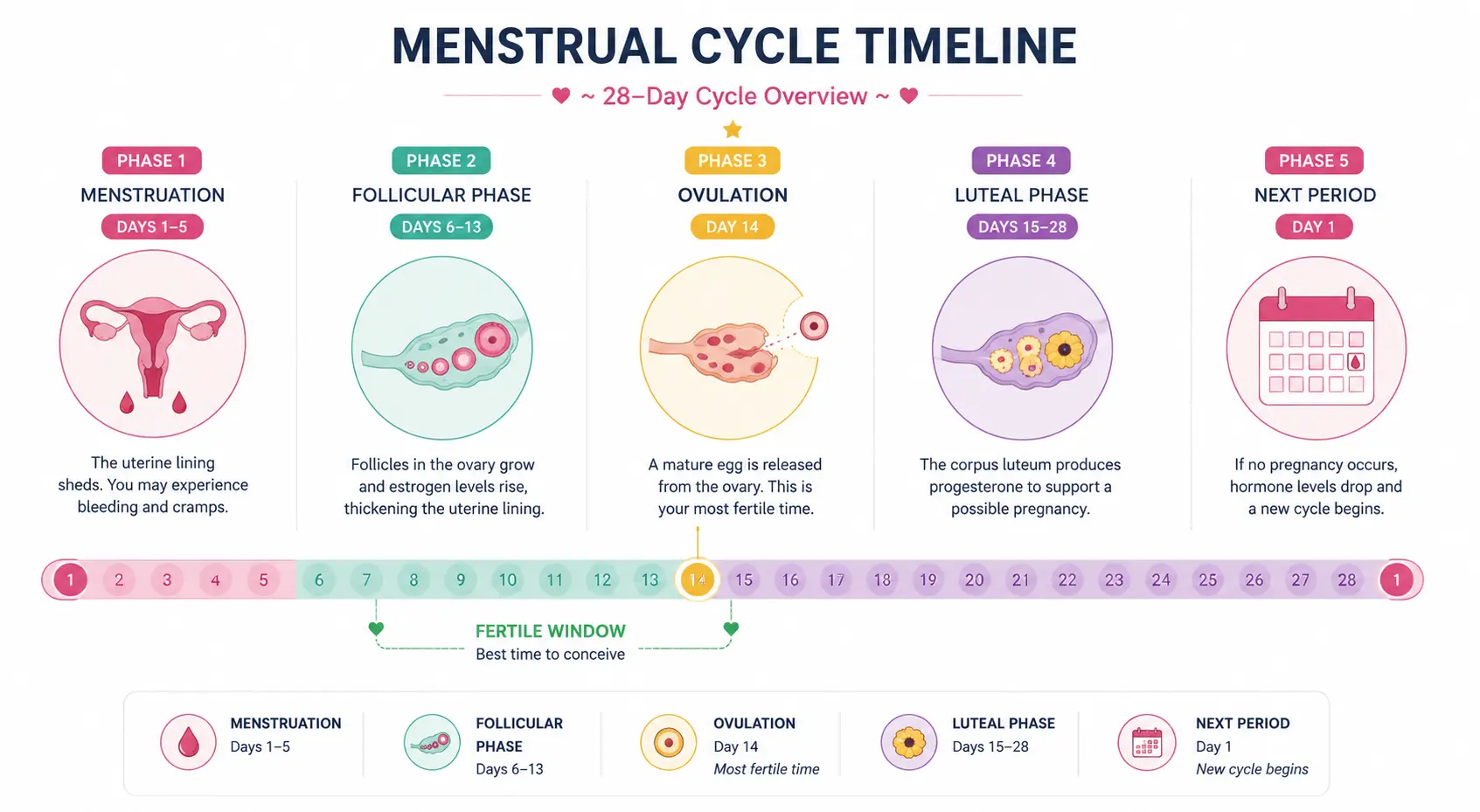
Ovulation is the moment a mature egg is released from one of your ovaries into the fallopian tube, where it waits to be fertilised. This happens roughly once every menstrual cycle, usually around the middle of the cycle. In a typical 28-day cycle, ovulation typically occurs around day 14, although this varies widely from woman to woman.
The egg itself lives for only 12 to 24 hours once released. Sperm, on the other hand, can survive inside the female reproductive tract for up to five days. Together, this creates what is called the fertile window: a stretch of around six days when conception is possible. It includes the five days leading up to ovulation and the day of ovulation itself.
Understanding this window matters because you do not have to have intercourse exactly on ovulation day to conceive. Having sex during the two to three days before ovulation is often more effective than trying to time it perfectly.
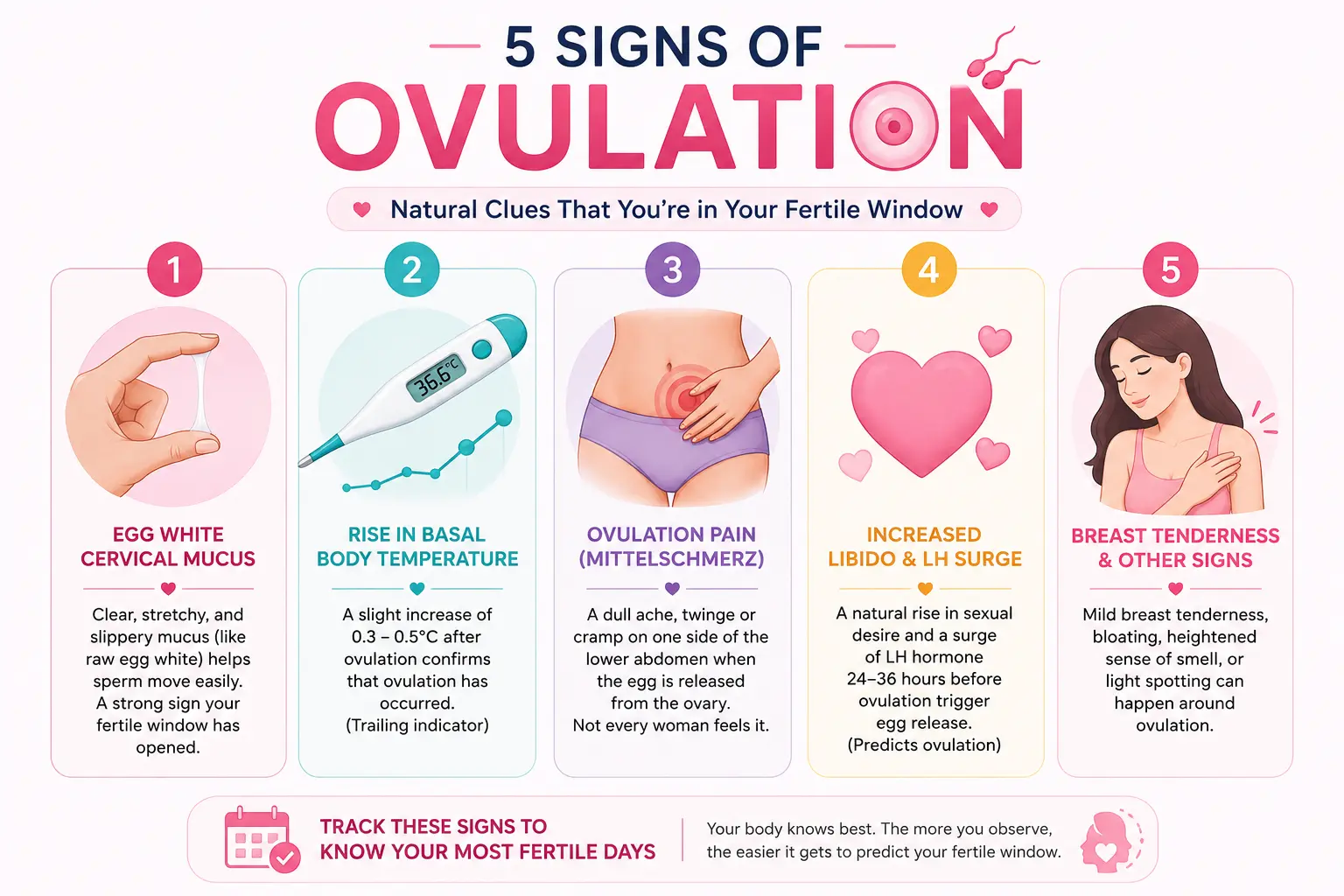
Sign 1: Changes in Cervical Mucus
Cervical mucus is one of the most reliable natural signs of approaching ovulation, and the easiest to track without any equipment. In the days leading up to ovulation, oestrogen rises and changes the consistency of the mucus your cervix produces.
At the start of your cycle, cervical mucus is usually minimal, thick, and sticky. As ovulation approaches, it becomes:
- Clearer in colour, similar to egg whites
- Stretchy between fingers, sometimes stretching several centimetres
- Wetter and more slippery in texture
- More noticeable in volume
This egg-white cervical mucus creates the perfect environment for sperm to travel through the cervix and into the uterus. It is a strong signal that your fertile window has opened. Once ovulation passes, the mucus quickly becomes thicker, cloudier, or dries up entirely.
Sign 2: A Small Rise in Basal Body Temperature
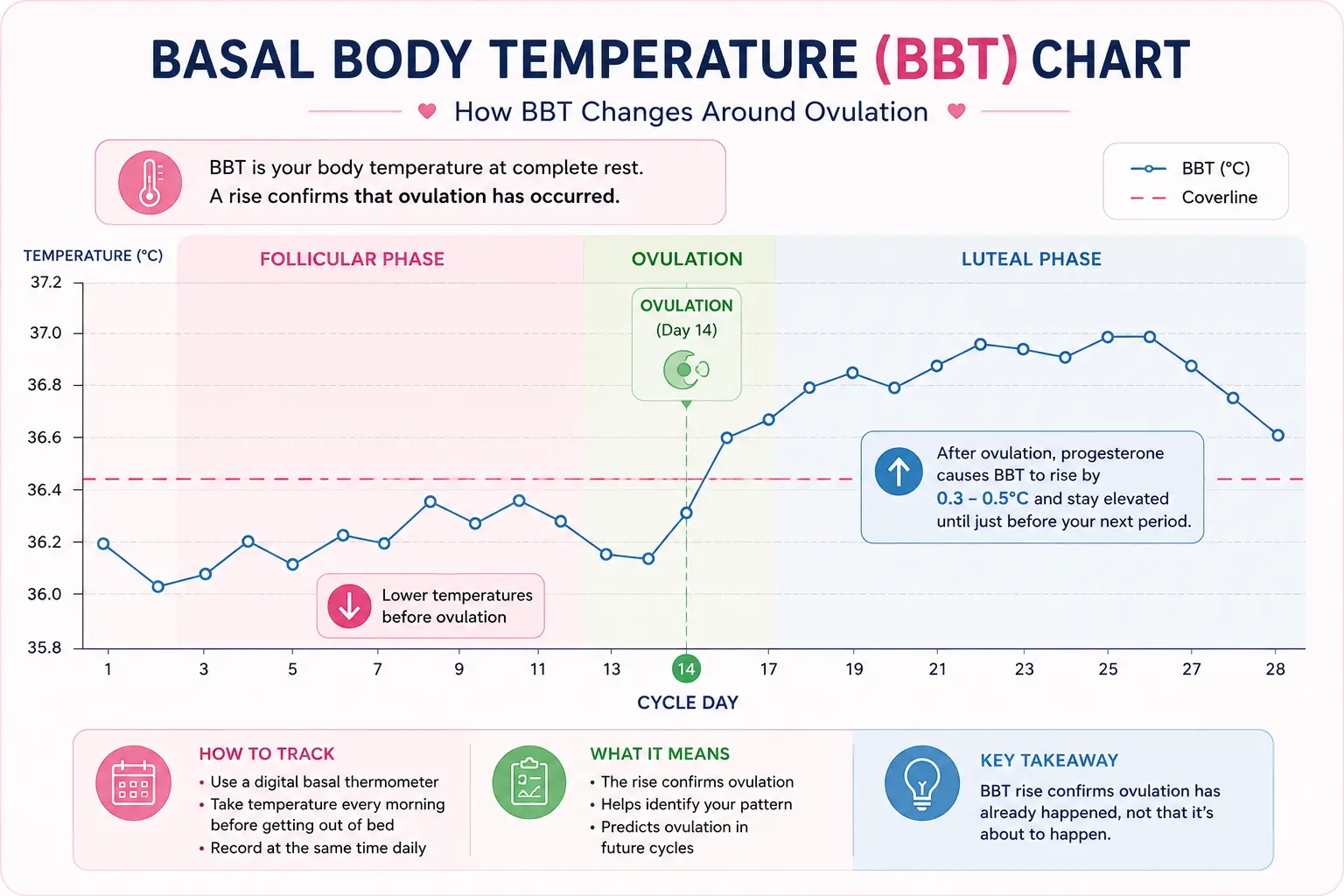
Basal body temperature, or BBT, is your body's temperature at complete rest, measured first thing in the morning before you get out of bed. It gives a reliable trailing signal that ovulation has just occurred.
After ovulation, progesterone released by the ovary causes a small but measurable rise in BBT, typically between 0.3 and 0.5 degrees Celsius. This raised temperature stays high until just before your next period.
The catch is that a BBT rise confirms ovulation has already happened rather than predicting it in advance. Tracking BBT over several cycles helps identify a personal pattern, so you can anticipate ovulation in future cycles more accurately. A digital basal thermometer taken at the same time every morning is essential for meaningful readings.
Sign 3: Ovulation Pain or Mittelschmerz
Some women feel a distinct sensation as an egg is released, known medically as mittelschmerz, which translates to "middle pain". Around one in five women experience it clearly in most cycles.
Ovulation pain is usually felt as a dull ache, sharp twinge, or cramping sensation on one side of the lower abdomen, since only one ovary typically releases an egg each cycle. The pain can last anywhere from a few minutes to a couple of days.
While ovulation pain is a helpful natural marker, it is not a signal every woman gets. If you never feel it, that does not mean you are not ovulating. If the pain is severe or persistent, it is worth having a specialist rule out other causes such as endometriosis or ovarian cysts.
Sign 4: Increased Libido and the LH Surge
Many women notice a natural rise in sexual desire in the days leading up to ovulation. This is not just psychological. Rising oestrogen and testosterone levels around ovulation genuinely lift libido, which is biology's way of encouraging conception at your most fertile time.
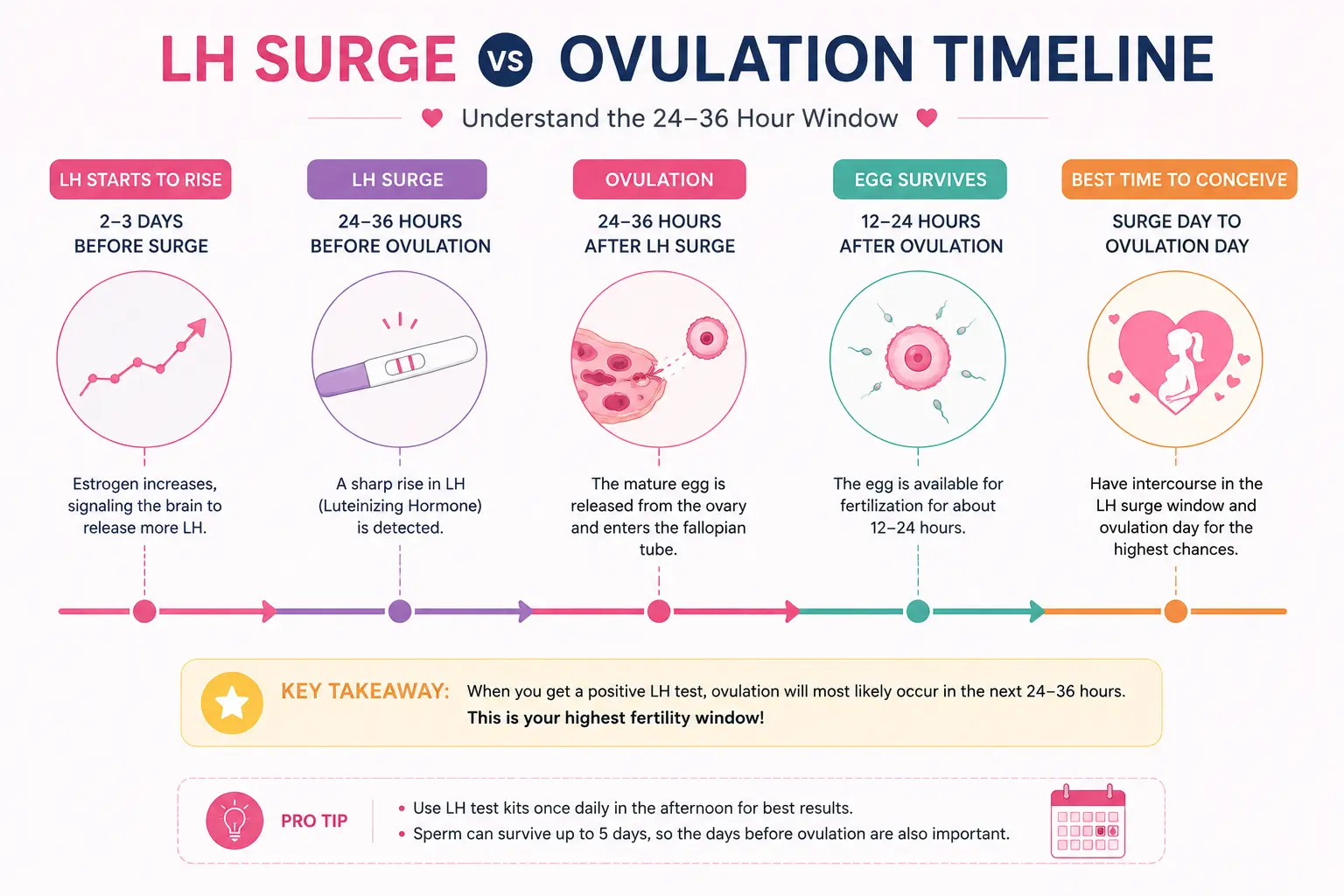
Alongside this, the luteinising hormone or LH surge triggers ovulation itself. This surge occurs 24 to 36 hours before the egg is released and is what home ovulation predictor kits detect. When your ovulation test turns positive, it is telling you that ovulation is likely within a day and a half, making that window the highest-priority time for intercourse if you are trying to conceive.
Sign 5: Breast Tenderness and Other Secondary Signs
The hormonal changes around ovulation produce several smaller signals worth noticing:
- Mild breast tenderness or sensitivity
- Bloating or a feeling of fullness
- Heightened sense of smell or taste
- Light spotting, particularly in some cycles
- Mild changes in cervix position, which sits higher and feels softer
These signs are less consistent than the main three, but combined with cervical mucus changes and any ovulation pain, they build a complete picture. Tracking them over two or three cycles will show you which signs are most reliable for your body.
Quick Reference: 5 Signs of Ovulation
| Sign | When It Appears | Reliability |
| Egg-white cervical mucus | 2 to 3 days before ovulation | Very high |
| BBT rise | 1 day after ovulation | High, but retrospective |
| Ovulation pain | On the day of ovulation | Moderate, not everyone feels it |
| Positive LH test | 24 to 36 hours before ovulation | Very high |
| Breast tenderness, bloating | Around ovulation | Moderate, variable |
How to Track Ovulation Accurately
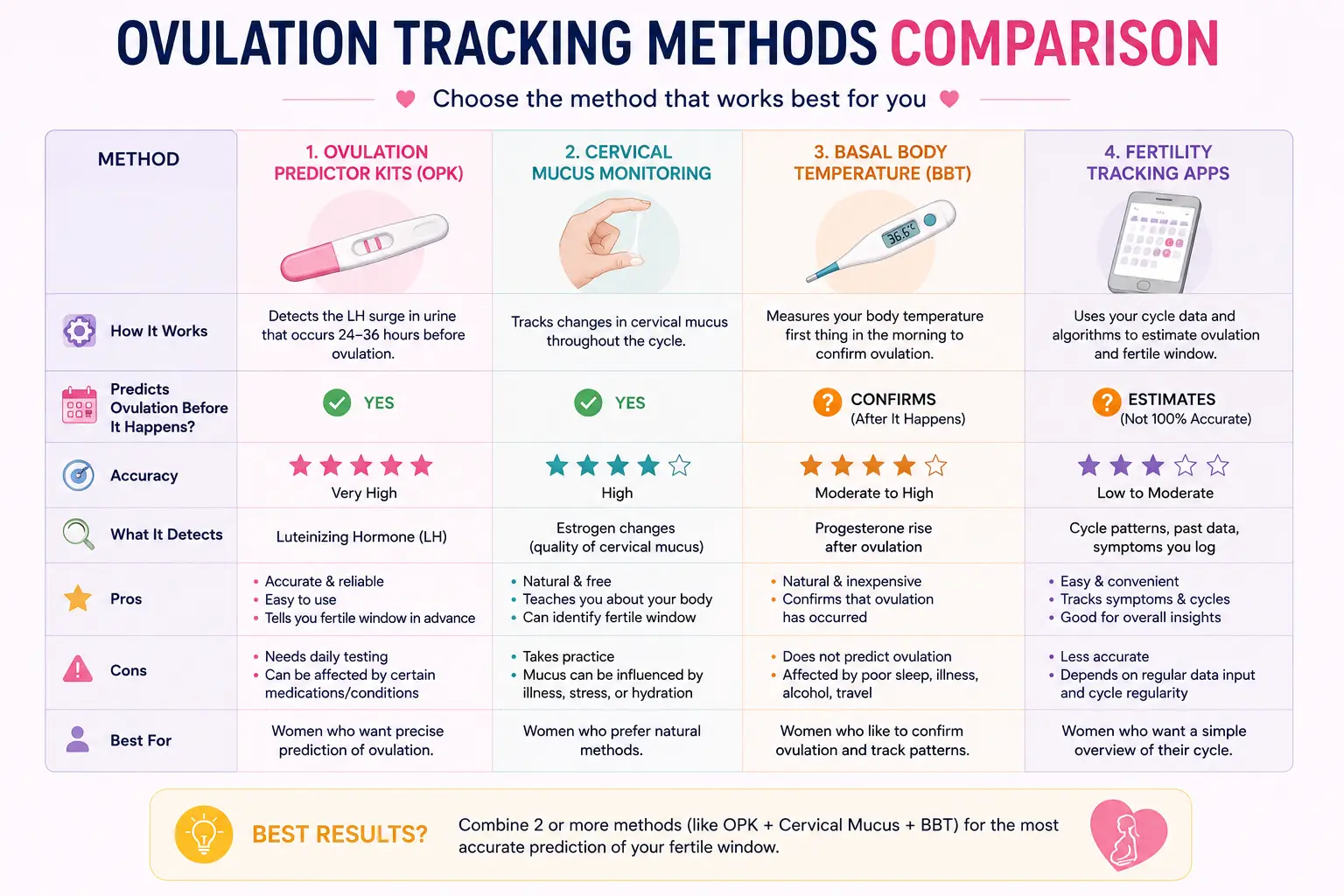
If you are trying to conceive, combining two or three tracking methods gives the clearest picture of your fertile window:
- Ovulation predictor kits (OPKs): These home urine tests detect the LH surge and reliably signal ovulation within 24 to 36 hours. Start testing a few days before you expect to ovulate.
- Cervical mucus monitoring: Check daily throughout your cycle. Egg-white mucus is your most reliable natural fertile-window signal.
- BBT charting: Take your temperature at the same time every morning before getting out of bed. Track patterns over two to three cycles.
- Fertility apps: Digital apps help log symptoms, predict fertile days based on cycle history, and integrate OPK results. Useful as a backup rather than a sole method.
- Cycle awareness: Note when your period starts and ends each month. This alone gives you a rough fertile window estimate. Our guide on when pregnancy is most likely after periods explains this timing in detail.
Using two methods together, such as cervical mucus tracking plus OPKs, is more accurate than any single technique.
When is the Best Time to Have Sex to Conceive?
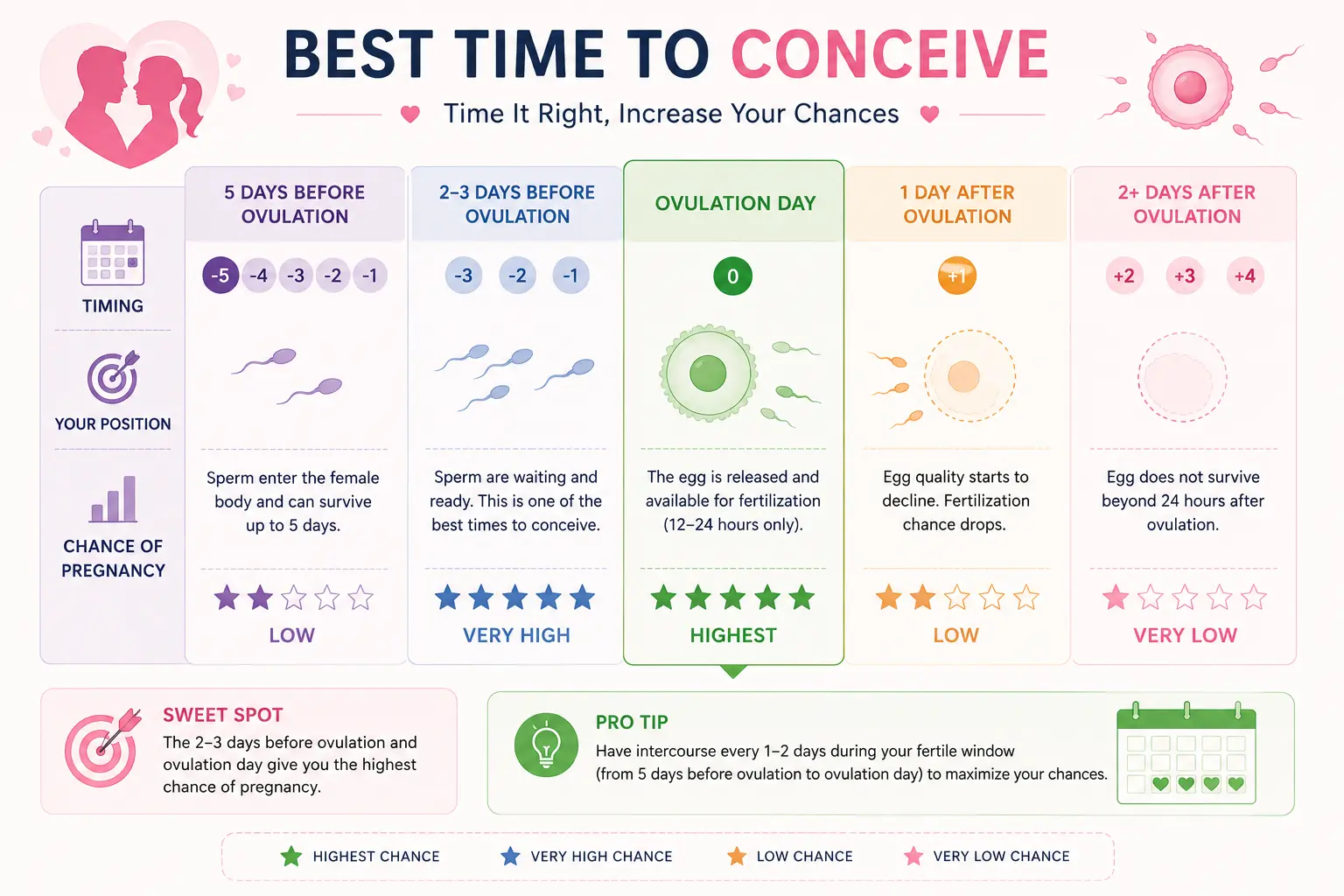
For couples actively trying to conceive, the highest-probability window is the three days leading up to and including ovulation. Sperm survive far longer than eggs, so having sex in the run-up to ovulation ensures sperm are already present when the egg is released.
A useful rule is to have sex every one to two days during your fertile window rather than saving it up for a perfect day. Daily intercourse does not significantly harm sperm quality in healthy men and increases your chance of catching ovulation. If you get a positive OPK, the next 36 hours are especially important. After ovulation, the chances of conception drop sharply within a day. If you would like to know when to test for pregnancy after possible conception, our guide onpregnancy testing after implantation explains the science.
When Do Ovulation Problems Need Medical Help?
Not all women ovulate regularly, and irregular or absent ovulation is one of the most common causes of infertility. Consider seeing a fertility specialist if:
- You have not conceived after 12 months of regular unprotected sex, or 6 months if you are over 35
- Your cycles are irregular, missing, or shorter than 21 or longer than 35 days
- You have been diagnosed with PCOS or thyroid disorders
- You experience severe ovulation pain
- You have no signs of ovulation despite tracking for several cycles
Ovulation issues are often highly treatable. Ovulation induction medications,IUI treatment, orIVF can help most women with ovulation-related infertility go on to have healthy pregnancies. A proper fertility assessment, including hormone testing and ultrasound, identifies the root cause and shapes the right treatment.
Ovulation Assessment and Fertility Care at Delhi IVF
At Delhi IVF & Fertility Research Centre, we have supported over 25,000 successful pregnancies since 1993 for couples from India and 66 countries worldwide. Under the leadership ofDr. Anoop Gupta, our team offers personalised ovulation assessment, tailored fertility treatment plans, and advanced reproductive care under one roof.
If tracking your ovulation naturally has not led to conception, we can help identify why and guide the next steps.

