
Understanding Normal vs Abnormal Sperm Morphology
In a healthy semen sample, a certain percentage of sperm should have a normal shape. The ideal sperm has an oval head, a midpiece, and a long tail that helps it swim toward the egg. In teratozoospermia, more than 85 percent of sperm in a sample have irregular head, midpiece or tail structures, which can impact fertility.
Types of Teratozoospermia
Teratozoospermia is classified into three types depending on the severity of the condition.
- Normal Teratozoospermia: Up to 14% of sperm cells are often seen in this kind.
- About 5% to 9% of sperm cells in moderate teratozoospermia are of normal quality.
- Just 4% of sperm cells in cases of severe teratozoospermia are of normal quality.
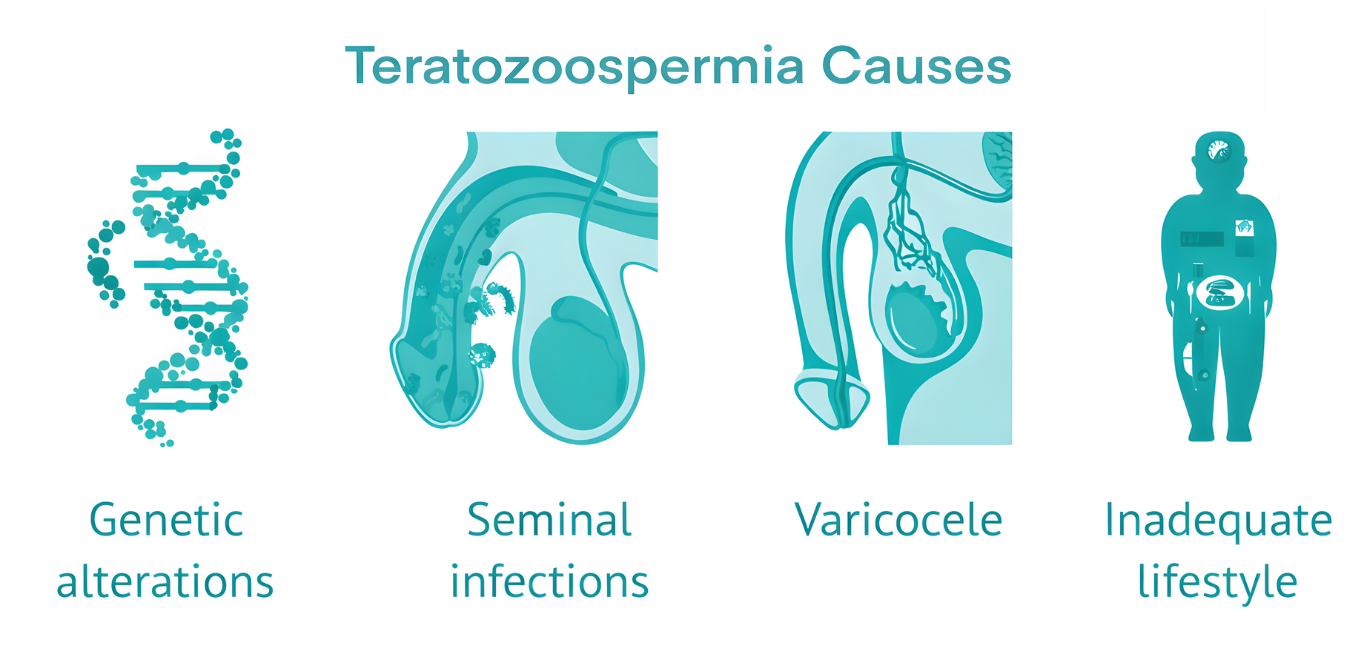
Causes of Teratozoospermia
Teratozoospermia can occur due to a combination of lifestyle, environmental, medical, and genetic factors. Understanding the underlying causes can help in planning the right course of treatment. Below are the key contributors:
1. Genetic Factors
Some men inherit defects in genes that control sperm development and structure. These genetic abnormalities can result in improperly shaped sperm cells. Chromosomal disorders such as Klinefelter syndrome may also be associated with abnormal sperm morphology.
2. Varicocele
A varicocele treatment is an enlargement of the veins within the scrotum that can lead to increased testicular temperature. Prolonged heat exposure in this area can interfere with sperm production and morphology, leading to a higher number of abnormally shaped sperm.
3. Infections
Infections of the male reproductive tract, such as epididymitis, orchitis, or prostatitis, can damage the testicles and affect sperm development. Sexually transmitted infections (STIs) may also negatively impact sperm morphology.
4. Exposure to Toxins and Chemicals
Prolonged exposure to industrial chemicals (like pesticides, heavy metals, solvents), radiation, or environmental pollutants can impair sperm formation. These toxins may alter sperm DNA and result in malformed sperm cells.
5. Lifestyle Factors
- Smoking: Tobacco contains toxins that are harmful to sperm structure and function.
- Alcohol and drug use: Chronic use can interfere with hormonal balance and sperm quality.
- Poor diet: Deficiencies in vitamins (such as folate, zinc, and vitamin C) can impact sperm development.
- Stress and lack of sleep: Hormonal disruptions caused by stress may impair sperm formation.
- Obesity: Excess weight is linked to lower testosterone levels and increased oxidative stress, both of which can affect sperm morphology.
6. High Testicular Temperature
Heat exposure from tight underwear, prolonged laptop use on the lap, hot baths, or frequent sauna use can affect sperm development by disrupting the optimal temperature required for healthy spermatogenesis.
7. Hormonal Imbalances
Disorders affecting testosterone, luteinizing hormone (LH), and follicle-stimulating hormone (FSH) levels can hinder normal sperm development. Conditions like hypogonadism can lead to abnormal sperm shape.
8. Medical Treatments
Chemotherapy, radiation therapy, and certain long-term medications (e.g., anabolic steroids, anti-androgens, or antibiotics like nitrofurantoin) may interfere with sperm production and result in morphological abnormalities.
Symptoms of Teratozoospermia
Teratozoospermia usually does not show any visible symptoms. Most men discover it during a fertility evaluation or semen analysis when they are facing difficulty in conceiving with their partner. The primary sign is poor sperm morphology detected in the lab.
Diagnosis
Teratozoospermia is diagnosed through a semen analysis, which evaluates several sperm parameters including count, motility, and morphology. The test is often repeated to confirm the findings.
Recent Advances in Teratozoospermia Treatment
Growing Research Focus: Scientists are delving further into what causes poor sperm morphology and how to enhance it.
Recent Advances in Teratozoospermia Treatment
Growing Research Focus: Scientists are delving further into what causes poor sperm morphology and how to enhance it.
The power of antioxidants: Supplements such as Coenzyme Q10, L-carnitine, zinc, and selenium have been found to improve sperm health by lowering oxidative stress and increasing sperm structure.
Hormonal Balance is Important: Subtle hormonal abnormalities might have an impact on sperm production. Many men are finding that personalized hormone treatment can help them regain balance and boost their fertility.
Molecular and Genetic Testing: Modern reproductive clinics utilize advanced genetic tests to detect mutations or chromosomal problems that may be harming sperm quality.
Therapies: improved diagnoses allow therapies to be tailored to each individual’s needs, resulting in improved outcomes.
ICSI – A Game-Changer: For severe teratozoospermia, Intracytoplasmic Sperm Injection (ICSI) remains one of the most successful treatments, inserting a single healthy-looking sperm straight into the egg to optimize fertilization chances.
Treatment Options for Teratozoospermia
Teratozoospermia is a condition where a high percentage of a man’s sperm are abnormally shaped, reducing the likelihood of natural fertilization. However, many men diagnosed with this condition can still achieve parenthood with the right medical intervention and lifestyle changes. Treatment depends on the severity of the condition, its underlying cause, and whether other fertility issues are present.
1. Lifestyle Modifications
For mild cases, especially when caused by environmental or lifestyle factors, simple changes can lead to significant improvement in sperm morphology:
- Quitting smoking and alcohol
- Maintaining a healthy weight
- Eating a balanced diet rich in antioxidants (e.g., vitamin C, E, zinc, selenium)
- Regular exercise and adequate sleep
- Avoiding heat exposure to the testes, such as saunas or tight clothing
- Managing stress
- These changes may improve sperm health over a few months, as it takes about 70–90 days for sperm to regenerate.
2. Medical Treatments
If an underlying medical issue is identified, targeted treatment may help:
- Antibiotics: For infections affecting the reproductive system
- Hormonal therapy: For hormonal imbalances like low testosterone or high prolactin
- Surgical correction: For conditions like varicocele that impair sperm development
- Antioxidant supplements: Can improve sperm function by reducing oxidative stress
3. Assisted Reproductive Techniques (ART)
In moderate to severe cases, or when natural conception is not successful despite treatment, ART may be recommended:
a) Intrauterine Insemination (IUI)
This involves placing specially prepared sperm directly into the woman’s uterus. IUI may be useful when a mild form of teratozoospermia is present, provided that sperm count and motility are within normal ranges.
b) In Vitro Fertilization (IVF)
In IVF, eggs are retrieved and fertilized with sperm in a lab. If the sperm quality is poor, embryologists can still attempt fertilization with the most normal-looking sperm available.
c) Intracytoplasmic Sperm Injection (ICSI)
ICSI is often the most effective method for severe teratozoospermia. A single, morphologically normal sperm is selected and injected directly into the egg, bypassing the need for the sperm to swim or penetrate the egg naturally. Delhi IVF specialist in ICSI and has helped many couples facing male factor infertility.
4. Genetic Counseling
If a genetic cause is suspected, especially in recurrent IVF failure or a family history of infertility, genetic counseling and testing may be advised to guide further treatment or determine risks.
Teratozoospermia Issues
One of the main complications of infertility, teratozoospermia, is the inability to conceive. Genetics can be passed from the male having this disease to his offspring.
Criteria for Teratozoospermia Risk
Teratozoospermia risk factors include high-power cancer treatments, testicular damage, bad lifestyle choices, and frequent drinking and smoking.
Outlook for Patients
Teratozoospermia is treatable in a few cases, but not all. Lifestyle adjustments and other therapy choices can be beneficial.
Men with teratozoospermia can have healthy offspring with no birth abnormalities. However, a patient with this ailment may pass on the hereditary problem to his male kid.
How Delhi IVF Can Help
- Over 30 years of experience in treating male and female infertility
- Personalized fertility evaluations using WHO-standard sperm analysis.
- Expertise in treating teratozoospermia and severe sperm abnormalities
- Advanced procedures include ICSI, IMSI, and sperm DNA fragmentation testing.
- Expert embryologists and andrologists provide high success rates.
- Holistic treatment involves:
– Nutritional counseling
– Antioxidant Therapy
– Hormonal evaluations
– Surgical correction (e.g., varicocele treatment)
– Research-driven protocols with a patient-first approach
Why is Delhi IVF the right choice for you?
With over 30 years of experience, Delhi IVF provides compassionate and innovative reproductive care. From ICSI/IMSI treatment for male infertility to in-house genetic counseling, holistic support, and transparent pricing, every step is designed to enhance your journey, comfort, and success.

