

If you are in the two-week wait and wondering how soon to take a pregnancy test after implantation, here is the short answer: most women can take a pregnancy test about 3 to 5 days after implantation, but the most reliable result comes on the day of your missed period, roughly 12 to 14 days past ovulation (DPO). Testing earlier is possible with a sensitive early-detection test; however, it carries a higher risk of a false negative because your hCG levels may still be too low to be detected.
Those few days between implantation and a positive result can feel like the longest wait of your life. To help you test at the right time and avoid the heartbreak of a misread result, the fertility specialists at Delhi IVF & Fertility Research Centre have broken down exactly what happens after implantation, when your body produces enough hormone to test, and how to read your result with confidence.
What is Implantation and Why Does It Matter for Pregnancy Testing?
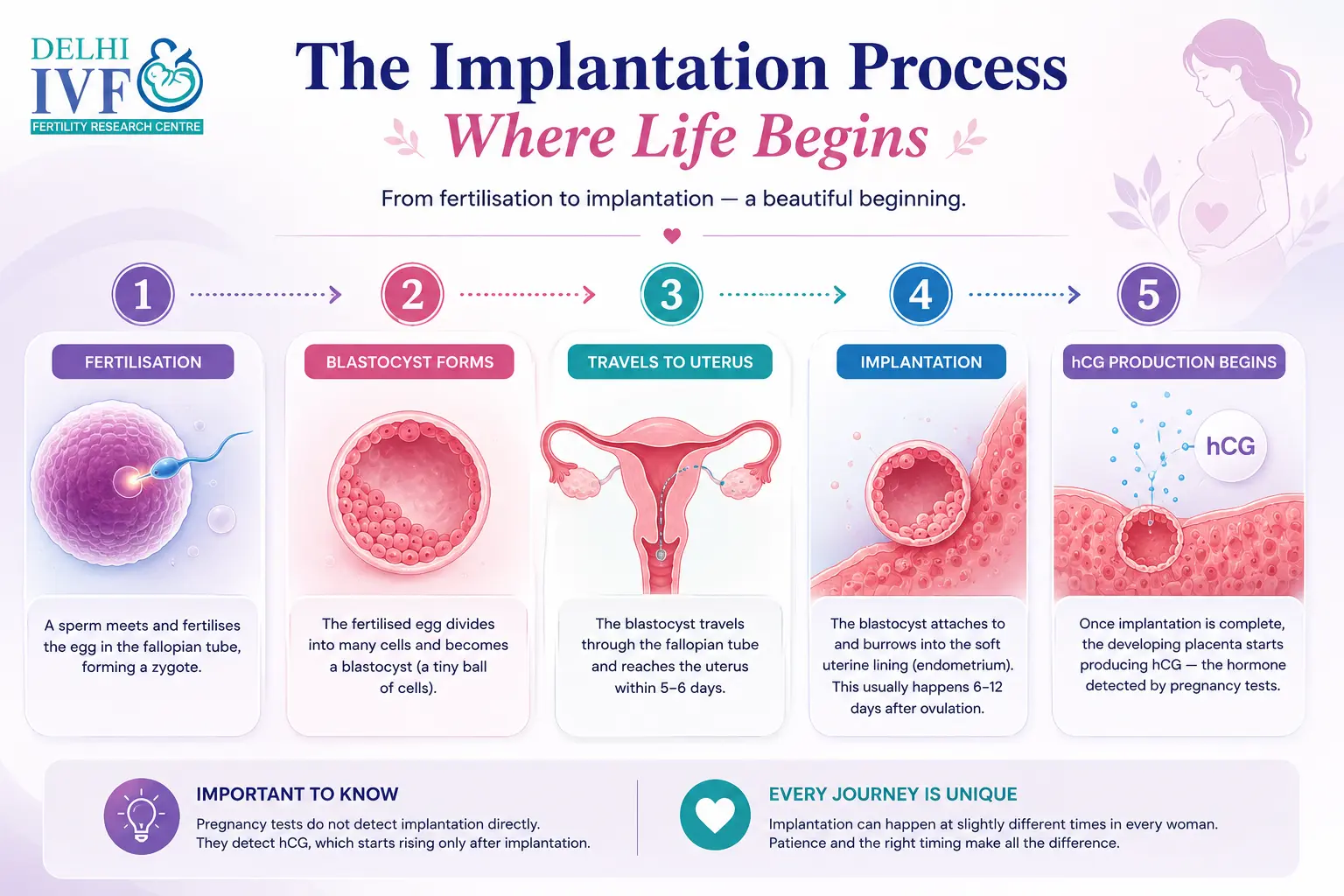
Implantation is the moment pregnancy truly begins. After fertilisation, the fertilised egg travels down the fallopian tube, divides into a small ball of cells called a blastocyst, and embeds itself into the uterine lining (the endometrium). This usually happens 6 to 12 days after ovulation, and most commonly around 8 to 10 DPO.
Pregnancy tests do not directly detect implantation. They detect a hormone, and that hormone only starts rising once implantation is complete. This is the single most important reason you cannot test the instant you suspect conception.
The Role of hCG in Early Pregnancy
Human chorionic gonadotropin (hCG) is the pregnancy hormone every test looks for. Once the embryo settles into the uterine lining, the developing placenta begins producing hCG. In the very beginning, the amount is tiny, often below what a home test can pick up. From there, hCG levels typically double every 48 to 72 hours during a healthy early pregnancy.
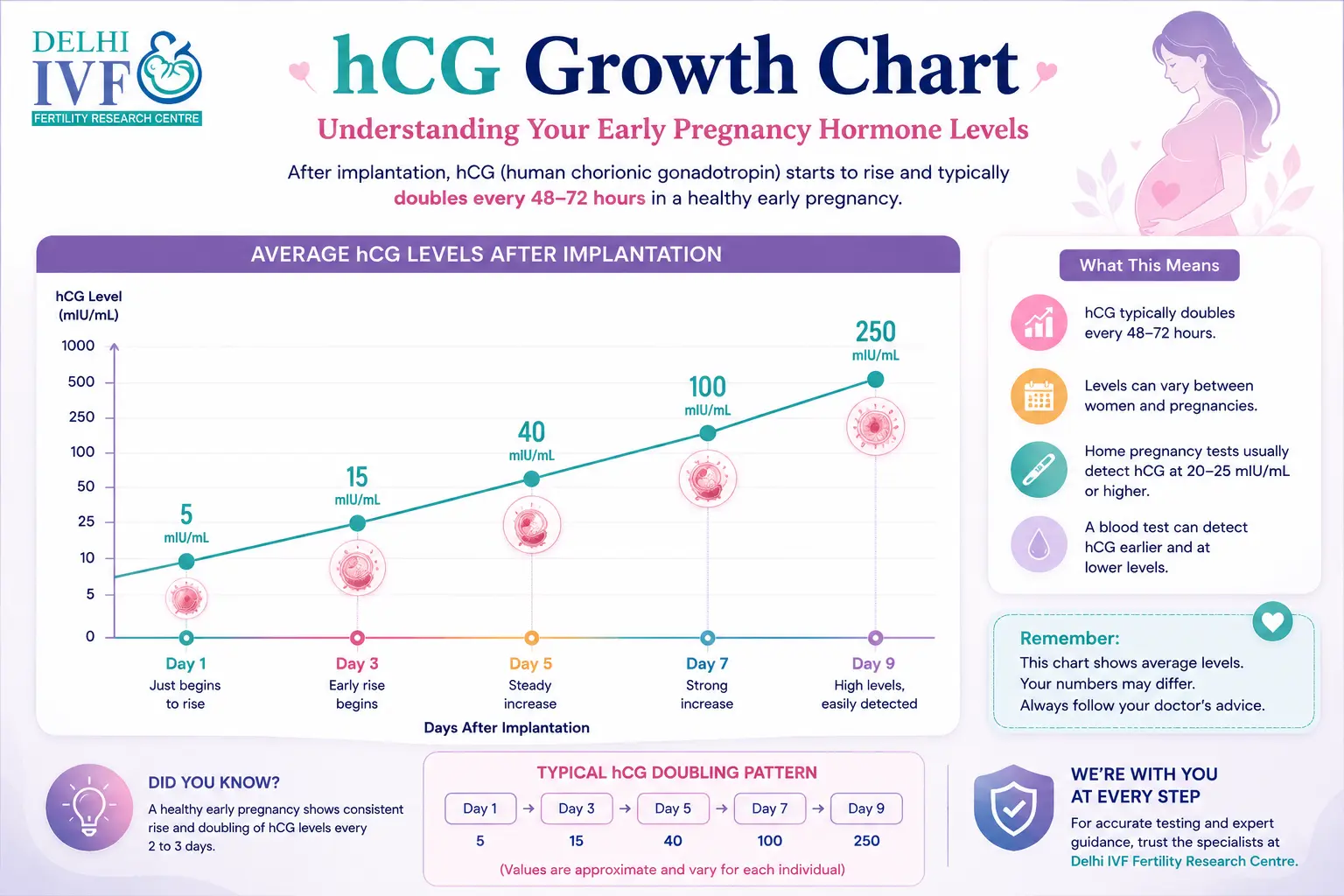
This doubling pattern is why timing matters so much. Test before hCG has had time to climb, and even a real pregnancy can show a negative result.
Implantation Bleeding as an Early Clue
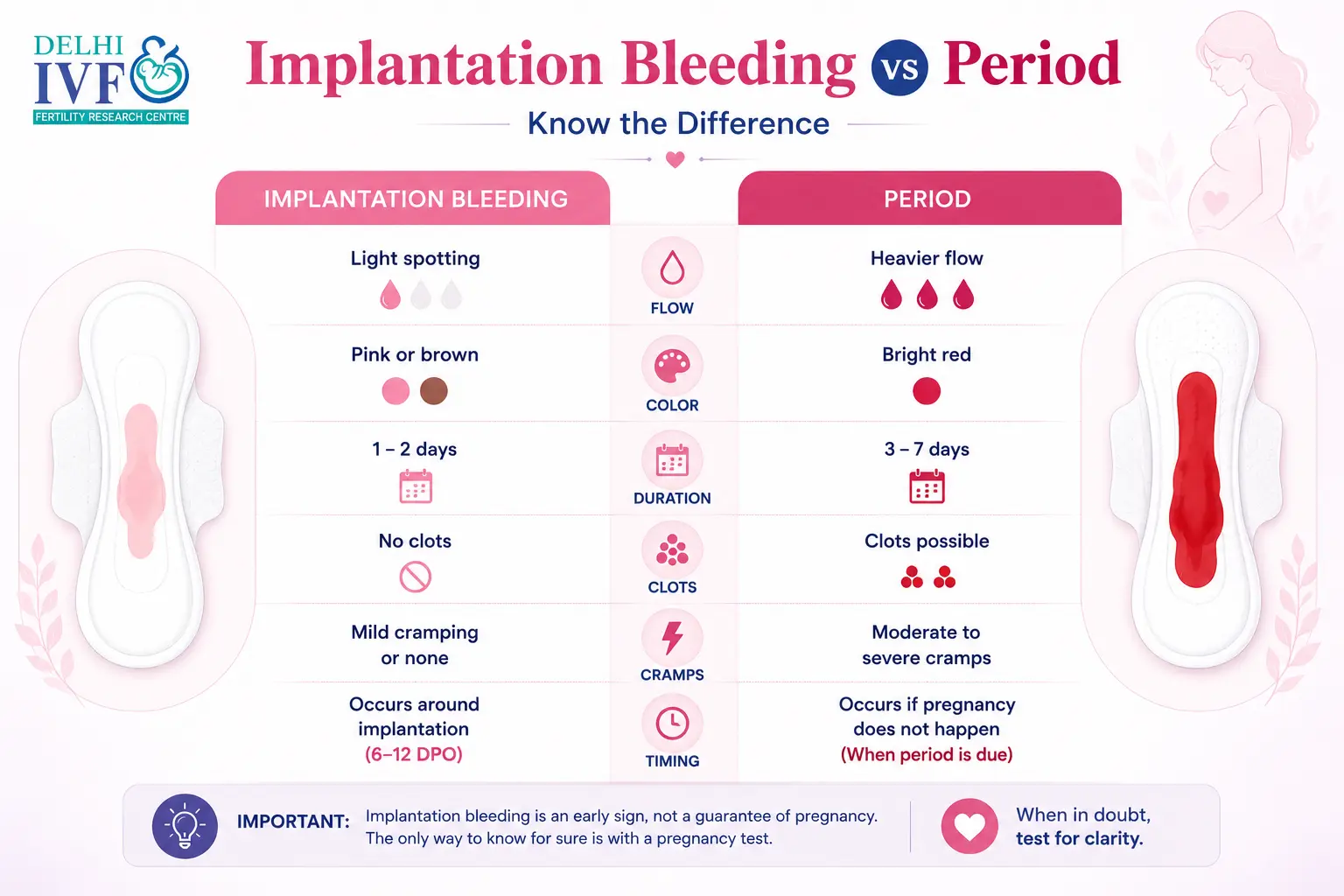
Some women notice light implantation bleeding or spotting when the embryo embeds. It is usually pink to brownish, much lighter than a period, and arrives around the time you would normally expect your menstrual cycle to start. Implantation spotting can be a helpful early signal, but it is not a guarantee of pregnancy, and it does not affect the accuracy of a test taken afterwards.
How Soon Can You Take a Pregnancy Test After Implantation?
You can take a home pregnancy test as early as 3 to 5 days after implantation, once your body has produced enough hCG to cross the test's sensitivity threshold. For most women, this lands somewhere between 10 and 14 DPO.
The reason the answer is a range rather than a fixed date is that implantation itself does not happen on a set date. If you are an early implanter (around 6 to 7 DPO), hCG starts rising sooner, and a sensitive test may show a faint positive by 9 DPO. If implantation happens later (11 to 12 DPO), you may not get a clear positive until after your missed period.
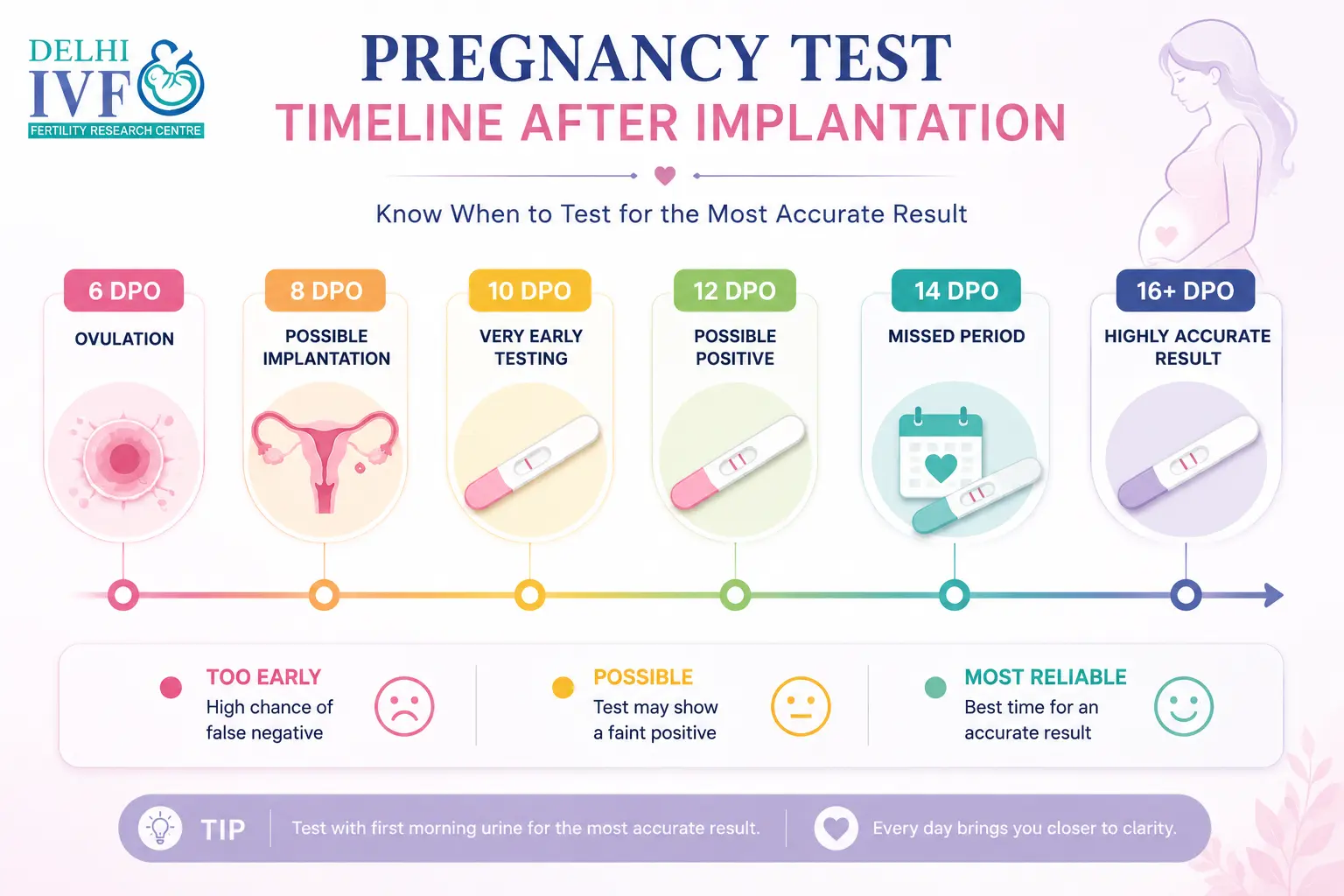
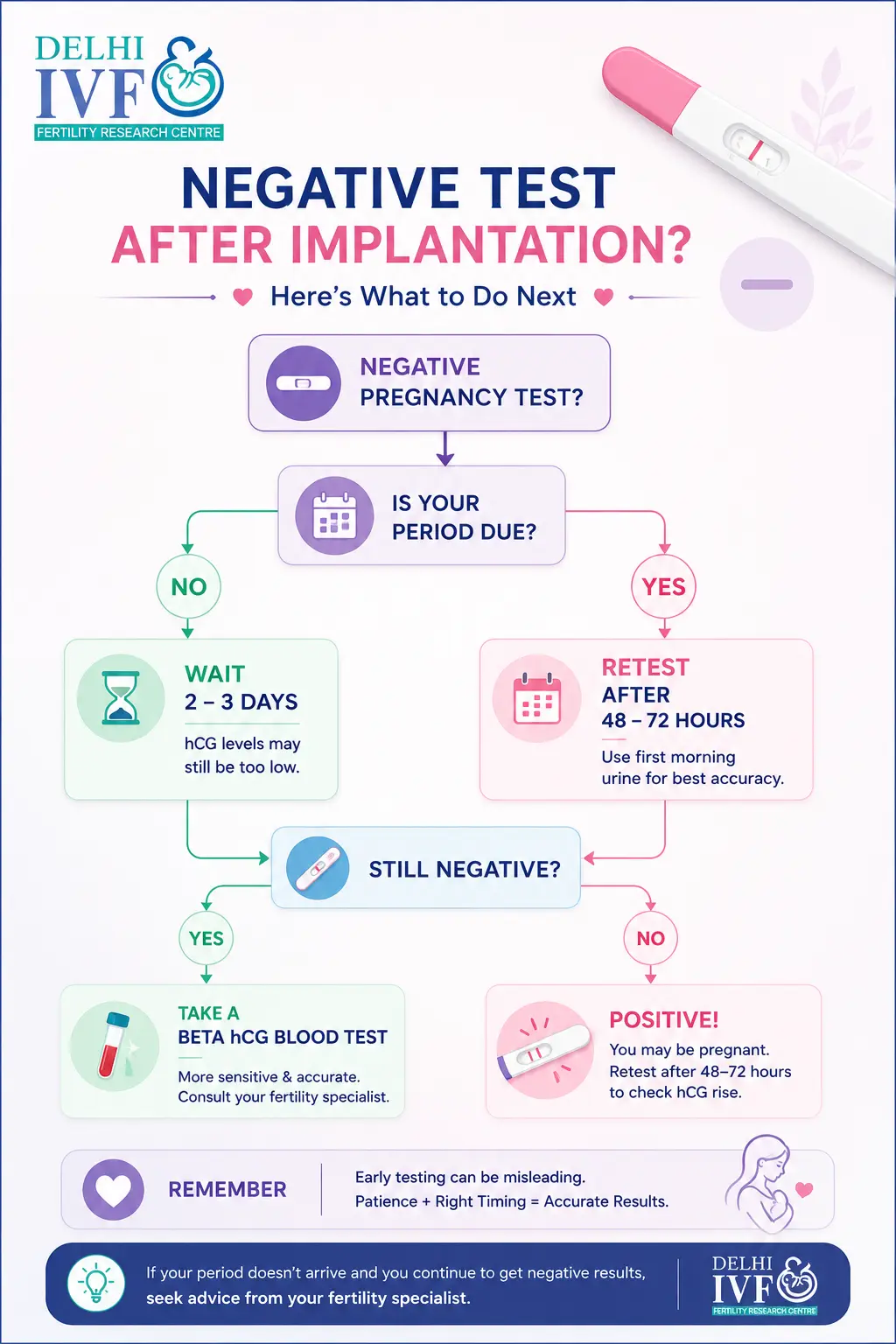
For the most accurate pregnancy test after implantation, the simplest rule is this: wait until at least the first day of your missed period. If your result is negative but your period has not arrived, retest in 2 to 3 days, because hCG may simply need more time to build up.
Pregnancy Testing Timeline After Implantation
The table below shows what typically happens day by day, so you can see how soon a pregnancy test is likely to read positive after implantation.
| Days after implantation | Approx. DPO | hCG status | Test reliability |
| 1 to 2 days | 8 to 10 DPO | Just beginning to rise, often very low | Usually too early, high false-negative risk |
| 3 to 4 days | 10 to 12 DPO | Rising, may reach 10 to 25 mIU/mL | Sensitive early tests may show a faint line |
| 5 to 7 days | 12 to 14 DPO | Doubling steadily, often detectable | Good reliability, around your missed period |
| 7 to 10 days | 14 to 17 DPO | Usually well above the test threshold | Clear positive on most home tests |
Use this as a guide rather than a strict rulebook. Your personal ovulation date, implantation timing, and the sensitivity of your chosen test all shift these windows slightly.
Taking a Pregnancy Test After Implantation Bleeding
A very common question is how soon you can take a pregnancy test after implantation bleeding. Implantation bleeding does not mean hCG has reached a detectable level yet. It simply marks the embryo embedding into the uterine lining.
For a dependable result, wait 3 to 4 days after the spotting stops, which usually coincides with your missed period, then test using first morning urine. Implantation bleeding itself never causes a false positive or a false negative, so the spotting will not interfere with your result. It is the hCG level, not the bleeding, that determines what the test shows.
Why You Might Get a Negative Test After Implantation
Getting a negative pregnancy test after implantation bleeding, when you feel certain you are pregnant, is one of the most confusing parts of the two-week wait. In most cases, the explanation is timing, not the absence of pregnancy.
The most common reasons for a false negative include testing before hCG has risen high enough, late implantation that delays the hormone rise, diluted urine from drinking large amounts of fluid before testing, or using a test with low sensitivity. If you test too early after implantation, the hormone may be present but still below your test's detection limit.
If you receive a negative result but your period does not arrive, wait 48 to 72 hours and test again with first morning urine. If you continue to get negatives while symptoms persist or your period stays away, a blood test at a fertility clinic can give you a clearer answer.
What Does a Faint Line Mean After Implantation?
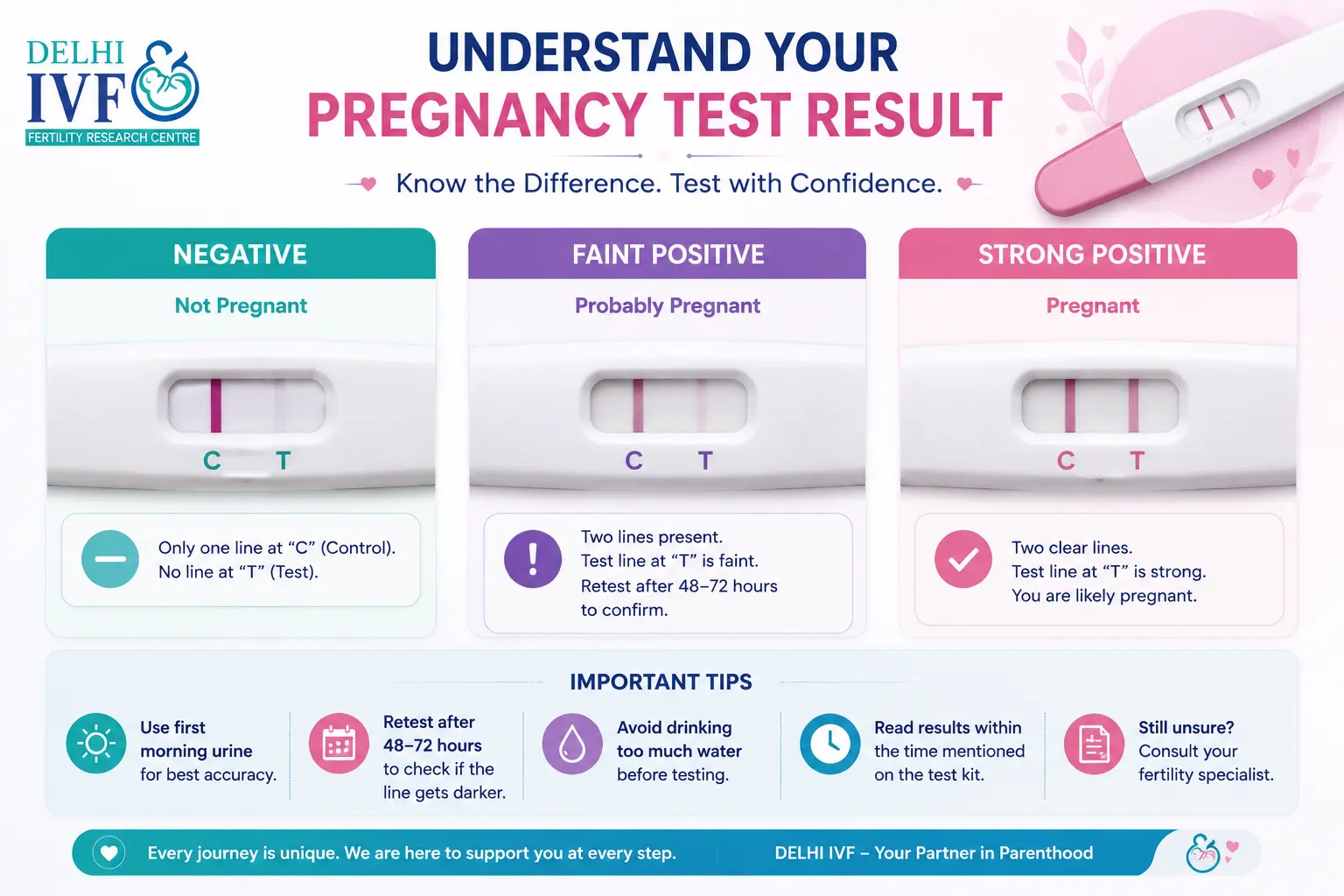
A faint second line, no matter how light, usually counts as a positive result, as long as it appears within the test's reading window. A faint line typically means you are pregnant, but tested early, when hCG is present but still low.
The best way to confirm is to retest after 48 to 72 hours. If hCG is rising as expected, the test line should grow darker and bolder. If the line fades or fails to darken, it may indicate a very early loss known as a chemical pregnancy, and a consultation with a fertility specialist is the right next step.
Blood Test vs Urine Test: Which Detects Pregnancy Sooner?
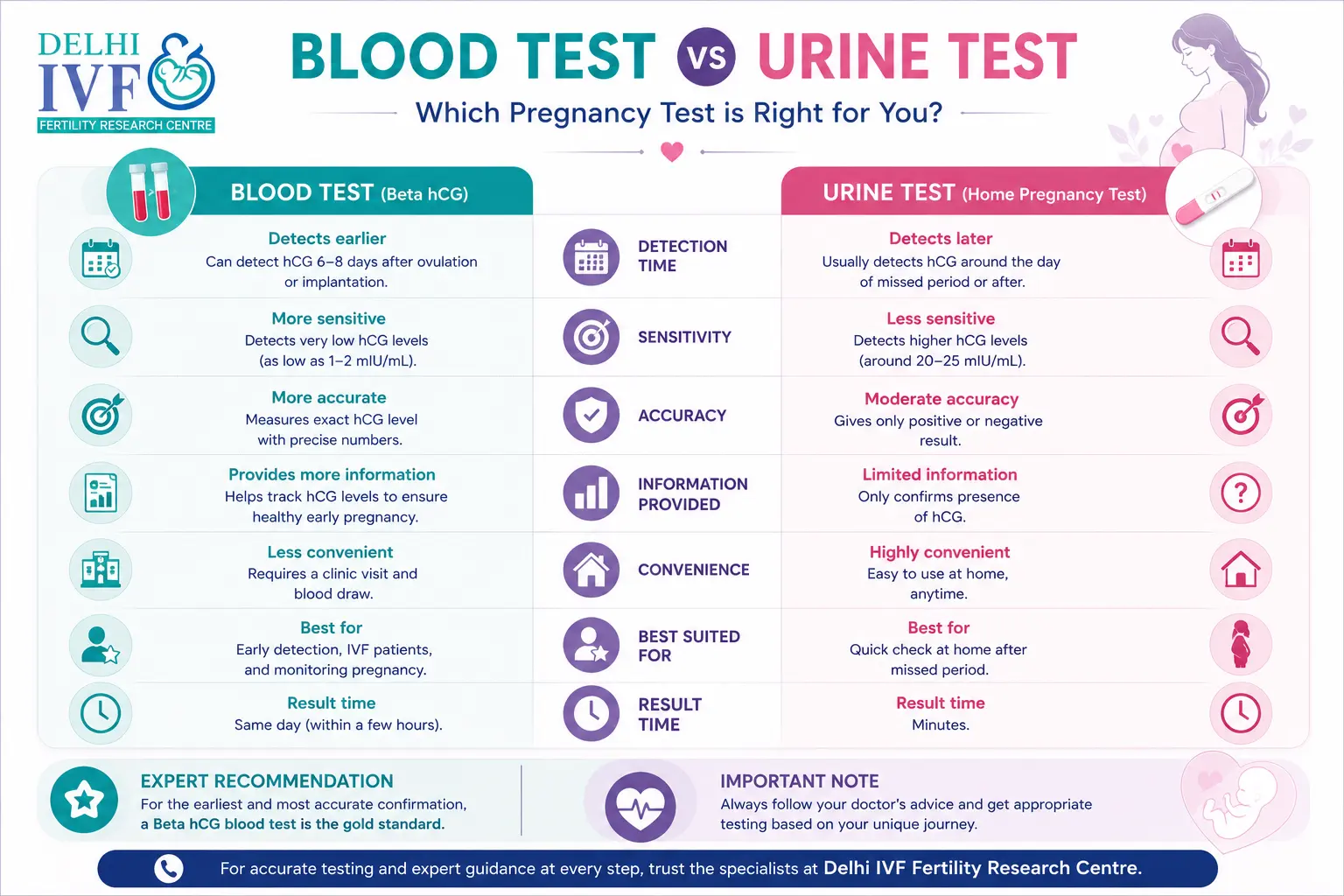
There are two ways to confirm pregnancy, and they differ in how early they can detect hCG.
A home urine pregnancy test is convenient and private, but it needs a higher hCG level, usually around 20 to 25 mIU/mL for standard kits, to show a positive. A blood test (beta hCG), done at a fertility clinic or laboratory, is more sensitive and can detect lower hCG levels several days sooner. A beta hCG test also measures the exact amount of hormone, which lets your doctor track whether levels are doubling appropriately in early pregnancy.
If you want the earliest and most precise confirmation, especially after fertility treatment, a beta hCG blood test is the gold standard.
Pregnancy Test After IVF or Embryo Transfer
If you have conceived through IVF, the timing rules are slightly different, and the guidance here is important. After an embryo transfer, your clinic will schedule a beta hCG blood test, usually around 9 to 14 days after the transfer, depending on whether you had a fresh or frozen embryo transfer (FET) and the stage of the embryo.
Many women feel tempted to take a home pregnancy test during the two-week wait after IVF. We generally advise against early home testing after embryo transfer for two reasons. First, some fertility protocols use an hCG trigger injection, and traces of that medication can produce a false positive on a home test. Second, an early false negative can cause unnecessary distress when hCG simply has not risen enough yet.
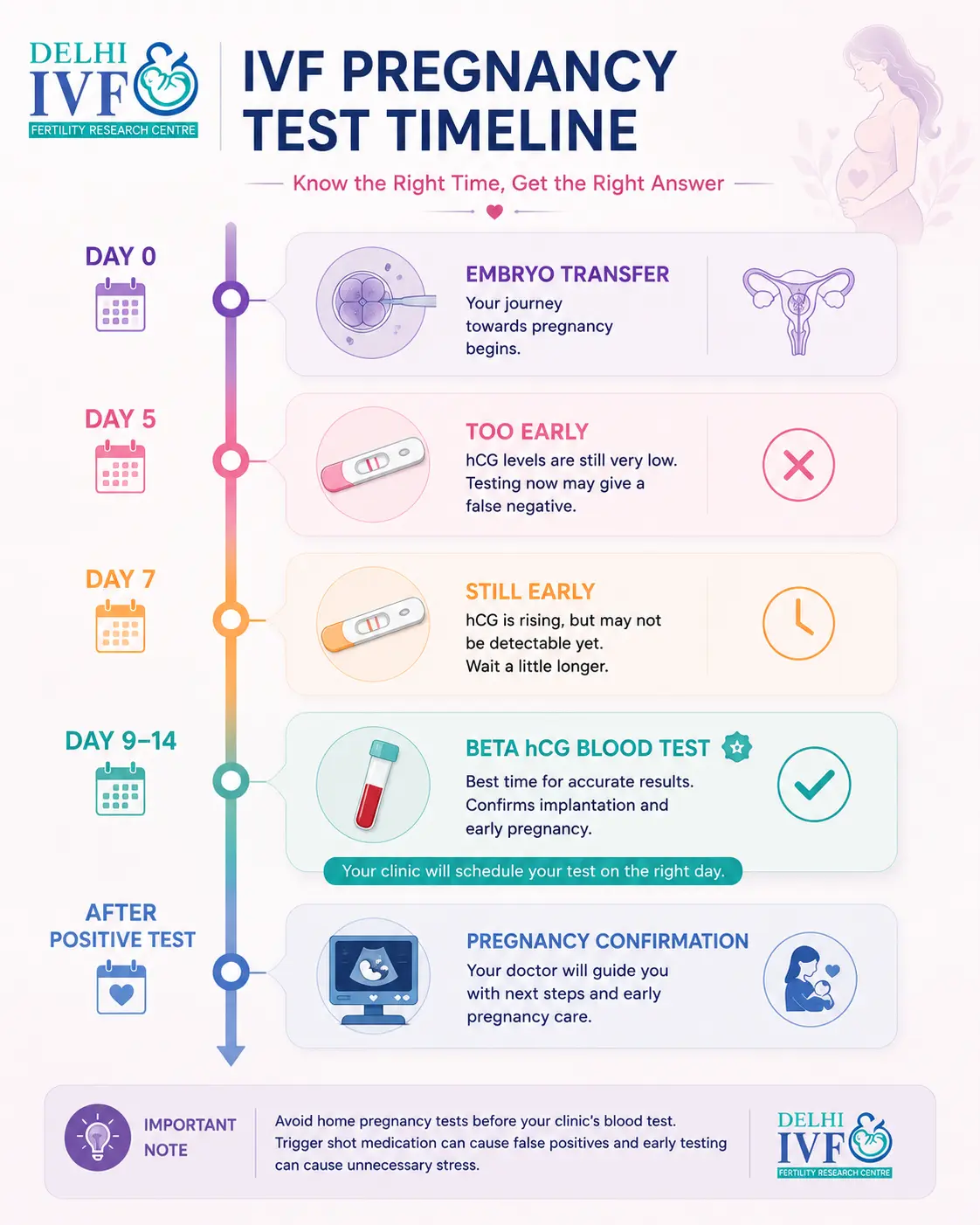
The most reliable path after IVF or FET is to wait for the beta hCG test that your Delhi IVF specialist has scheduled. That single blood test removes the guesswork, confirms implantation, and gives your doctor a baseline hormone value to monitor.
Tips for the Most Accurate Pregnancy Test Result
A few simple habits make a real difference to accuracy when you test after implantation:
- Wait for your missed period: Testing on or after the day your period is due gives the most reliable result for most women.
- Use the first morning urine: hCG is most concentrated in your first urine of the day, which improves early detection.
- Choose a sensitive test: Early-detection kits that detect 10 to 20 mIU/mL pick up pregnancy sooner than standard kits.
- Read the result within the time window: Check the result in the minutes specified on the box, not hours later.
- Do not over-hydrate before testing: Diluted urine can lower hCG concentration and cause a false negative.
- Retest if unsure: A faint line or a negative with no period both warrant a repeat test after 48 to 72 hours.
When to See a Fertility Specialist
If you are getting repeated negative tests while your period stays away, seeing inconsistent or faint results, or trying to conceive without success, it is worth speaking to a specialist. A fertility consultation can confirm pregnancy with a beta hCG test, investigate any delay, and guide your next steps.
At Delhi IVF & Fertility Research Centre, our team, led by Dr. Anoop Gupta, supports couples through every stage of the journey, from understanding early pregnancy signs to advanced treatments such as IVF, ICSI, IUI, and frozen embryo transfer. If you would like clarity on your result or your fertility, our specialists are here to help.

