
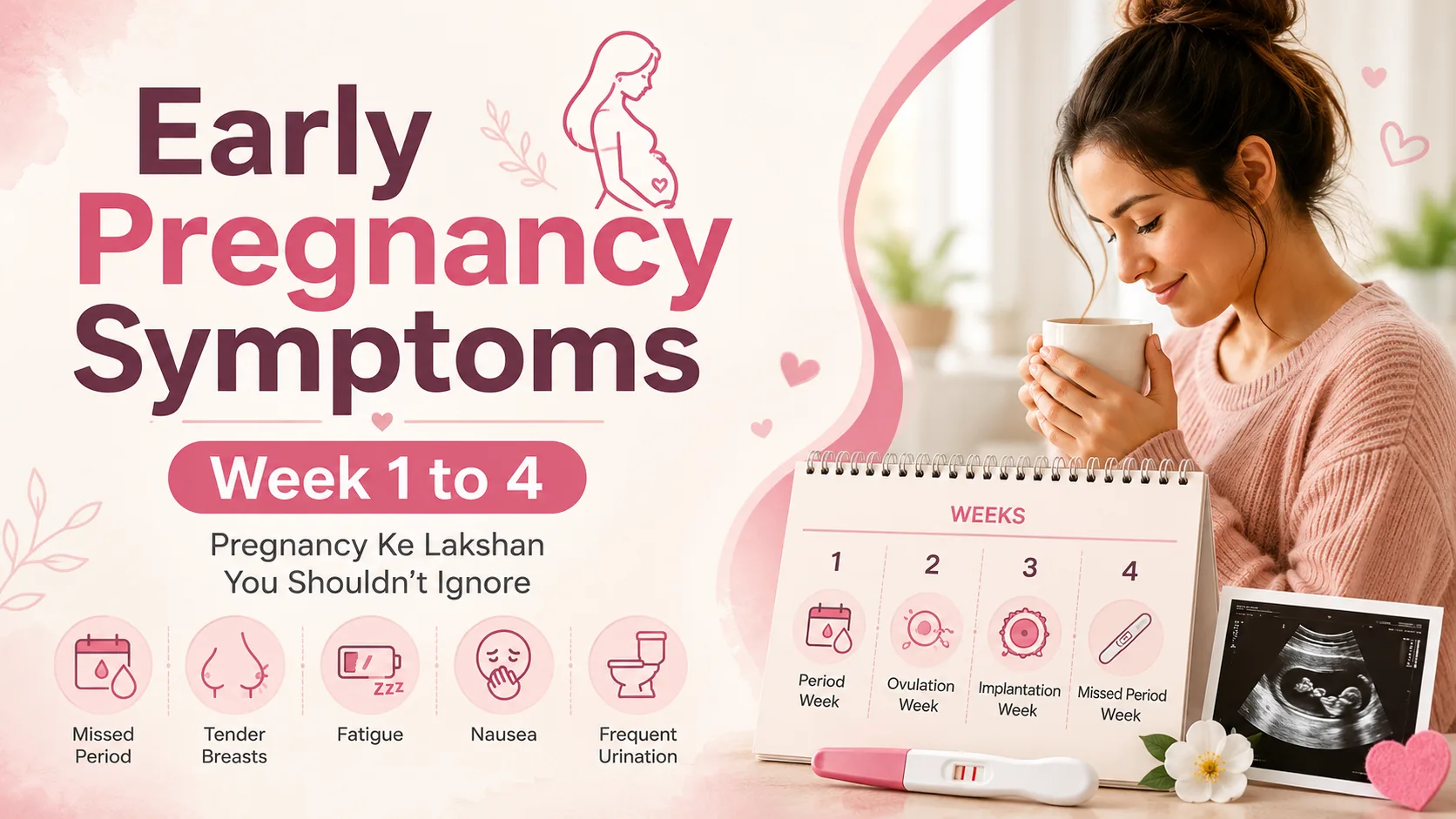
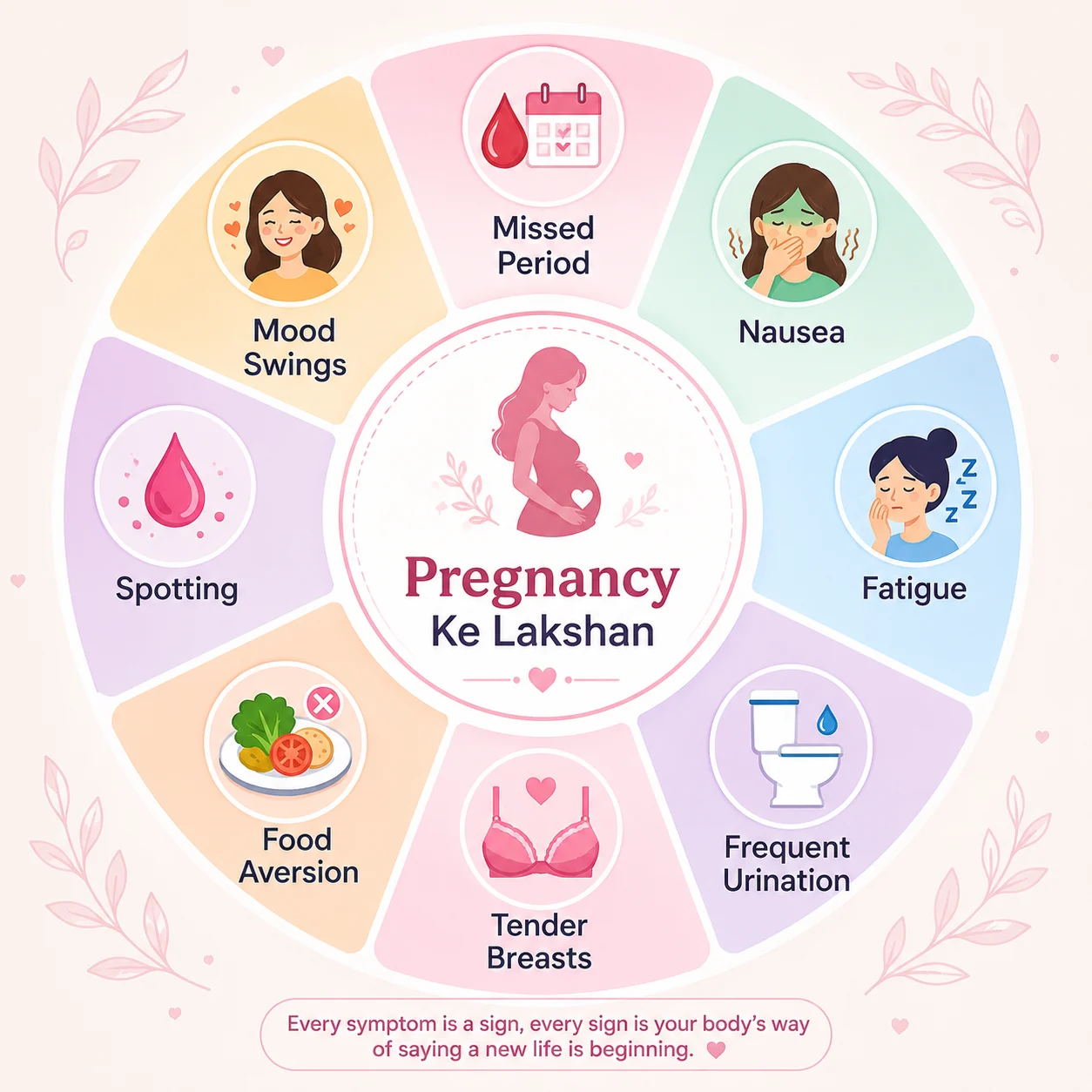
The earliest pregnancy symptoms usually begin around week 3 or week 4, and include a missed period, tender breasts, fatigue, mild nausea, light spotting, and frequent urination. In the first two weeks of a menstrual cycle, most women feel nothing at all, because pregnancy has not yet begun in the biological sense. Learning to read your body correctly, week by week, can save you a lot of anxiety in the two-week wait.
Whether you are actively trying to conceive or wondering if this could finally be the month, this week-by-week guide from the specialists at Delhi IVF & Fertility Research Centre walks you through the earliest pregnancy ke lakshan (garbh dharan ke lakshan), what is happening inside your body, and the signs that mean it is time to speak with a doctor.
How Pregnancy Weeks Are Counted
Before we look at the symptoms, it helps to unders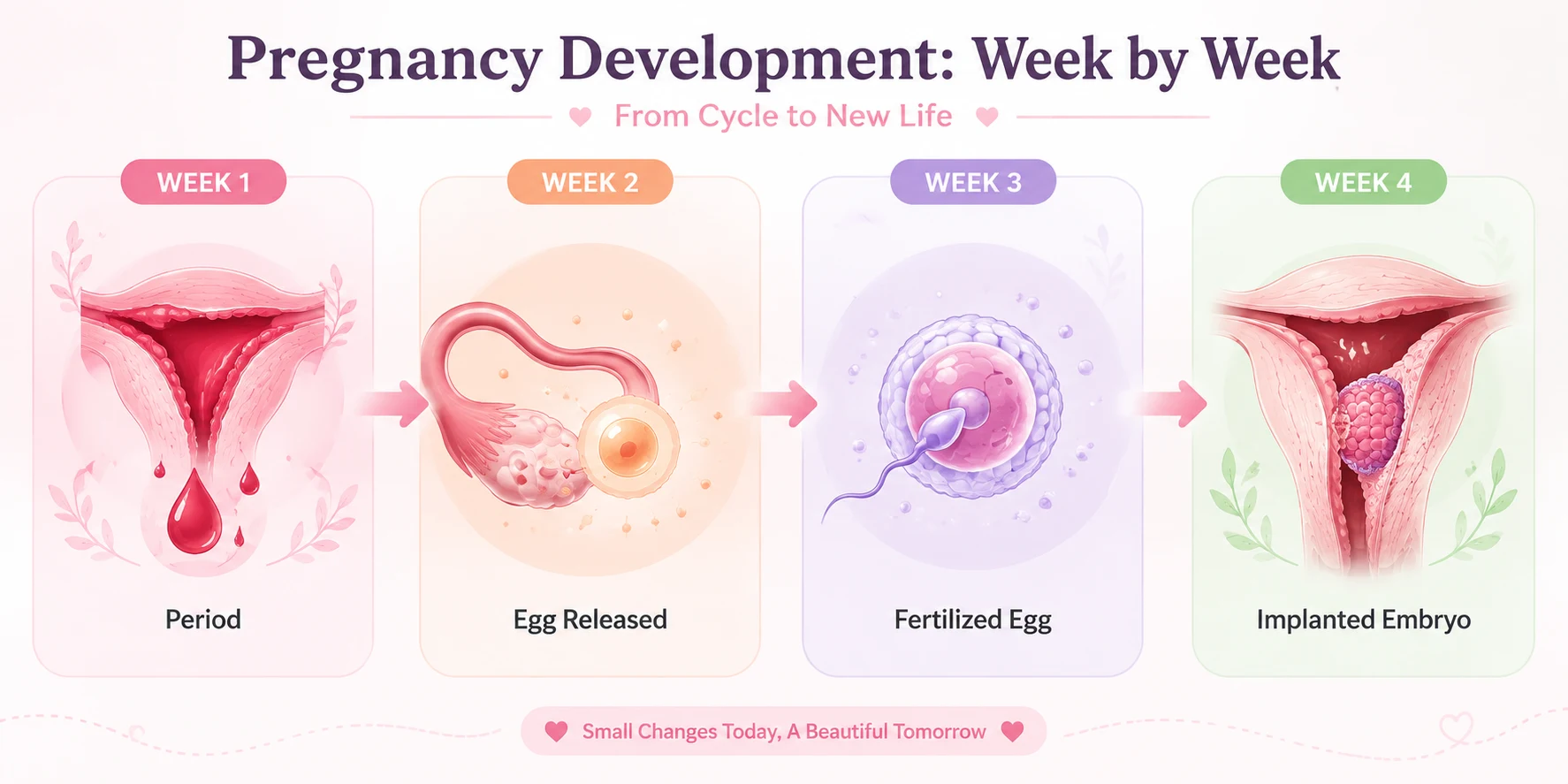
- Week 1 is actually the week of your period, before you have even ovulated
- Week 2 is your fertile window, when ovulation usually happens
- Week 3 is when fertilisation and early implantation occur
- Week 4 is when your period would be due, and when most women test positive
So when a doctor says "you are 4 weeks pregnant," you are actually about 2 weeks past conception. This is why the earliest pregnancy symptoms only start appearing from around week 3 to 4, not from week 1.
Week 1 Pregnancy Symptoms (Pehla Hafta)
Technically, you are not pregnant yet in week 1. Your body is shedding the previous cycle's uterine lining as a period, and preparing an egg for release later in the cycle. The symptoms you feel this week are period symptoms, not first-week pregnancy signs.
What you may feel:
- Menstrual bleeding
- Period cramps
- Fatigue or low energy
- Mood changes
Some women who are actively trying to conceive read into every twinge from day one. It is worth remembering that no pregnancy symptom can occur before ovulation, which is still a week or two away.
Week 2 Pregnancy Symptoms
Week 2 is your fertile window. Ovulation typically happens around day 14 of a 28-day cycle. If conception occurs, it happens in this week, though you will still not feel any pregnancy symptoms yet because the fertilised egg is only just beginning its journey.
Signs of ovulation to look for this week:
- Clear, stretchy cervical mucus that looks like egg white
- A slight rise in basal body temperature
- Mild pain on one side of the lower abdomen (mittelschmerz)
- Increased libido
Important to know: Any tender breasts or bloating in week 2 are due to ovulation hormones, not pregnancy. Real early pregnancy symptoms need time to develop after implantation.
Week 3 Pregnancy Symptoms: Fertilisation and Implantation
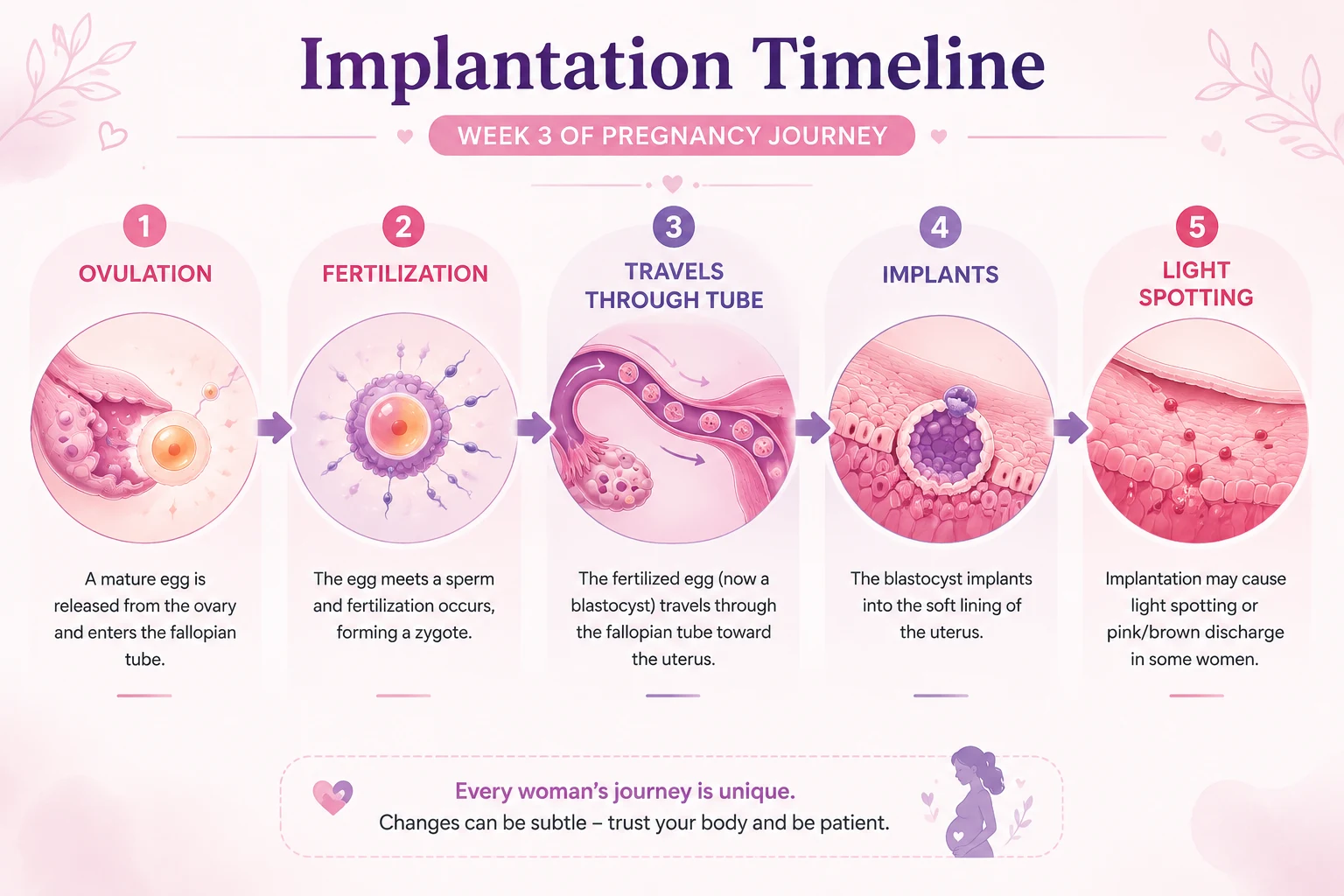
Week 3 is when the story really begins. If fertilisation has happened, the fertilised egg travels down the fallopian tube, divides into a blastocyst, and starts to implant into the uterine lining towards the end of this week. Some women feel the very first subtle signs during this window.
Common week 3 symptoms:
- Light implantation bleeding or spotting: pink or brown, much lighter than a period
- Mild cramping: gentle, period-like cramps as the embryo embeds
- Tender or heavy breasts: an early hormonal shift
- Fatigue: Rising progesterone can leave you feeling unusually tired
- A metallic taste in the mouth for some women
These signs are subtle, and many women mistake them for premenstrual symptoms. If you would like to understand implantation and timing better, read our detailed guide on how soon to take a pregnancy test after implantation.
Week 4 Pregnancy Symptoms: The Missed Period Week
Week 4 is when most women realise they might be pregnant, because this is when a period is due. By this point, the embryo has implanted, the developing placenta is producing hCG (the pregnancy hormone), and symptoms begin to build. Home pregnancy tests are now likely to show a positive result, especially with first morning urine.
Common week 4 pregnancy ke lakshan:
- A missed period: the single most reliable early sign
- Tender, swollen, or tingling breasts
- Fatigue and low energy
- Mild nausea, often on an empty stomach
- Frequent urination as blood volume rises
- Bloating and mild constipation
- Mood swings, similar to but stronger than PMS
- A heightened sense of smell
- Food aversions or unusual cravings
Not every woman has all of these symptoms, and the intensity varies from person to person. Feeling only mild symptoms, or none at all, does not mean anything is wrong.
Week-by-Week Early Pregnancy Symptom Table
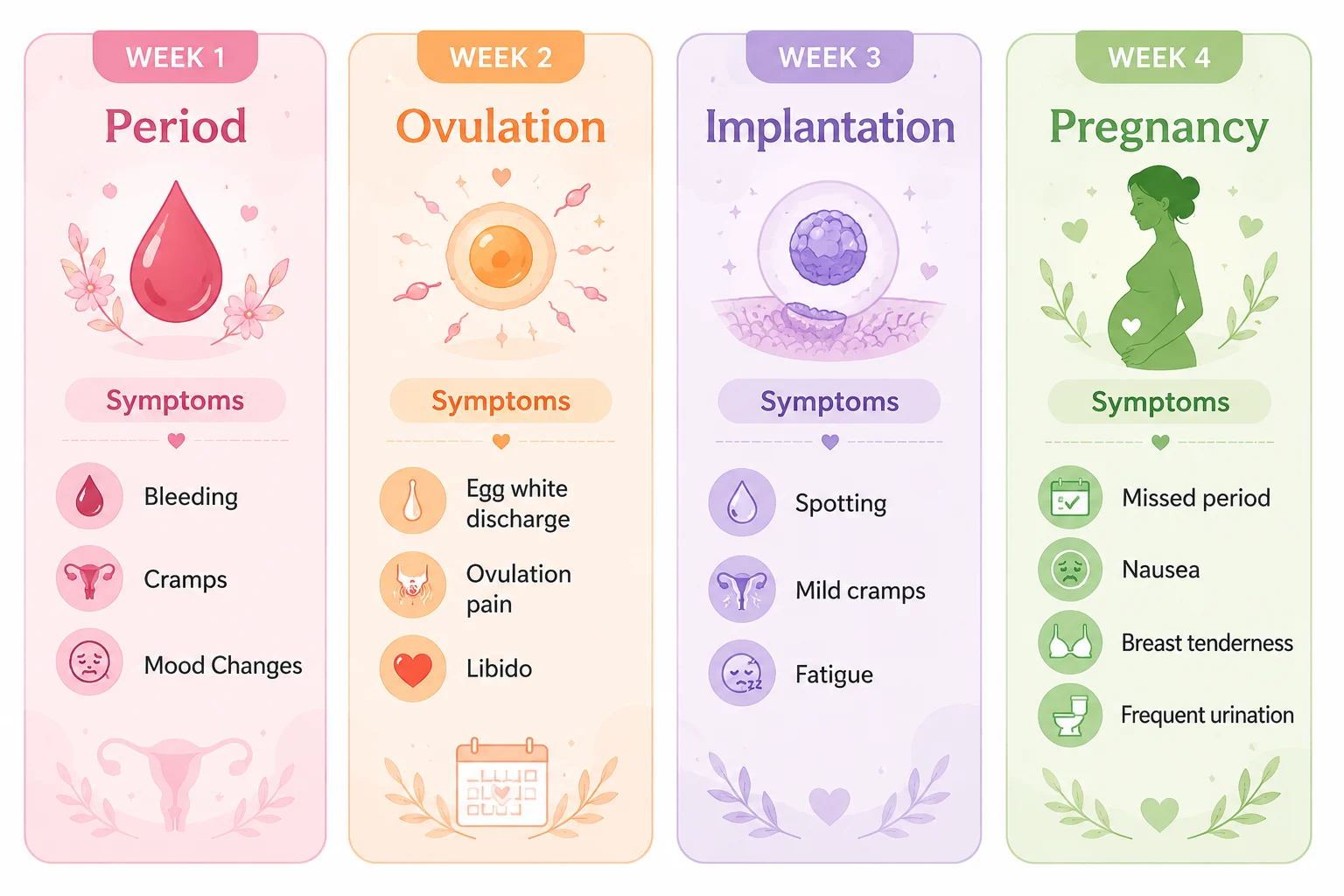
Use this quick reference to see what is normal in each of the first four weeks.
| Week | What is happening | Typical symptoms |
| Week 1 | Menstrual period, no pregnancy yet | Period bleeding, cramps, fatigue |
| Week 2 | Ovulation, possible conception | Cervical mucus changes, mild ovulation pain |
| Week 3 | Fertilisation and implantation | Light spotting, mild cramping, tender breasts, fatigue |
| Week 4 | hCG rises, missed period | Missed period, tender breasts, nausea, fatigue, frequent urination, mood changes |
Treat this as a general guide. Your personal timing can shift by a few days in either direction, and that is completely normal.
Common Pregnancy Ke Lakshan (Garbh Dharan Ke Lakshan)
For anyone searching in Hindi and Hinglish, these are the classic garbh dharan ke lakshan to look out for once you are past ovulation:
- Period miss hona (missed period)
- Chhaati mein bhaari pan aur dard (heavy, tender breasts)
- Bahut jyada thakan (extreme fatigue)
- Ji mitlana ya ulti aana (nausea or vomiting)
- Bar bar peshab aana (frequent urination)
- Halka spotting (light spotting from implantation)
- Khaane ke prati aversion (food aversions)
- Mood mein badlaav (mood swings)
- Munh mein dhaatu jaisa swaad (metallic taste)
- Halki pet mein aithan (mild abdominal cramps)
Again, having several of these signs together is a stronger clue than any one on its own. A pregnancy test remains the only reliable way to confirm.
Early Pregnancy Symptoms vs Period Symptoms
One of the hardest parts of the two-week wait is that many early pregnancy symptoms look almost identical to premenstrual symptoms. Tender breasts, cramping, fatigue, bloating, and mood swings can occur with both.
A few clues lean more towards pregnancy:
- Spotting is much lighter and earlier than your usual period
- Nausea, which is far more typical of pregnancy than of PMS
- A darker areola around the nipple
- A missed period, which remains the strongest single sign
Because the overlap is real, no symptom on its own confirms pregnancy. A home pregnancy test or a beta hCG blood test is the only certain way to know.
When to Take a Pregnancy Test
For most women, the most accurate time to test is on or after the day of their missed period, which is around week 4. Testing earlier is possible with a sensitive early-detection kit, but it raises the chance of a false negative, because hCG levels may still be too low.
If your test is negative but your period has not arrived, wait 48 to 72 hours and test again with first morning urine. If you still see a negative result while symptoms continue, a beta hCG blood test at a clinic gives the clearest answer.
What Happens After Week 4
Once you have confirmed pregnancy, the coming weeks bring more noticeable changes. Nausea usually builds between weeks 4 and 9, breast tenderness increases, and fatigue often peaks in the first trimester. To understand what to expect next, read our detailed guide on first-trimester pregnancy symptoms and early signs, which covers weeks 5 through 13 in depth.
Symptoms, No Positive Test: When to See a Fertility Specialist
Feeling early pregnancy symptoms month after month but never seeing a positive test can be one of the most emotionally difficult experiences. If you have been trying to conceive for a while without success, it is worth remembering that this is very common, and it is also very treatable.
You should consider a fertility consultation if:
- You are under 35 and have been trying to conceive for 12 months
- You are 35 or older and have been trying for 6 months
- You have irregular or absent periods
- You have a known condition such as PCOS, endometriosis, or fibroids
- Your partner has a known concern with sperm count or quality
Many couples who felt "stuck" for years go on to conceive successfully with the right assessment and treatment. Options range from ovulation induction and Intrauterine Insemination (IUI) to advanced treatments like In Vitro Fertilisation (IVF) and ICSI for more complex cases.
At Delhi IVF & Fertility Research Centre, our team, led by Dr. Anoop Gupta, has helped thousands of couples across India and abroad conceive, including many who had faced years of unexplained infertility or failed cycles elsewhere. If you are unsure whether it is time to seek help, a first consultation can give you clarity without any pressure.
Warning Signs You Shouldn't Ignore
Most early pregnancy symptoms are a normal part of your body adjusting. However, some signs need prompt medical attention. Contact a doctor or go to the nearest emergency department if you experience:
- Heavy vaginal bleeding, especially bright red blood that soaks a pad within an hour
- Severe or one-sided abdominal or pelvic pain, which can be a sign of an ectopic pregnancy
- Severe, persistent vomiting with an inability to keep fluids down
- High fever, fainting, or severe dizziness
- Painful urination with fever or back pain
Trust your instincts. If something feels wrong, it is always better to get it checked.

