
The most common first-trimester pregnancy symptoms include a missed period, nausea, tender breasts, fatigue, and frequent urination, and they usually begin around 4 to 6 weeks of pregnancy. Some women notice the earliest signs of pregnancy even before a missed period, while others feel almost nothing in the first few weeks. Both are completely normal.
The first trimester is a time of rapid change, and it can also be a time of uncertainty. You may find yourself reading into every twinge, wondering what a real pregnancy symptom is and what is simply your body adjusting. To help you feel more confident, the fertility specialists at Delhi IVF & Fertility Research Centre have put together this clear, week-by-week guide to early pregnancy symptoms, what causes them, what is normal, and the warning signs that mean you should call a doctor.
What is the First Trimester?
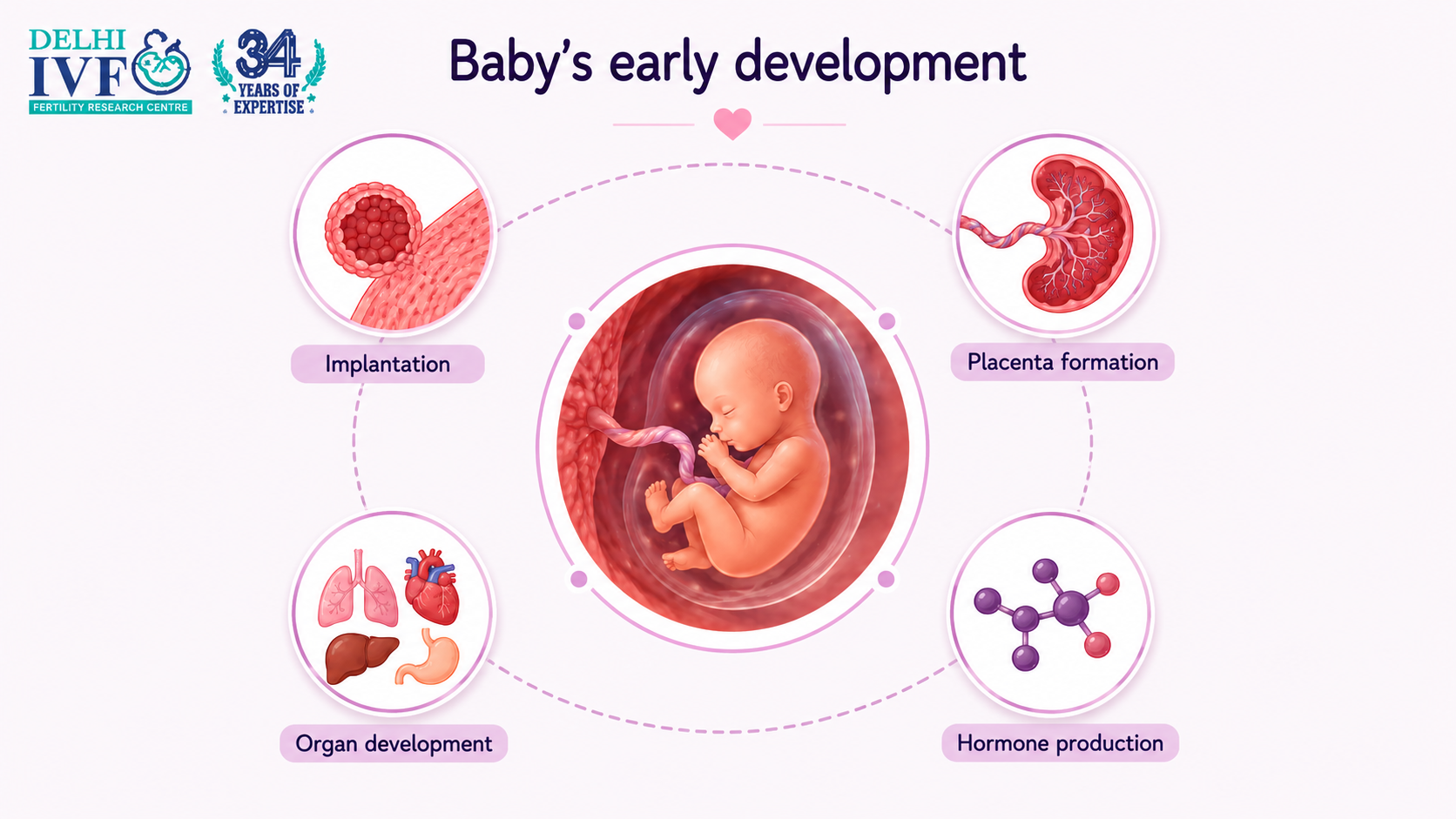
The first trimester covers the first 13 weeks of pregnancy, from week 1 through to the end of week 13. Pregnancy is dated from the first day of your last menstrual period (LMP), not from the day of conception, which is why you can be counted as four weeks pregnant only about two weeks after you actually conceive.
During these early weeks, the fertilised egg implants into the uterine lining, the placenta begins to form, and your body starts producing pregnancy hormones in large amounts. By the end of the first trimester, all of your baby's major organs and body systems have begun to develop. Most of the symptoms you feel are driven by three hormones: human chorionic gonadotropin (hCG), progesterone, and oestrogen.
When Do First Trimester Symptoms Start?
For most women, early pregnancy symptoms begin around 4 to 6 weeks, which is roughly one to two weeks after a missed period. A few symptoms may appear as soon as one to two weeks after conception, including light implantation bleeding, mild cramping, or fatigue. Others, such as morning sickness, often develop a little later.
There is no single timeline that fits everyone. The intensity and order of symptoms vary from woman to woman, and even from one pregnancy to the next in the same woman.
First Trimester Symptom Timeline
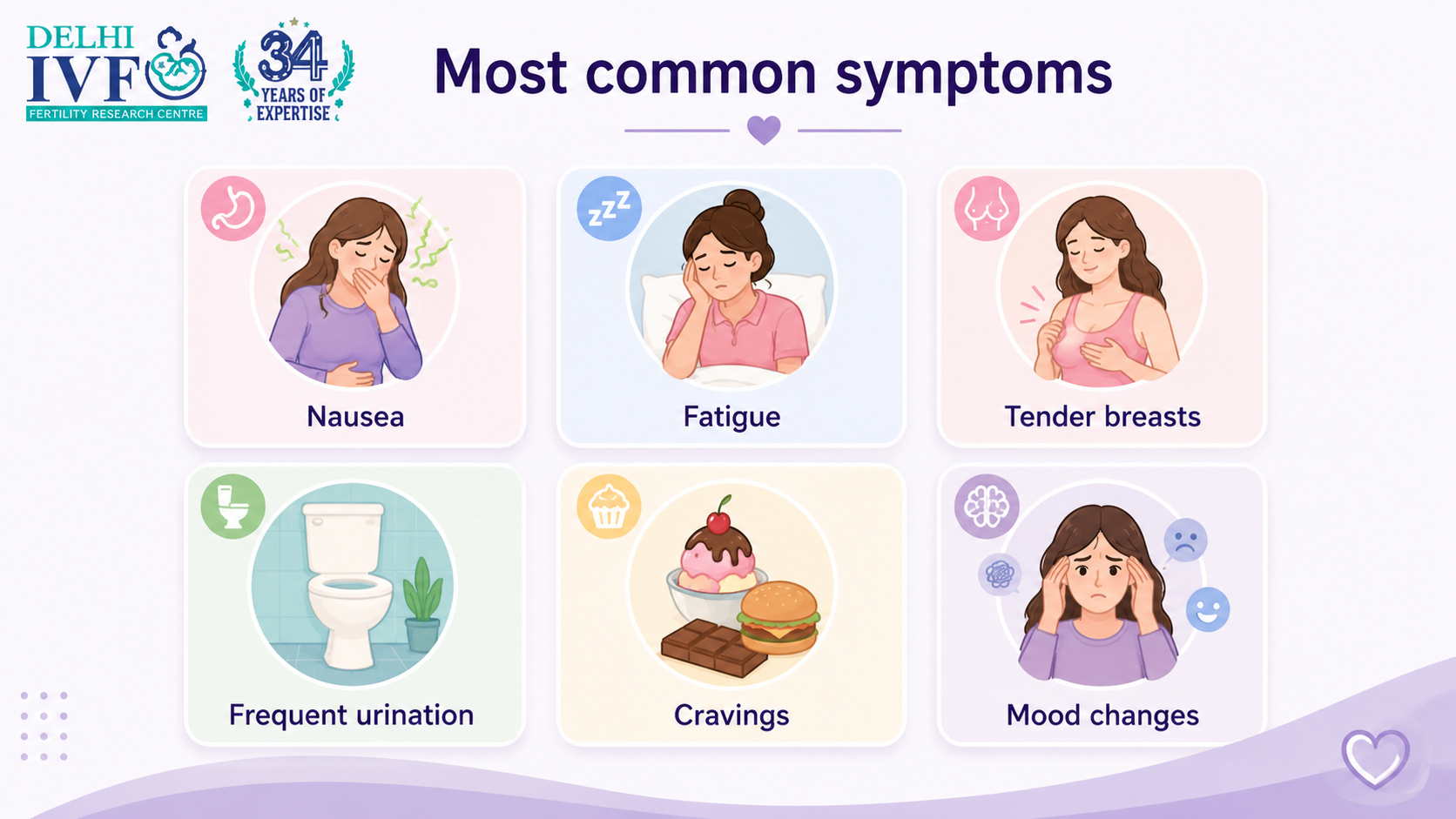
The table below shows when the most common early pregnancy symptoms typically appear and why they happen.
Symptom: When it usually starts. Why it happens
| Implantation bleeding or spotting | 1 to 2 weeks after conception | The embryo embeds into the uterine lining |
| Missed period | Around 4 weeks (week 4) | Pregnancy hormones pause your cycle |
| Tender, swollen breasts | 4 to 6 weeks | Rising oestrogen and progesterone |
| Fatigue | 4 to 6 weeks | Rising progesterone levels |
| Nausea or morning sickness | 4 to 9 weeks | Rising hCG and hormone changes |
| Frequent urination | 6 to 8 weeks | More blood volume and a growing uterus |
| Food cravings and aversions | First trimester | Changes in hormones and sense of taste |
Use this as a general guide rather than a strict rulebook. Your own experience may differ, and that does not mean anything is wrong.
Early Signs of Pregnancy Before a Missed Period
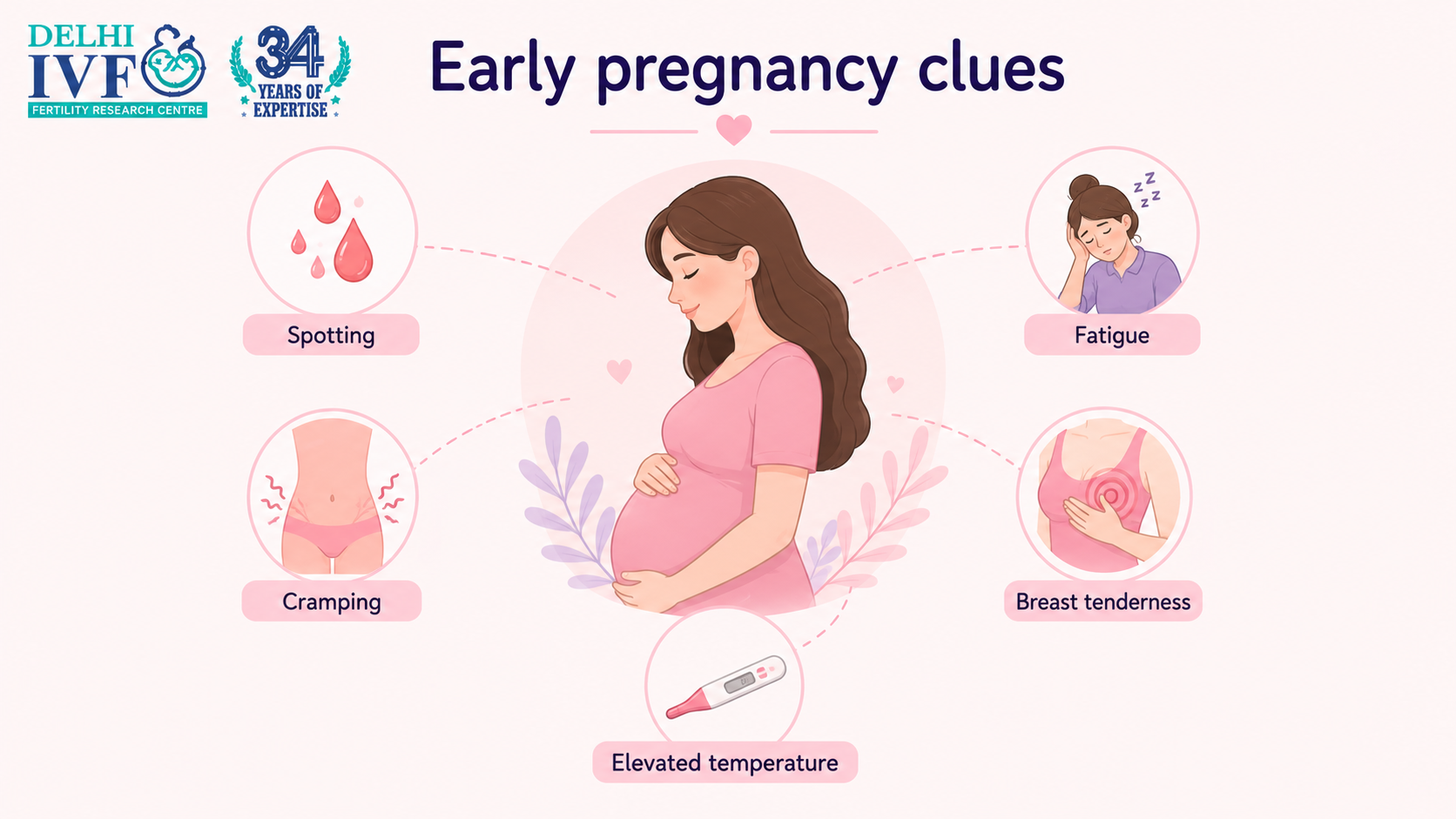
Many women want to know the earliest signs of pregnancy, often before they have even taken a test. While a missed period remains the most reliable early indicator, some subtle clues can appear in the days beforehand:
- Light implantation bleeding: A small amount of pink or brown spotting, much lighter than a period, when the embryo embeds.
- Mild cramping: Gentle, period-like cramps around the time of implantation.
- Tender breasts: A heavy, sore, or tingly feeling in the breasts, similar to but often stronger than premenstrual tenderness.
- Fatigue: Unusual tiredness driven by a sudden rise in progesterone.
- Raised basal body temperature: A temperature that stays elevated for more than two weeks after ovulation.
These signs are not proof of pregnancy on their own, because many of them overlap with premenstrual symptoms. The only way to confirm pregnancy is a positive pregnancy test, ideally taken on or after the day of your missed period.
Common First Trimester Pregnancy Symptoms Explained
Here are the symptoms most women experience in the first trimester, along with what causes them and simple ways to cope.
Missed Period
A missed period is often the first and clearest sign of pregnancy for women with a regular cycle. If a week or more passes beyond your expected date, it is worth taking a home pregnancy test. Keep in mind that stress, illness, and hormonal changes can also delay a period.
Nausea and Morning Sickness
Nausea, with or without vomiting, affects more than half of pregnant women. Despite the name, morning sickness can strike at any time of day or night. It usually begins between 4 and 9 weeks and often eases by week 12 to 14 as hormone levels settle.
To manage nausea, try:
- Eating small, frequent meals instead of large ones
- Keeping plain biscuits or crackers by your bed for the morning
- Sipping ginger tea or water throughout the day
- Avoiding strong cooking smells that trigger you
If you cannot keep any food or fluid down, you may have a severe form called hyperemesis gravidarum, which needs medical care.
Tender, Swollen Breasts
Hormonal changes make the breasts feel fuller, heavier, and sore early on. The skin around the nipple (the areola) may darken, and the veins may look more prominent. A well-fitted, supportive bra usually helps, and the tenderness tends to ease after the first few weeks.
Fatigue
Overwhelming tiredness is one of the most common early pregnancy symptoms, caused mainly by rising progesterone. Rest whenever you can, take short naps, eat iron-rich foods, and stay gently active. Energy levels usually improve around the fourth month as the placenta becomes well established.
Frequent Urination
Needing to pass urine more often starts within the first few weeks. Your blood volume increases, your kidneys work harder, and your growing uterus presses on your bladder. Keep drinking plenty of fluids, but cut back in the hour before bed. If urination becomes painful, mention it to your doctor, as it may signal a urinary tract infection.
Food Cravings and Aversions
Your sense of taste and smell can change sharply in early pregnancy. You may crave certain foods or suddenly dislike ones you used to enjoy. Both are normal and linked to hormonal shifts.
Other Common Symptoms
You may also notice:
- Bloating and constipation, as hormones slow down digestion
- Heartburn occurs when the valve between the stomach and oesophagus relaxes
- Mood swings caused by fluctuating hormones
- Headaches and dizziness from changes in blood flow and blood pressure
- A metallic taste in the mouth, known as dysgeusia
- Mild nasal congestion as blood flow to the mucous membranes increases
Early Pregnancy Symptoms vs Period Symptoms
One of the hardest parts of the two-week wait is that early pregnancy symptoms and premenstrual (PMS) symptoms look very similar. Tender breasts, cramping, fatigue, bloating, and mood changes can occur with both.
A few clues lean towards pregnancy rather than a period:
- Spotting is lighter and earlier than your usual period
- Nausea, which is far more typical of pregnancy than PMS
- Darkening of the areola, which is specific to pregnancy
- A missed period, which remains the strongest single sign
Because the overlap is real, symptoms alone cannot confirm pregnancy. A home pregnancy test or a beta hCG blood test is the only way to be sure.
Is It Normal to Have No Symptoms in the First Trimester?
Yes. Having few or no first-trimester symptoms is completely normal and does not mean your pregnancy is unhealthy or that you are more likely to miscarry. Every pregnancy is different. Some women feel a wide range of symptoms, while others sail through the first trimester feeling almost nothing. Symptom intensity is not a measure of how well your pregnancy is progressing.
First Trimester Symptoms After IVF or Embryo Transfer
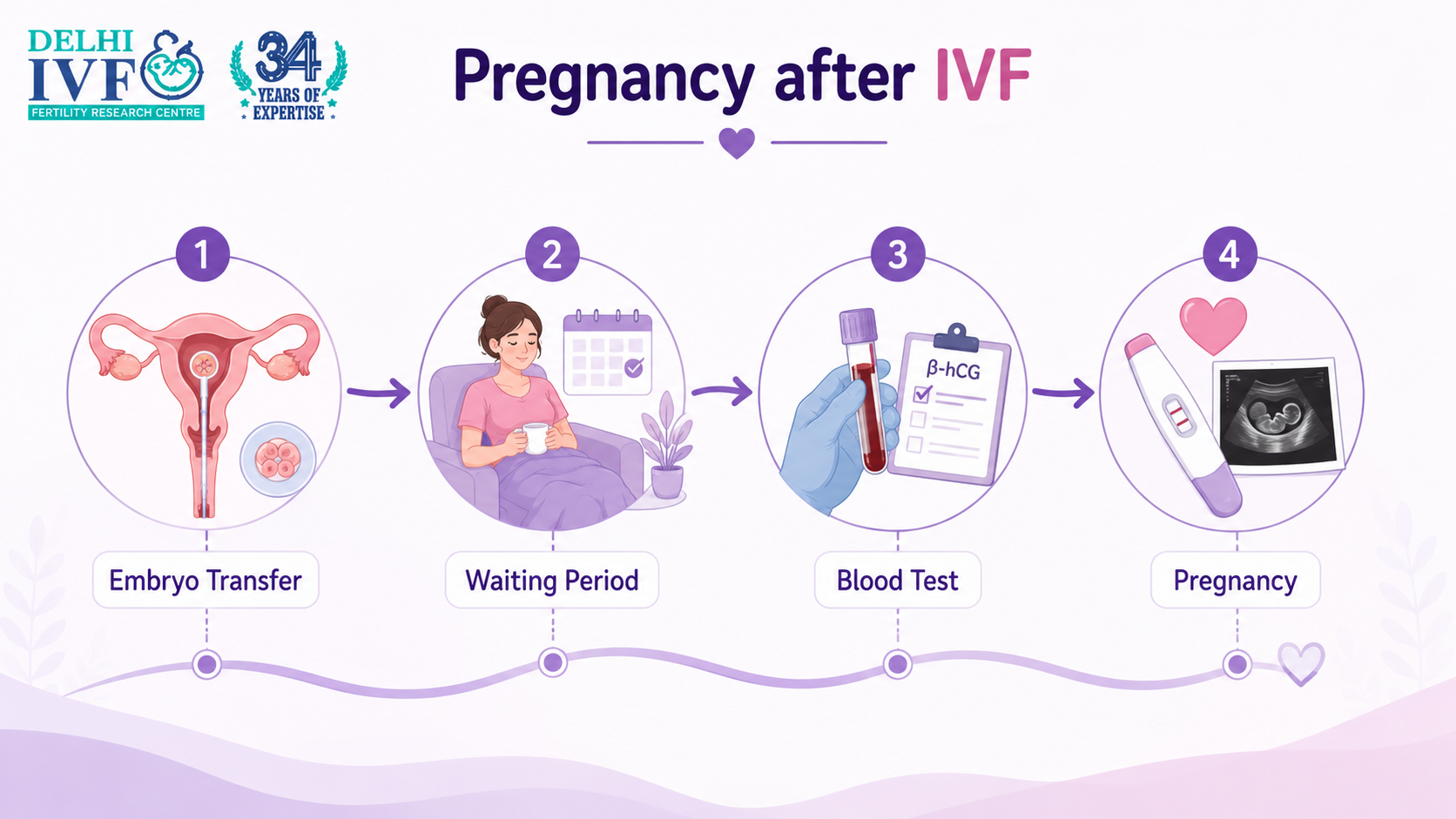
If you have conceived through IVF, your early pregnancy symptoms are broadly the same as in a natural pregnancy, but the experience can feel different. During the two-week wait after an embryo transfer, it is easy to read meaning into every sensation. It helps to know that the progesterone support used after embryo transfer can itself cause symptoms such as breast tenderness, bloating, and fatigue, so these are not always reliable signs of pregnancy.
The clearest confirmation is the beta hCG blood test your fertility specialist schedules, usually around 9 to 14 days after transfer. Early home testing is generally discouraged after IVF, because trigger-shot medication can cause a false positive and low hCG can cause a false negative. If you are unsure about any symptom during this time, your Delhi IVF team is the best source of reassurance.
When to See a Doctor in the First Trimester
Most first-trimester symptoms are a normal part of early pregnancy. However, some signs need prompt medical attention. Contact your doctor or go to the nearest emergency department if you experience:
- Heavy vaginal bleeding, especially bright red blood that soaks a pad within an hour
- Severe or one-sided abdominal or pelvic pain, which can be a sign of an ectopic pregnancy
- Severe, persistent vomiting with an inability to keep fluids down
- High fever, fainting, or severe dizziness
- Painful urination with fever or back pain
It is never wrong to get symptoms checked. If something feels off, trust your instincts and reach out to a professional.
Tips for a Healthy First Trimester
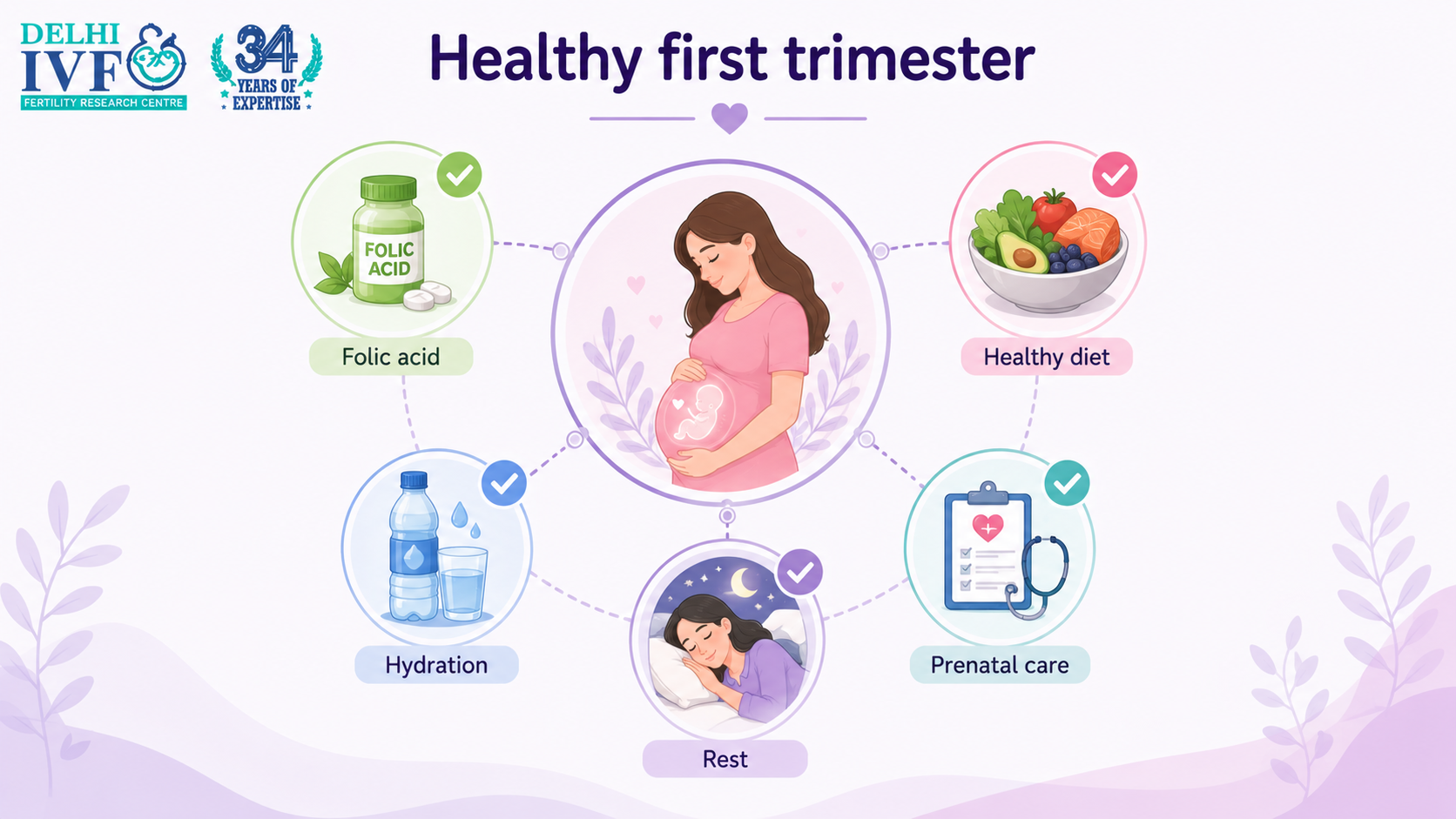
A few simple habits support you and your baby through these early weeks:
- Start or continue a daily folic acid supplement, ideally 400 micrograms, to support your baby's developing nervous system
- Eat a balanced diet with plenty of fruit, vegetables, and iron-rich foods
- Stay hydrated and rest whenever your body asks for it
- Avoid alcohol and smoking, and limit caffeine
- Book your first prenatal appointment as soon as you know you are pregnant
Start Your Pregnancy Care with Delhi IVF
Whether you have just seen a positive test, are navigating early symptoms, or are trying to conceive, the right support makes all the difference. At Delhi IVF & Fertility Research Centre, our team, led by Dr. Anoop Gupta, cares for couples through every stage of the journey, from early pregnancy guidance to advanced fertility treatments such as IVF, ICSI, and IUI. If you have questions about your symptoms or your fertility, our specialists are here to help.

