

For many couples struggling to conceive, the answer eventually comes back to a small piece of anatomy most people have never thought about: the fallopian tubes. When these tubes are blocked, sperm and egg cannot meet, and pregnancy cannot happen naturally. Blocked fallopian tubes account for roughly a quarter of all female infertility cases in India, yet they can go undetected for years because the condition rarely produces obvious symptoms.
If you have been trying to conceive without success, or a doctor has mentioned tubal blockage as a possibility, this guide walks you through everything you need to know. The specialists at Delhi IVF explain what fallopian tube blockage is, why it happens, how it is diagnosed, and, most importantly, the modern treatment options that can help you become a parent.
What are Blocked Fallopian Tubes?
The fallopian tubes are two thin, muscular passages that connect each ovary to the uterus. Every month, an egg released from the ovary travels through the tube, where it meets sperm and, if fertilised, moves into the uterus to implant. When one or both tubes are blocked, this pathway is broken.
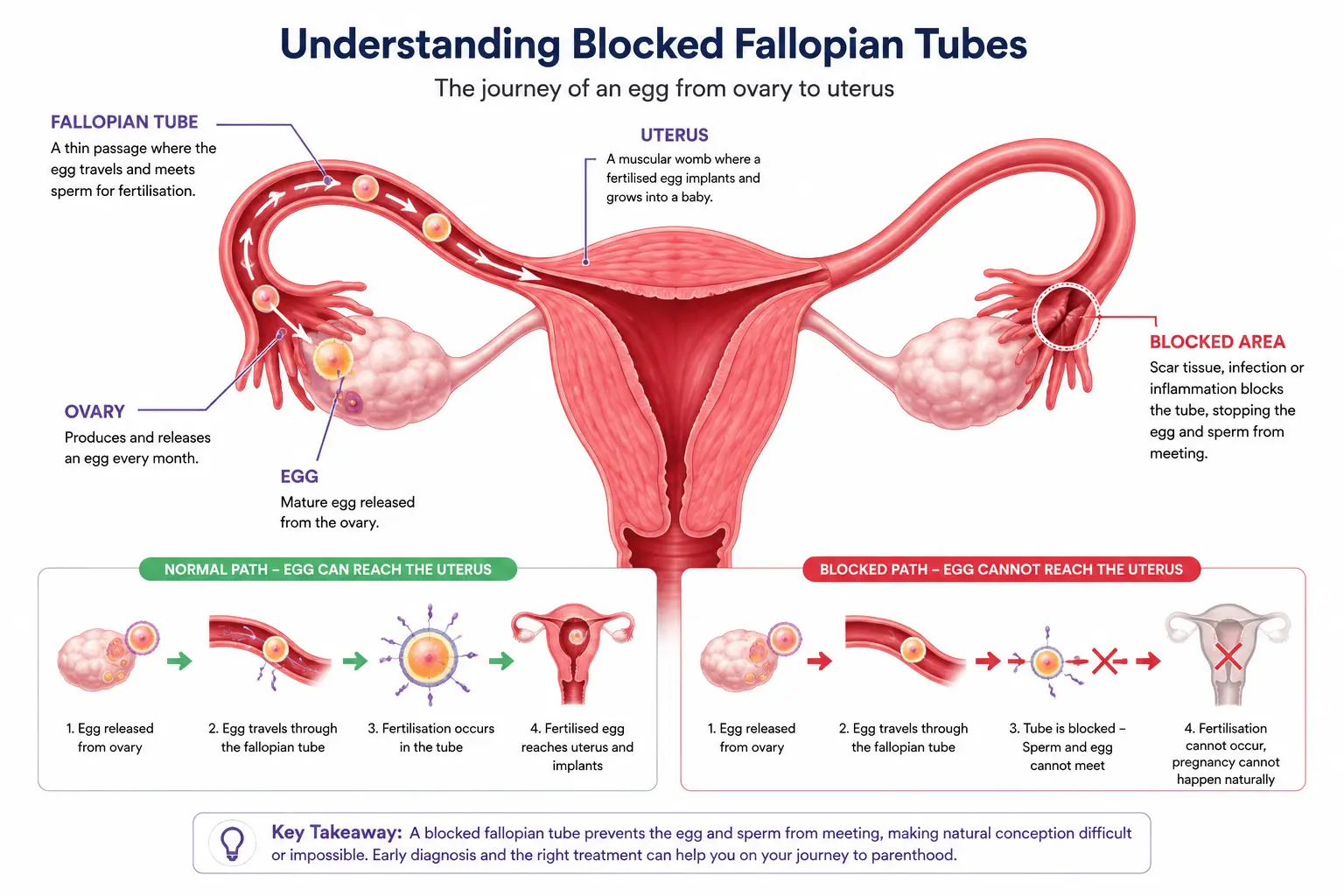
Fallopian tube blockage, medically called tubal occlusion, prevents the egg and sperm from meeting or stops a fertilised embryo from reaching the uterus. Blockage may affect only one tube, in which case natural pregnancy is still possible but often takes longer. When both tubes are blocked, natural conception becomes impossible without medical intervention.
Blockage may also be partial rather than complete. Partial blockage significantly raises the risk of ectopic pregnancy, where a fertilised embryo implants in the tube rather than the uterus, which is a serious medical emergency.
Types of Fallopian Tube Blockage
Not all tubal blockages are the same. The location of the blockage matters because it changes both the likely cause and the best treatment approach.
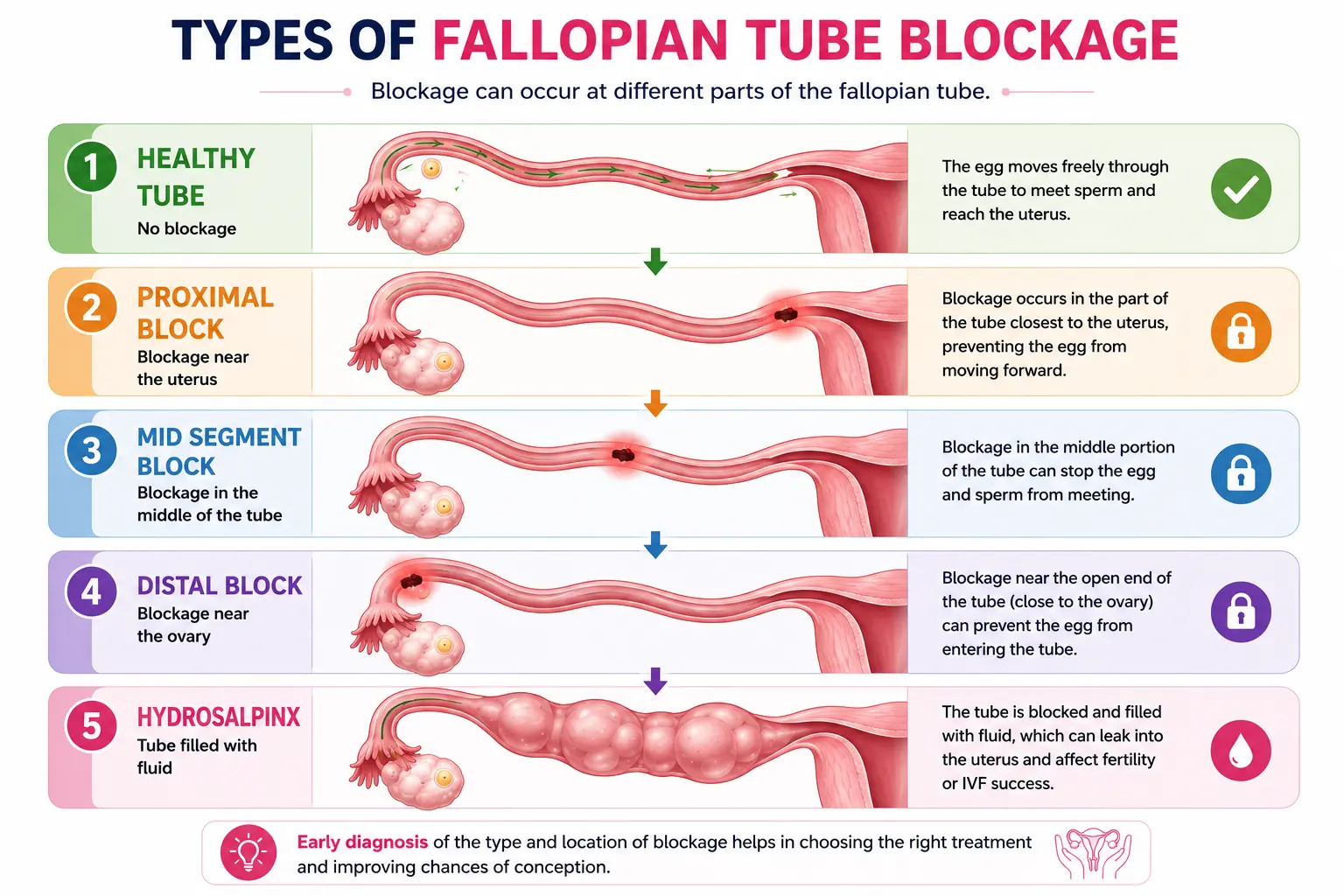
| Type | Where the Blockage Sits | Common Cause |
| Proximal | Where the tube joins the uterus | Infection, mucus plug, scar tissue |
| Mid-segmental | Middle section of the tube | Prior surgery, tubal ligation |
| Distal | End near the ovary | Pelvic infections, endometriosis |
| Hydrosalpinx | Distal blockage with fluid buildup in the tube | Chronic infection or inflammation |
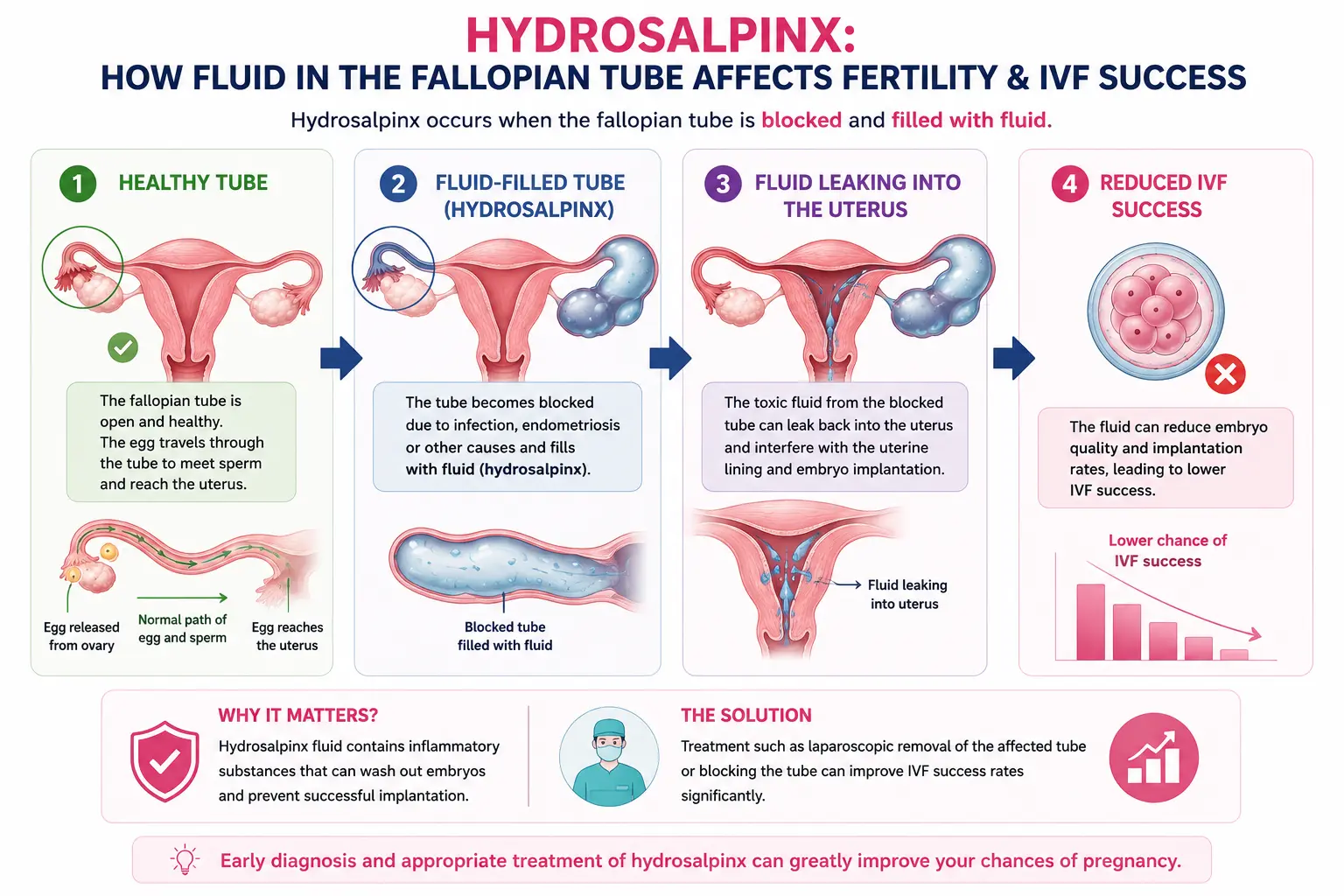
Hydrosalpinx deserves special attention because the trapped fluid can leak back into the uterus and dramatically reduce IVF success rates. In most cases, the affected tube is removed or clipped before starting IVF to protect implantation.
Symptoms of Blocked Fallopian Tubes
One of the most difficult things about tubal blockage is that it usually causes no obvious symptoms. Most women learn about the condition only when they investigate infertility. That said, some women do experience:
- Difficulty getting pregnant after 12 months of trying
- Mild to moderate pelvic pain, often on one side
- Painful periods that seem worse than typical menstrual cramps
- Pain during intercourse
- Unusual vaginal discharge, especially with a history of infection
- Ectopic pregnancy in the past
- Chronic lower abdominal or back discomfort
Hydrosalpinx can sometimes cause a more noticeable dull ache in the lower abdomen. However, the absence of symptoms should not be reassuring. Because tubal blockage is often silent, any woman struggling to conceive should have her tubes evaluated as part of a proper fertility workup.
Common Causes of Fallopian Tube Blockage
Fallopian tubes become blocked for a range of reasons, most linked to inflammation or scarring inside the pelvis:
- Pelvic inflammatory disease (PID): The single most common cause worldwide, often from untreated sexually transmitted infections such as chlamydia or gonorrhoea.
- Endometriosis: Tissue similar to the uterine lining growing in the pelvis, causing scarring and adhesions. For a complete overview, our guide on endometriosis and endometritis explains these often-confused conditions.
- Previous pelvic or abdominal surgery: Caesarean sections, appendectomies, or ovarian cyst removal can leave scar tissue that constricts the tubes.
- Ectopic pregnancy: A prior tubal pregnancy can permanently damage the tube.
- Tubal ligation reversal: Attempts to reverse sterilisation surgery may leave residual blockage.
- Congenital tube abnormalities: Some women are born with irregularly shaped or absent tubes.
- Fibroids: Large uterine fibroids near the tubal opening can press on or block the tube.
- Tuberculosis of the reproductive tract: Still a relevant cause of tubal blockage in parts of India.
Identifying the underlying cause helps shape the treatment approach and predicts the likelihood of successful surgical repair.
How are Blocked Fallopian Tubes Diagnosed?
Because tubal blockage rarely produces symptoms, diagnosis relies on specific fertility investigations rather than general checkups.
- Hysterosalpingogram (HSG): The most common first-line test. A special dye is injected into the uterus and imaged with X-ray to see whether it flows freely through the tubes.
- Hysterosalpingo-contrast sonography (HyCoSy): A similar test using ultrasound instead of X-rays, without radiation exposure.
- Saline infusion sonography (SIS): Provides detailed uterine imaging, sometimes used alongside tubal testing.
- Laparoscopy: The gold standard for confirming and treating tubal blockage in the same procedure. A tiny camera is inserted through a small incision, allowing direct visualisation and treatment.
- Blood tests for infections: Sometimes used to check for chlamydia antibodies, an indirect sign of past pelvic infection.
The right choice of test depends on your clinical history, age, and other findings. Your fertility specialist will guide the sequence.
How Blocked Tubes Affect Fertility
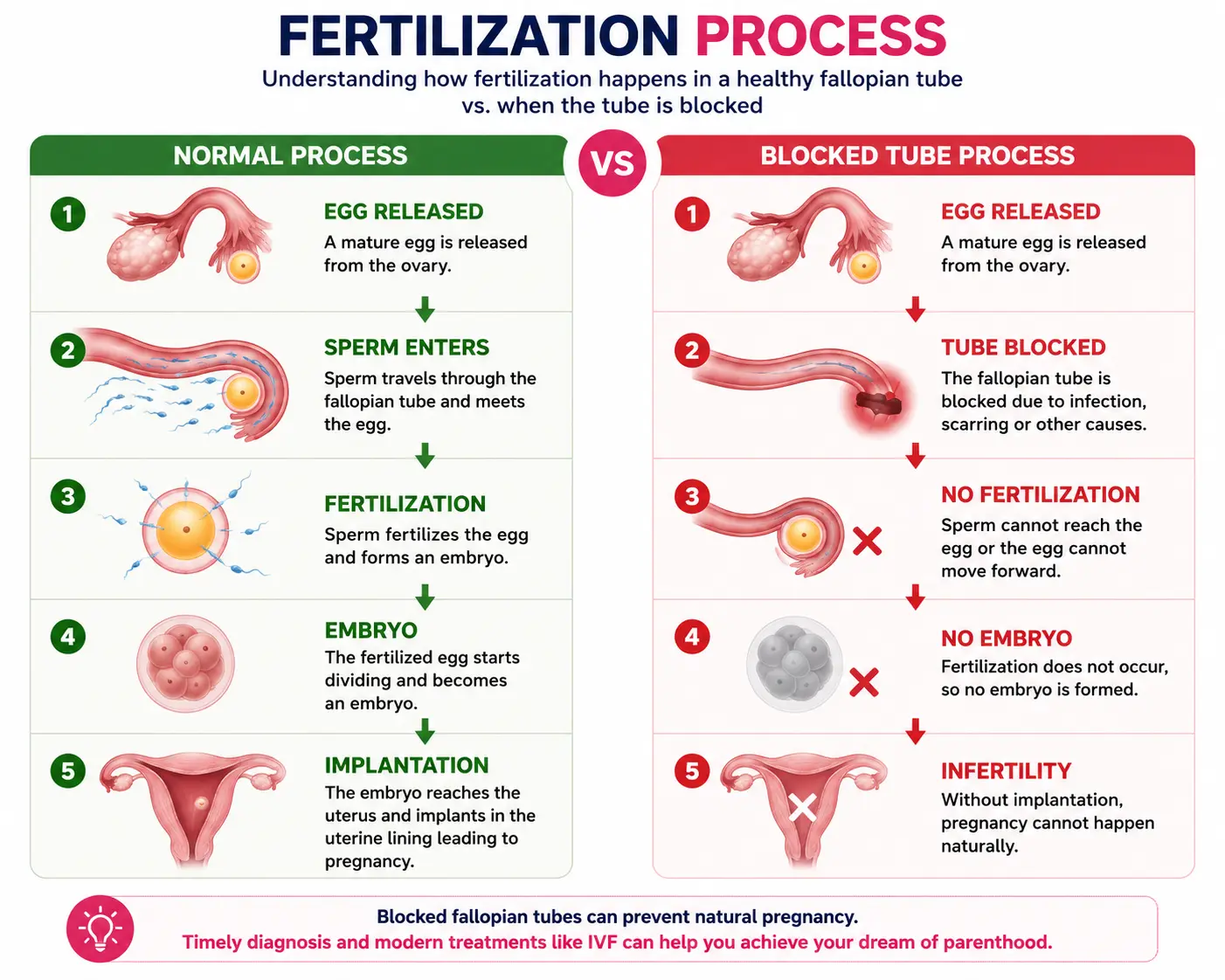
Blocked fallopian tubes are one of the top three causes of female infertility. Their impact depends on which tubes are affected, the type of blockage, and the underlying cause.
- One tube blocked: Natural pregnancy is still possible, but may take longer. Conception depends on ovulation from the ovary on the side with the healthy tube.
- Both tubes are blocked: Natural conception is not possible. IVF becomes the standard-of-care pathway because it bypasses the tubes entirely.
- Partial blockage: Raises the risk of ectopic pregnancy substantially, making early diagnosis essential.
- Hydrosalpinx: Reduces IVF success by up to 50 per cent if the fluid is not addressed before treatment.
For women over 35, the impact of tubal blockage is compounded by declining fertility. Understanding the best age to conceive alongside a tubal ligation diagnosis helps shape the right timeline for treatment.
Treatment Options for Blocked Fallopian Tubes
Modern fertility care offers two broad approaches: surgical repair to unblock the tubes, or IVF to bypass them entirely. The right choice depends on the location and severity of the blockage, your age, and how much time you have to conceive.
Surgical Options
- Laparoscopic tubal surgery: Minimally invasive surgery can remove adhesions, open blocked ends, or repair damaged sections. Success depends heavily on the location and cause of the blockage.
- Tubal cannulation: A thin catheter is passed through the uterus to clear proximal (near-uterus) blockages. Suitable only for specific types of blockage.
- Salpingostomy: An opening is created in a blocked distal tube to restore function. Best for younger women with mild damage.
- Salpingectomy: Complete removal of a badly damaged tube, particularly for hydrosalpinx, before IVF.
Surgical repair works best when the blockage is limited, the tube walls are healthy, and the woman is under 35. Even then, success is not guaranteed, and the risk of ectopic pregnancy afterwards is higher.
IVF: The Modern Standard-of-Care Pathway
For most women with bilateral tubal blockage, IVF treatment is the clearest route to pregnancy. IVF works by retrieving eggs directly from the ovary, fertilising them in the lab, and transferring the resulting embryo straight into the uterus, bypassing the fallopian tubes entirely.
Because IVF does not depend on the tubes at all, it is the recommended first-line treatment for:
- Both tubes are blocked or severely damaged
- Hydrosalpinx (after clipping or removing the affected tube)
- Older women with tubal blockage where time matters
- Combined tubal and other fertility issues (male factor, ovulation disorders, endometriosis)
- Failed tubal ligation surgery in the past
IVF offers higher success rates than tubal ligation in most cases, particularly when advanced techniques like blastocyst culture and embryo genetic screening are used.
When Should You See a Fertility Specialist?
Book a consultation with a fertility specialist if:
- You have been trying to conceive for 12 months, or 6 months if you are over 35
- You have a history of pelvic inflammatory disease, chlamydia, or gonorrhoea
- You have had an ectopic pregnancy
- You have had abdominal or pelvic surgery in the past
- You have endometriosis or unexplained chronic pelvic pain
Early evaluation matters. Tubal blockage rarely improves on its own, and the sooner it is identified, the more treatment options you have.
Blocked Tubes Care at Delhi IVF
At Delhi IVF & Fertility Research Centre, we have supported over 25,000 successful pregnancies since 1993 for couples from India and 66 countries worldwide. Under the leadership of Dr. Anoop Gupta, our fertility team combines precise diagnostic imaging, minimally invasive tubal surgery where suitable, and advanced IVF and ICSI to give every couple the strongest possible chance of conception.
If a diagnosis of blocked fallopian tubes has left you uncertain about the next step, we are here to help you understand your options with clarity.

