
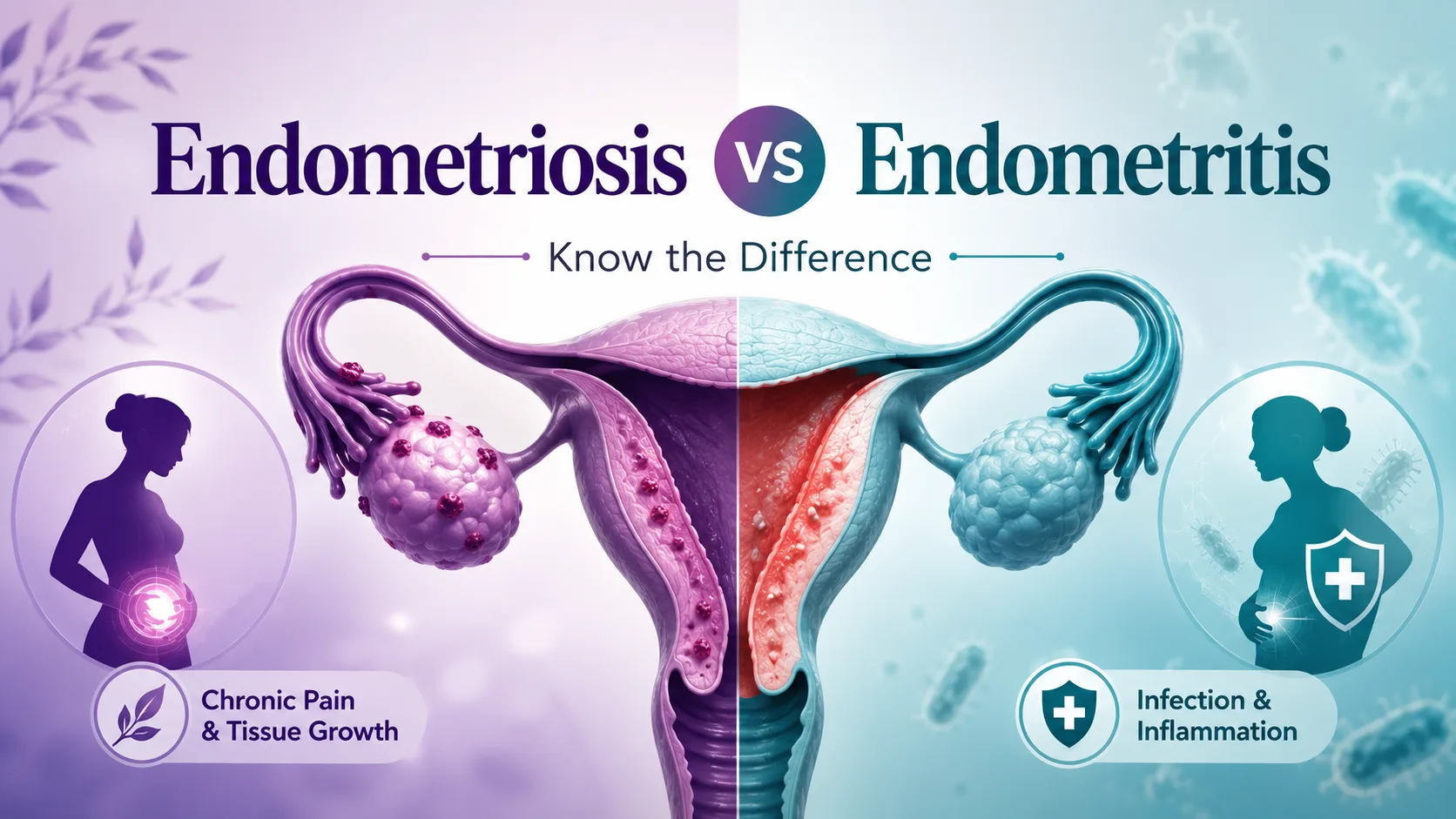
Two words. One letter apart. Two completely different medical conditions. And yet endometriosis and endometritis are so consistently confused, even in mainstream health articles and online glossaries, that thousands of women receive incorrect information about their own bodies.
If you have recently been given one of these diagnoses, or you are researching symptoms and keep seeing both terms treated as synonyms, this guide will settle it. In the next few minutes, the specialists at Delhi IVF explain exactly what each condition is, how they differ, why the confusion is so common, and what each means for your fertility and long-term health.
Endometriosis vs Endometritis - The Difference in One Line
Endometriosis is a chronic condition where tissue similar to the uterine lining grows outside the uterus, causing pain and fertility problems.
Endometritis is an inflammation or infection of the uterine lining itself, usually short-term and treatable with antibiotics.
They sound alike because they are named after the same tissue, the endometrium, but they behave differently and require completely different treatments.

Understanding Endometriosis
Endometriosis is a chronic gynaecological condition affecting an estimated 10 per cent of women of reproductive age worldwide. In this condition, tissue that resembles the endometrium (the inner lining of the uterus) grows in places it should not, such as the ovaries, fallopian tubes, and the outer surface of the uterus. In rare cases, it can also spread to the bladder, bowel, or other pelvic organs.
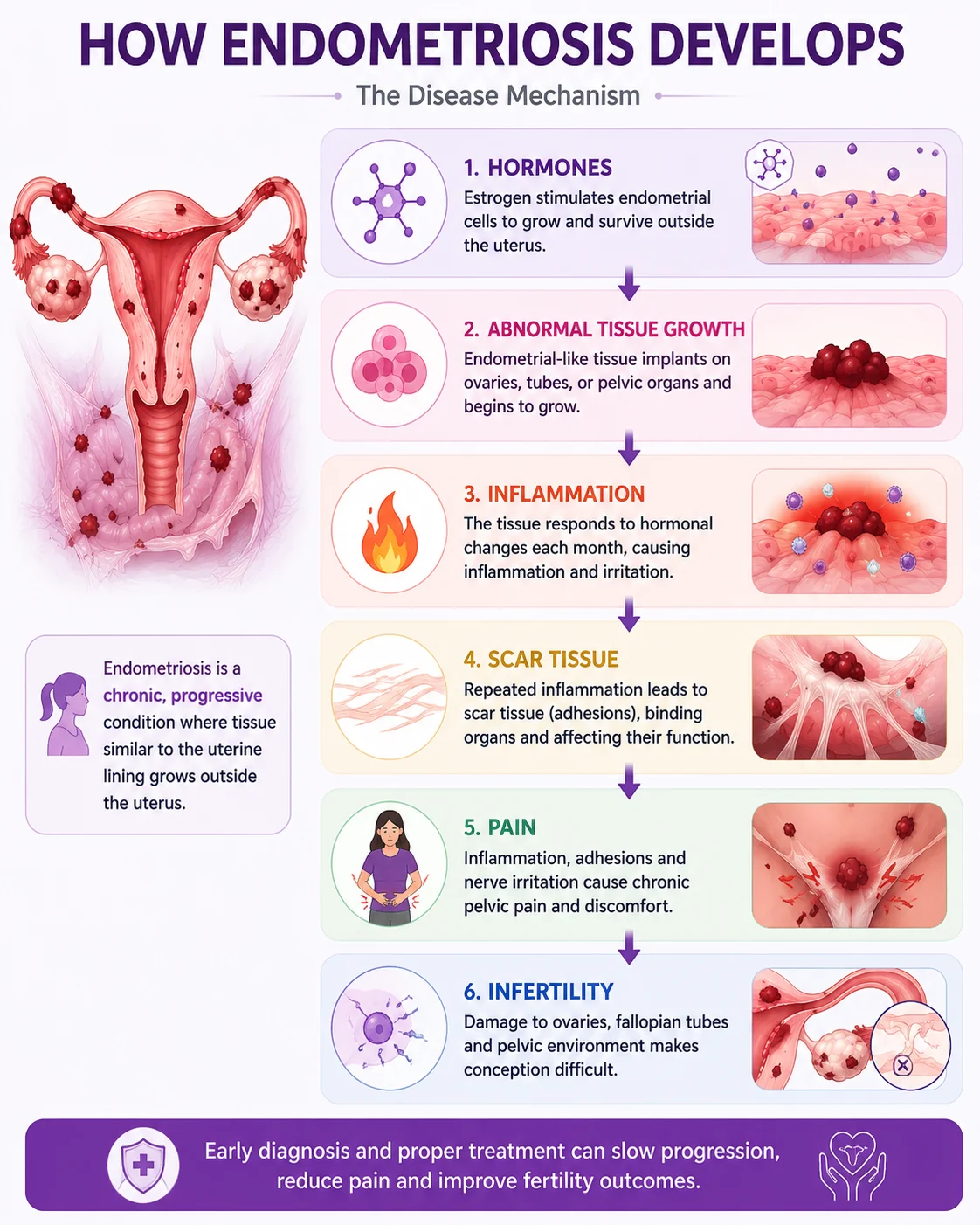
Each menstrual cycle, this misplaced tissue responds to hormonal signals just like the uterine lining does. It thickens, breaks down, and bleeds. But because the tissue has no way to leave the body, it becomes trapped, causing inflammation, scar tissue, cysts (called endometriomas), and adhesions.
The condition is progressive in many women and can worsen over time if left untreated. It is one of the leading causes of chronic pelvic pain and infertility in Indian women.
Understanding Endometritis
Endometritis is inflammation or infection of the endometrium, the actual inner lining of the uterus. Unlike endometriosis, it usually develops over days or weeks rather than years.
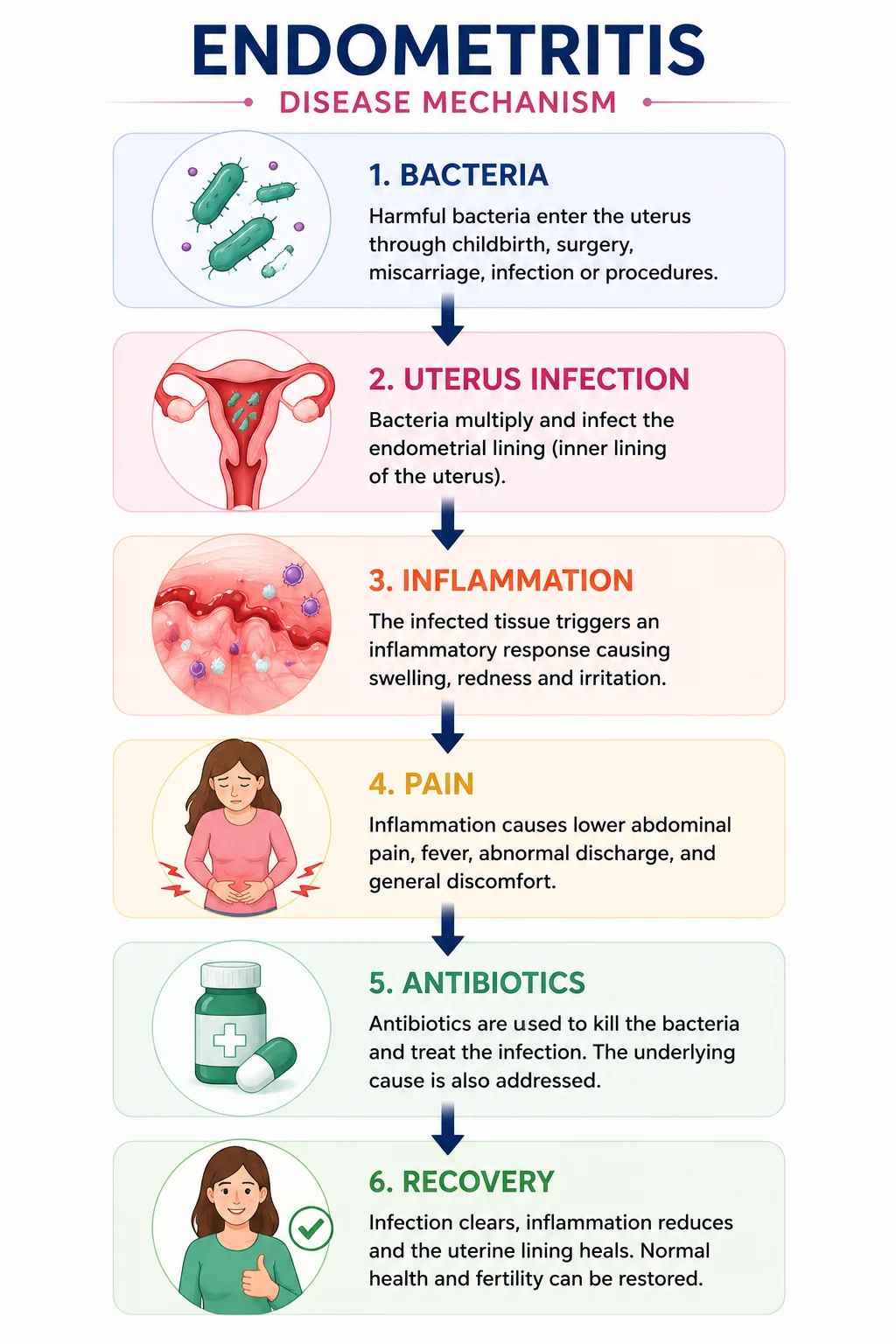
The most common causes are bacterial infections, often following childbirth, miscarriage, caesarean section, an intrauterine procedure, or a sexually transmitted infection such as chlamydia or gonorrhoea. The inflammation can be acute (sudden and severe) or chronic (lower-grade and persistent).
Endometritis is far less well-known than endometriosis, yet chronic endometritis in particular is increasingly recognised as a hidden cause of implantation failure and recurrent miscarriage. Unlike endometriosis, it usually clears completely with a course of antibiotics, especially when caught early.
Side-by-Side Comparison - Endometriosis vs Endometritis
| Feature | Endometriosis | Endometritis |
| What it is | Growth of endometrial-like tissue outside the uterus | Inflammation or infection of the uterine lining |
| Cause | Not fully known, involves hormones and immune factors | Bacterial infection or inflammation |
| Duration | Chronic and often lifelong | Usually short-term, can be chronic |
| Main symptom | Painful periods, chronic pelvic pain | Pelvic pain, fever, abnormal discharge |
| Location | Ovaries, tubes, pelvis, sometimes bowel or bladder | Inside the uterus |
| Diagnosis | Ultrasound, laparoscopy, MRI | Ultrasound, endometrial biopsy, hysteroscopy |
| Treatment | Hormonal therapy, laparoscopic surgery, IVF | Antibiotics, treating the underlying cause |
| Fertility impact | Common cause of infertility | Contributes to implantation failure |
Symptoms: How They Look Different
Because both conditions cause pelvic pain, they are easy to mistake for one another. Looking at the full symptom pattern is the best way to tell them apart.
Common symptoms of endometriosis:
- Severely painful periods, worse than typical menstrual cramps
- Chronic pelvic pain outside menstruation
- Pain during or after sexual intercourse
- Pain during bowel movements or urination, especially during periods
- Heavy or irregular periods
- Difficulty getting pregnant
- Fatigue, bloating, and nausea
Common symptoms of endometritis:
- Fever, especially after childbirth or a uterine procedure
- Lower abdominal pain
- Abnormal vaginal bleeding or spotting
- Foul-smelling vaginal discharge
- Pain during intercourse
- General feeling of illness, chills, or malaise
- Difficulty conceiving or repeated early miscarriage in chronic cases
A pattern of pain that is strictly cyclical, worse around periods, points more toward endometriosis. Pain accompanied by fever or foul discharge, especially after a recent childbirth or uterine procedure, points toward endometritis.
Causes and Risk Factors

Endometriosis risk factors:
- Family history of endometriosis
- Early onset of menstruation
- Short menstrual cycles of less than 27 days
- Heavy or prolonged periods
- Never having given birth
- Certain immune system disorders
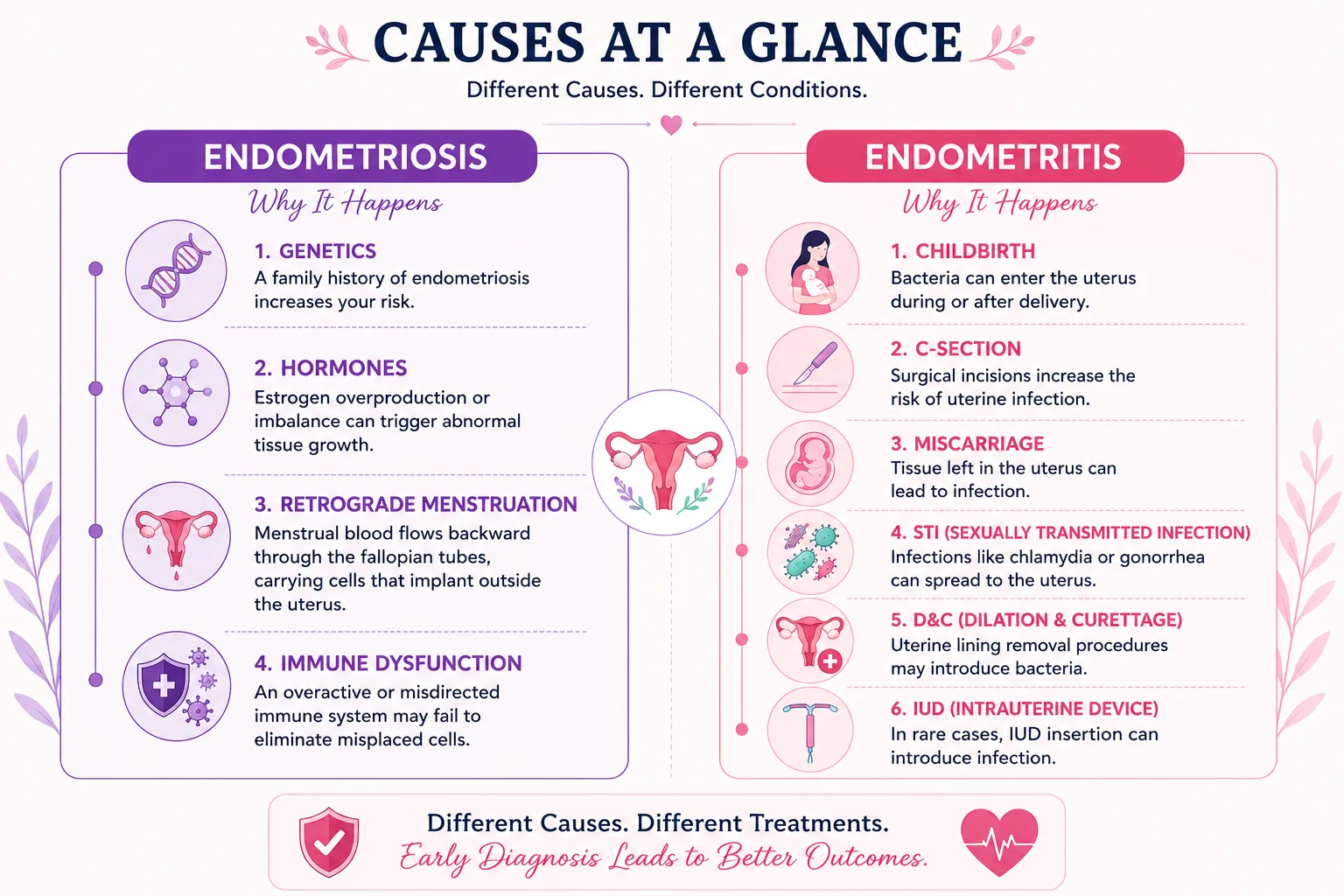
The exact cause of endometriosis remains debated. Theories include retrograde menstruation (menstrual blood flowing backwards through the fallopian tubes), immune dysfunction, hormonal influences, and genetic factors.
Endometritis risk factors:
- Recent childbirth, especially caesarean section
- Recent miscarriage or abortion
- Intrauterine procedures such as D&C or IUD insertion
- Pelvic inflammatory disease
- Sexually transmitted infections
- Multiple sexual partners without protection
- Retained products of conception after delivery or miscarriage
Endometritis almost always has an identifiable trigger, most often an infection introduced into the uterus.
Diagnosis: How Each is Confirmed
Endometriosis diagnosis typically involves:
- Detailed clinical history and pelvic examination
- Transvaginal ultrasound to check for ovarian cysts or endometriomas
- MRI when deeper endometriosis is suspected
- Laparoscopy, which remains the gold standard for confirming and staging endometriosis
Endometritis diagnosis typically involves:
- Pelvic examination and swab tests
- Blood tests to check for infection markers
- Transvaginal ultrasound
- Endometrial biopsy to look for specific plasma cells that indicate chronic endometritis
- Hysteroscopy to inspect the uterine cavity directly
For women with unexplained infertility or repeated IVF implantation failure, testing for chronic endometritis is increasingly part of a thorough fertility workup.
Treatment Approaches
Because these are fundamentally different conditions, they call for fundamentally different treatments.
Endometriosis treatment options:
- Pain-relief medications for symptom management
- Hormonal therapies to slow tissue growth (birth control pills, GnRH analogues, progestins)
- Laparoscopic surgery to remove endometrial deposits and adhesions
- IVF treatment when endometriosis affects fertility
- Lifestyle changes, including an anti-inflammatory diet and regular exercise
Endometritis treatment options:
- A course of antibiotics targeting the responsible bacteria
- Treatment of any underlying cause, such as removing retained tissue or treating an STI
- Follow-up biopsy to confirm resolution in chronic cases
- Careful monitoring during future pregnancies
Chronic endometritis often responds well to antibiotics, and women with previously failed IVF cycles frequently see improved outcomes once the infection is cleared.
Impact on Fertility
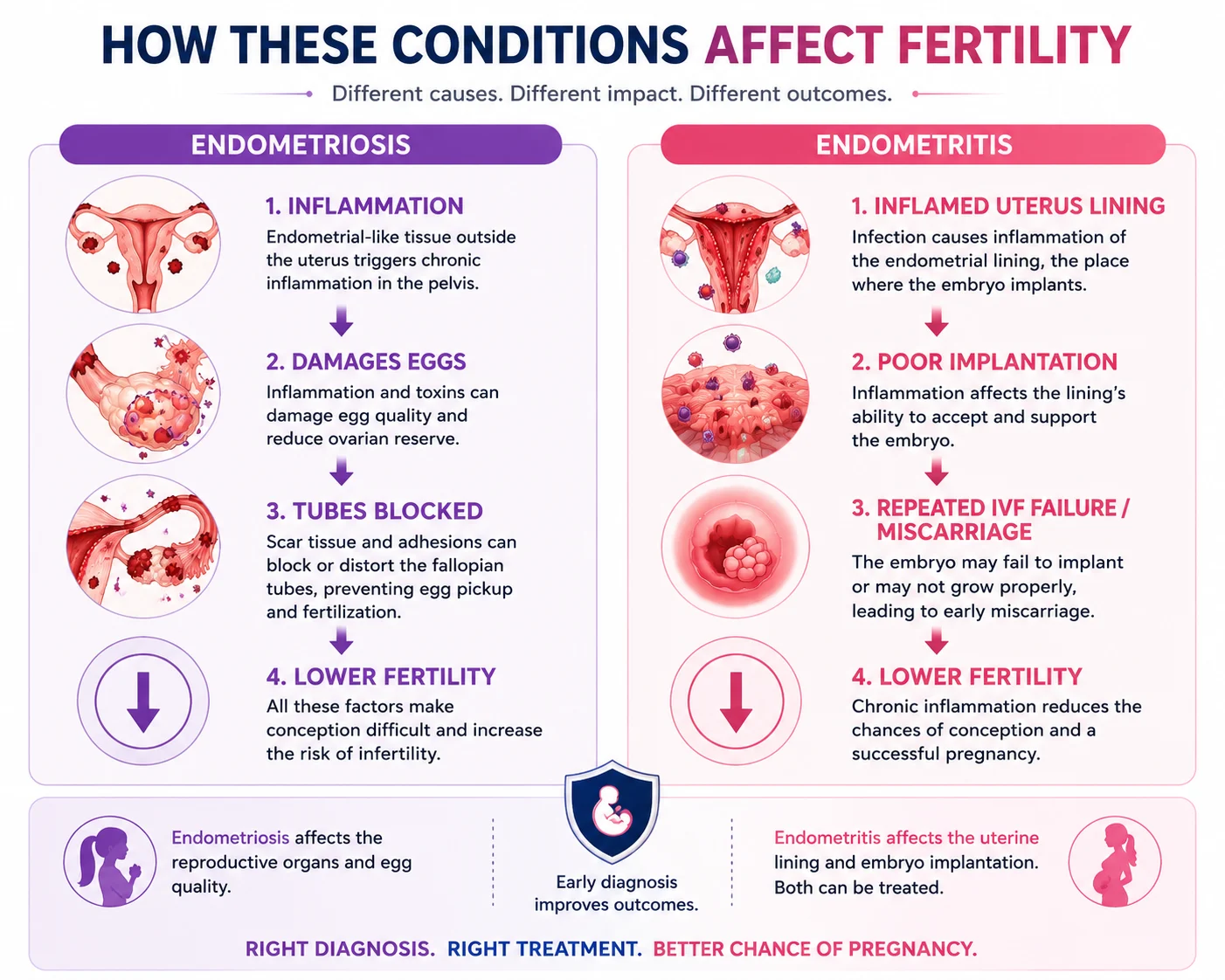
Both conditions can affect fertility, but through very different mechanisms.
Endometriosis and fertility: Endometriosis can distort pelvic anatomy, damage or block fallopian tubes, disrupt egg quality, and change the environment in which an embryo tries to implant. It is present in up to 30 per cent of women with infertility.
Endometritis and fertility: Chronic endometritis creates an inflammatory environment inside the uterus that interferes with embryo implantation. It is now recognised as a significant contributor to unexplained infertility and repeated IVF failure. Treating the underlying infection often restores fertility potential.
For couples struggling to conceive, ruling out both conditions is a crucial step in a complete fertility assessment. If time is a factor, especially given the best age to conceive, acting on these diagnoses sooner rather than later matters.
When Should You See a Doctor?
Book a consultation if you experience any of the following:
- Severely painful periods that interfere with daily life
- Chronic pelvic pain lasting more than three months
- Difficulty conceiving after 12 months of trying (or 6 months if you are over 35)
- Fever with pelvic pain after childbirth, miscarriage, or a uterine procedure
- Abnormal or foul-smelling vaginal discharge
- Repeated pregnancy loss without a clear cause
- Failed IVF cycles without an identified reason
Accurate diagnosis is the difference between the right treatment and years of unnecessary discomfort. Both endometriosis and endometritis are highly treatable when identified correctly.
Expert Care at Delhi IVF
At Delhi IVF & Fertility Research Centre, we have supported over 25,000 successful pregnancies since 1993 for couples from India and 66 countries worldwide. Under the leadership of Dr. Anoop Gupta, our team offers thorough evaluation for both endometriosis and endometritis, along with tailored treatment plans that combine advanced diagnostics with the full range of fertility care under one roof.
Whether you need laparoscopic surgery, antibiotic management, or advanced IVF with ICSI, our specialists guide you through each option with clarity and warmth.

