
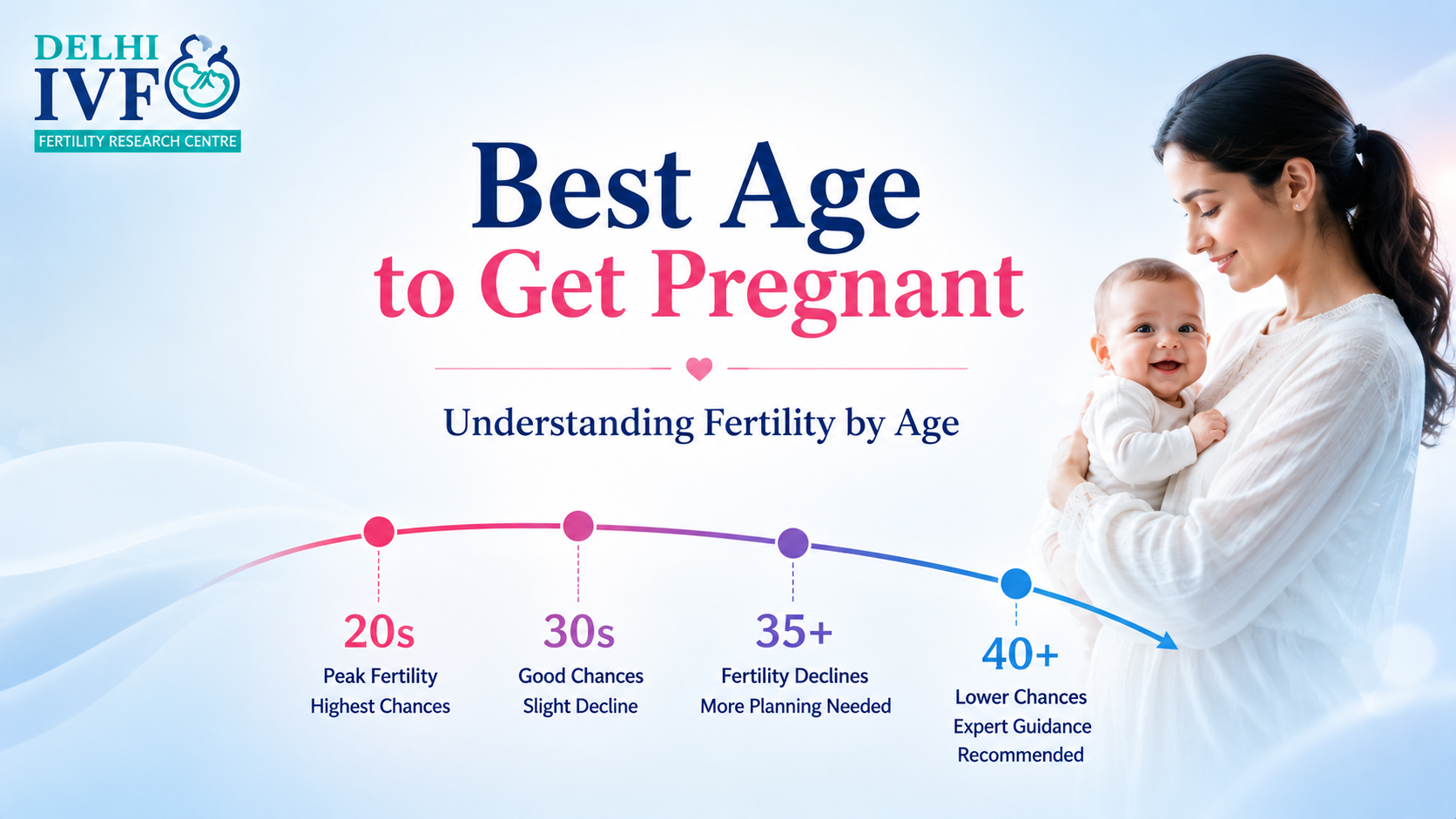
The best age to get pregnant is generally considered to be your 20s to early 30s. This is when egg quality and quantity are at their highest, the monthly chance of conceiving is greatest, and the risk of pregnancy complications is lowest. Female fertility begins to decline gradually from around age 30 and more noticeably after 35, though many women go on to have healthy pregnancies later in life.
Age is one of the most important fertility factors, but it is not the only one. Your health, your partner's age, your finances, your relationship, and your personal readiness all matter too. In this guide, the specialists at Delhi IVF & Fertility Research Centre explain how fertility changes with age, your chances of conceiving at different stages, the risks to be aware of, and how to plan with confidence.
What is the Best Age to Get Pregnant for a Woman?
From a purely biological point of view, the ideal age to get pregnant is the early to mid-20s, when fertility peaks. However, most experts agree that the late 20s to early 30s is the best practical window for a first baby. At this stage, you still have a high chance of conceiving and a low risk of complications, while often having more emotional and financial stability than in your early 20s.
There is no single perfect age that fits everyone. The right age to get pregnant is a balance between your biology and your life, and that balance looks different for every person.
Why Age Affects Fertility
To understand the best age to conceive, it helps to know what happens to fertility over time. A woman is born with all the eggs she will ever have, around one to two million at birth. This number falls steadily throughout life. By the late 30s, only a small fraction remains, and by the early 50s, very few eggs are left.
Two things decline with age: the quantity of eggs (your ovarian reserve) and the quality of those eggs. As eggs age, they are more likely to carry chromosomal abnormalities, which makes conception harder and raises the risk of miscarriage. This combination of falling quantity and quality is why age is the single biggest factor in a woman's fertility, and why good health alone cannot fully override it.
Fertility tests such as AMH (anti-Mullerian hormone) and an antral follicle count can give a snapshot of your ovarian reserve, though they measure egg quantity rather than quality.
Fertility by Age: Your Chances of Conceiving
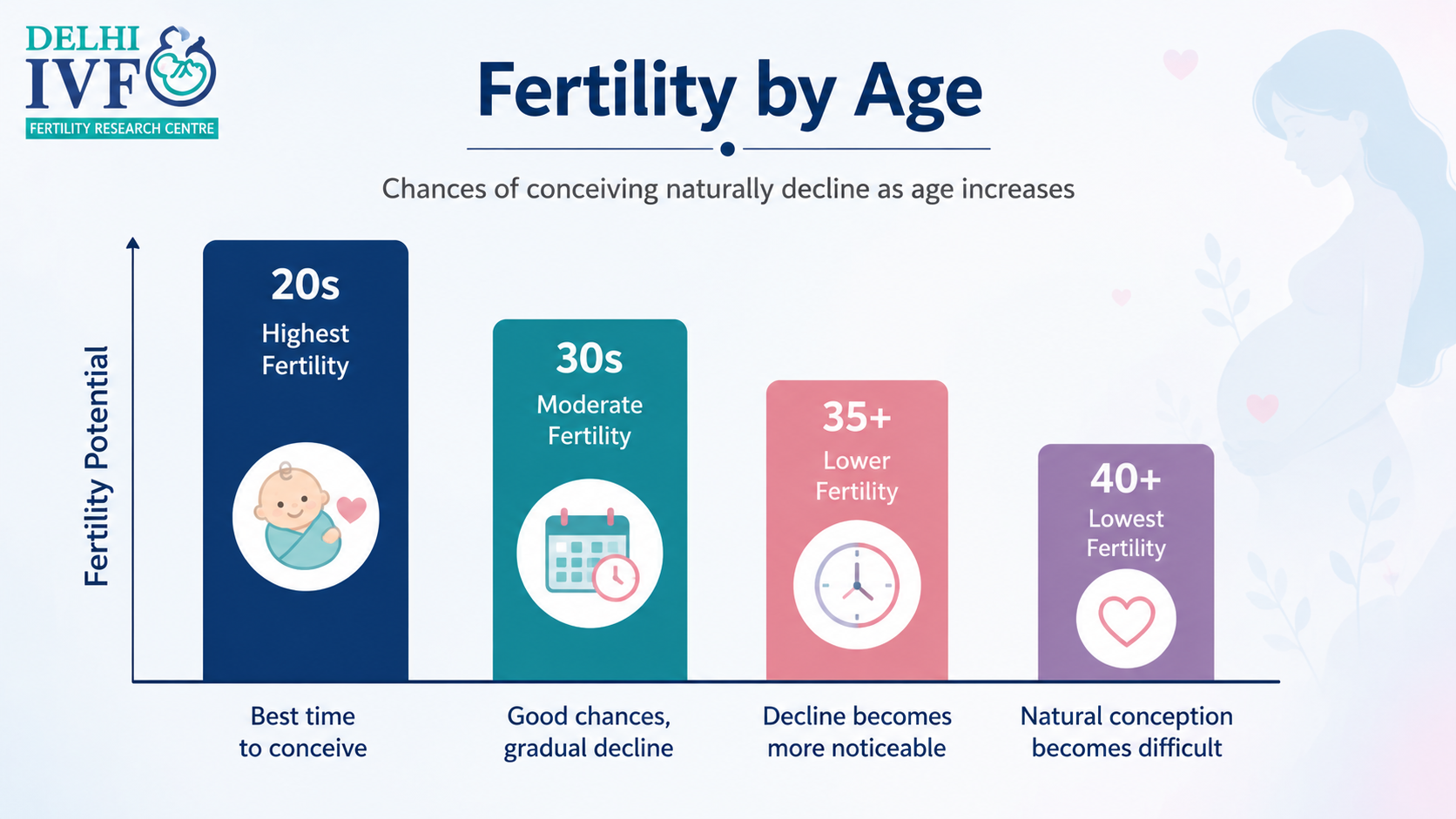
The table below gives a general picture of how the monthly chance of conceiving changes with age. These are averages, and individual results vary.
| Early to mid-20s | Around 25 to 30% | Peak fertility, highest egg quality, lowest risk |
| Late 20s | Around 20 to 25% | Excellent fertility with more life stability |
| Early 30s | Around 15 to 20% | Still good, slow decline begins |
| 35 to 37 | Around 10 to 15% | Decline speeds up, more testing advised |
| Age 40 | Around 5% | Lower odds per cycle, higher complication risk |
| Age 45 and above | Very low naturally | Natural conception is unlikely; donor eggs are often considered |
Use this as a guide rather than a guarantee. Conditions such as PCOS or endometriosis, as well as lifestyle and your partner's fertility, all influence your real chances.
Getting Pregnant in Your 20s
Your 20s are your most fertile years. Egg quality and quantity are at their best, the monthly chance of conceiving is high, and the risks of miscarriage and chromosomal conditions are at their lowest. For many women, though, the early 20s bring practical challenges around career, finances, and relationships, which is why some choose to wait until their late 20s. Conception rates in the late 20s remain very strong, making this a popular and biologically sound time to start a family.
Getting Pregnant in Your 30s
The early 30s are still a good time to conceive, with only a gradual decline in fertility. Many career-focused women in stable relationships start their families during this decade. From around the mid-30s, fertility begins to fall more quickly, and the chances of miscarriage and the need for a caesarean section increase compared with the 20s. If you are in your early 30s, there is usually no need to worry, but it is wise to be aware that time becomes more of a factor as the decade progresses.
Getting Pregnant After 35
Once you reach your mid-to-late 30s, the decline in fertility accelerates, and egg quality drops more sharply. Pregnancy is still very achievable, and most women over 35 have healthy babies, but a few things change:
- It may take longer to conceive
- The risk of miscarriage and chromosomal abnormalities rises
- Pregnancy complications such as gestational diabetes and high blood pressure become more common
- Earlier fertility testing and closer monitoring are often recommended
If you are over 35 and have been trying for six months without success, it is sensible to speak with a fertility specialist rather than waiting a full year.
Getting Pregnant in Your 40s
Many women do conceive and deliver healthy babies in their 40s, but natural fertility is significantly reduced by this stage. By age 40, the chance of conceiving in any single cycle is around 5%, and it falls further each year. The risks of miscarriage, chromosomal conditions, and pregnancy complications are also higher. For women in their 40s who wish to conceive, a fertility evaluation before trying is recommended, and treatments such as IVF or the use of donor eggs are often part of the conversation.
Does Male Age Affect Fertility?
Yes. While men do not have a sharp biological clock in the way women do, male fertility also declines with age. From around 40 to 45, sperm quality and DNA integrity begin to reduce. Older paternal age can increase the time it takes a couple to conceive, raise the risk of miscarriage, and is linked to a small increase in certain health conditions in children. So when thinking about the best age to have a baby, both partners' ages are worth considering. From a biological standpoint, the late 20s to early 30s is also an ideal window for men.
Pregnancy Risks by Age
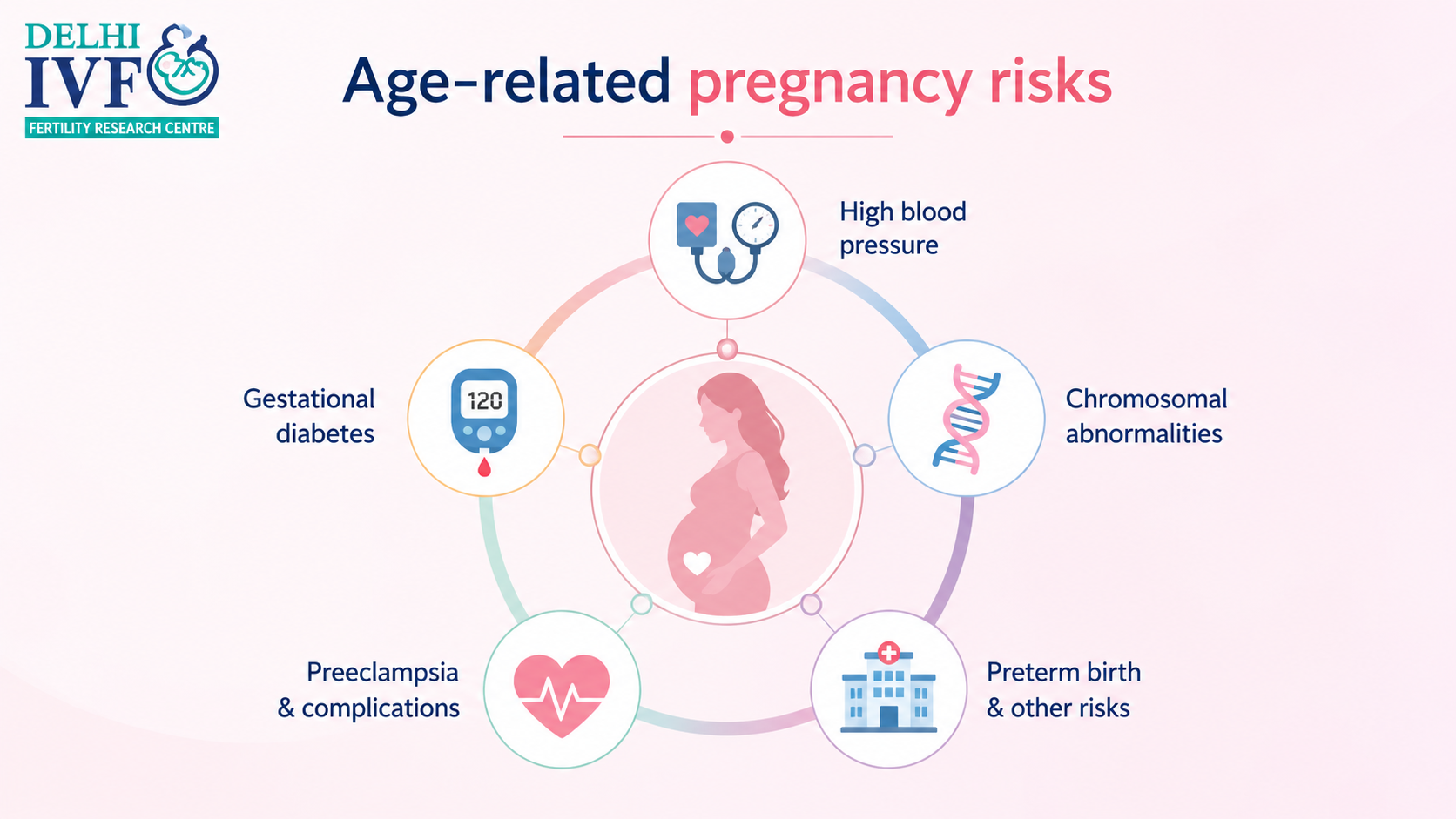
It is important to understand age-related risks without becoming alarmed by them. The risks rise gradually rather than all at once, and most pregnancies at any age are healthy. With advancing maternal age, the chances increase for:
- Miscarriage
- Chromosomal abnormalities such as Down syndrome
- Gestational diabetes
- Preeclampsia and high blood pressure
- Caesarean delivery
- Stillbirth, though this remains uncommon
Good prenatal care, a healthy lifestyle, and early conversations with your doctor all help to manage these risks effectively.
The Best Age to Get Pregnant Is Also a Personal Decision
While the biology is clear, the best age to have a baby is not only a medical question. Emotional readiness, financial stability, a supportive relationship, and your career all play a part, and there is no wrong choice in weighing these up. Many people have happy, healthy families later in life. The goal of understanding fertility and age is not to create pressure, but to help you make an informed decision that is right for you.
Planning: Egg Freezing and Fertility Testing
If you know you want children but are not ready yet, there are ways to protect your future fertility. Egg freezing (oocyte cryopreservation) allows you to store eggs while they are younger and of higher quality, ideally in your 20s or early 30s, for use later. A fertility assessment, including ovarian reserve testing, can also give you a clearer picture of where you stand. You can explore egg and sperm freezing options with a specialist if you are considering planning.
Does IVF Reverse the Effects of Age?
This is one of the most important things to understand. It is a common misconception that IVF can fully overcome age-related fertility decline. In reality, IVF success rates also fall with age, because the treatment still relies on the quality of your eggs. IVF is a powerful tool that helps many couples conceive, and treatments such as IVF and ICSI can address many causes of infertility, but they do not stop the biological clock. For older women, using donor eggs from a younger woman can significantly improve the chances of success. Knowing this early helps you plan realistically rather than relying on treatment to undo the effect of time.
When to See a Fertility Specialist
A simple guide based on age can help you decide when to seek advice:
- Under 35: See a fertility specialist if you have been trying to conceive for 12 months without success
- 35 to 39: Seek advice after 6 months of trying
- 40 and over: Have a fertility evaluation before you start trying
You should also speak to a specialist sooner, at any age, if you have irregular periods, a known condition such as PCOS or endometriosis, or any concern about your fertility.
At Delhi IVF & Fertility Research Centre, our team, led by Dr. Anoop Gupta, helps individuals and couples understand their fertility and plan their families with clear, honest guidance. Whether you want a fertility assessment, are exploring your options, or are ready to begin treatment, our specialists are here to help.

