

The days between embryo transfer and your pregnancy test are, for most couples, the most anxious of the entire IVF journey. Every symptom feels loaded with meaning. Every hour crawls. You want to do everything right, and the fear of making a mistake can feel overwhelming.
The good news is that once your embryo is transferred, it is already in the safest place it can be, your uterus. Your job now is not to make the embryo implant. Your job is to give your body every reasonable chance to support it while looking after your own physical and emotional well-being. In this guide, the specialists at Delhi IVF walk you through exactly what to do and what to avoid in the 14 days after embryo transfer, along with what is actually happening inside your body during this time.
What Happens During the 2-Week Wait?
The two-week wait, often shortened to 2WW, is the period between embryo transfer and your beta hCG blood test. It is the time when the embryo attaches to the uterine lining, begins to grow, and starts producing the hormone that a pregnancy test can detect.
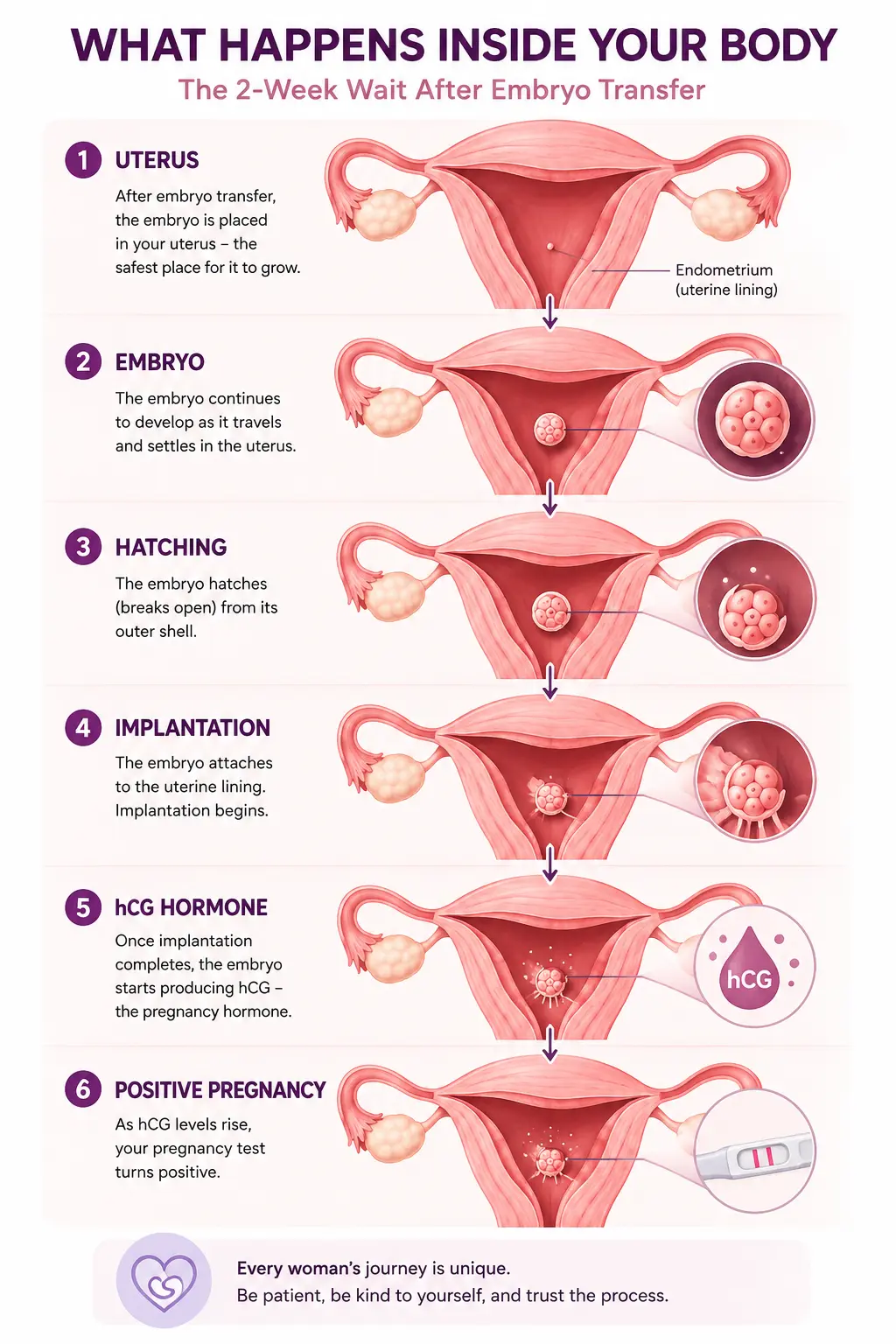
Here is a rough outline of what happens inside your body during these 14 days.
| Day | What Is Happening |
| Day 1 | The embryo continues to develop in the uterus |
| Day 2 to 3 | The embryo hatches from its outer shell |
| Day 3 to 4 | The embryo attaches to the uterine lining |
| Day 5 to 6 | Implantation begins |
| Day 7 to 10 | Implantation completes, and hCG production starts |
| Day 11 to 14 | hCG levels rise enough to be detected on a blood test |
Every woman's timeline varies slightly, and the type of transfer, whether Day 3 or Day 5 blastocyst, shifts the schedule by a couple of days. What matters is that the process is quiet, internal, and largely automatic. There is nothing you need to actively do to make implantation happen.
What to Eat After Embryo Transfer
There is no magic food that makes an embryo implant, but eating a balanced, nutrient-rich diet supports overall reproductive health and gives you steady energy through the 2WW. Focus on:
- Protein-rich foods: Eggs, paneer, lentils, chicken, fish, tofu
- Complex carbohydrates: Whole grains, brown rice, roti, oats
- Healthy fats: Avocados, nuts, seeds, ghee in moderation
- Iron-rich foods: Spinach, beetroot, dates, pomegranate
- Folate sources: Leafy greens, citrus fruits, beans
- Hydrating fluids: Warm water, coconut water, herbal teas
Include plenty of colourful vegetables and fruits, and aim for warm, freshly cooked meals wherever possible. Small, frequent meals are easier on your system than three large ones, especially if progesterone medication is making you feel bloated or nauseated.
What to Avoid After Embryo Transfer
Certain foods and habits are worth avoiding during the 2-week wait, both for safety and for comfort:
- Raw or undercooked meat, seafood, and eggs
- Unpasteurised dairy products and soft cheeses
- Papaya and pineapple in large quantities, as they may cause uterine contractions
- Excess caffeine (limit to one cup of tea or coffee a day)
- Alcohol entirely
- Smoking and passive smoke exposure
- Highly processed foods and excess sugar
- Very hot foods and drinks in large quantities
- Herbal supplements without a doctor's approval
If you have specific dietary preferences or medical conditions, talk to your fertility team about a personalised meal plan.
Physical Activity Guidelines
You do not need to lie in bed for two weeks. In fact, complete bed rest is not recommended and may not improve implantation.
What to do:
- Rest gently for the first 24 to 48 hours after transfer
- Gentle walking is encouraged from day 3 onwards
- Light household activities are fine after the first two days
- Continue to work if your job is not physically demanding, subject to your doctor's advice
What to avoid:
- Heavy lifting above 5 kg
- High-impact exercise, running, jumping, or intense yoga
- Hot baths, saunas, and steam rooms
- Long-distance travel or air travel without medical clearance
- Sexual intercourse until your doctor confirms it is safe
- Straining during bowel movements (increase fibre and fluids to prevent constipation)
Moving gently and staying active in a low-impact way keeps circulation healthy and supports your mental state.
Sleep, Rest, and Body Positioning
Rest is important, but you do not need to sleep in any specific position. No evidence lying flat or elevating your hips changes implantation. Sleep in whatever position is comfortable, whether on your side, back, or however you naturally rest.
Aim for 7 to 9 hours of good-quality sleep each night. Poor sleep raises stress hormones, which is worth avoiding during this window. If progesterone medication is making you drowsy during the day, short naps are perfectly fine.
Managing Common 2WW Symptoms
Many of the physical sensations you feel during the two-week wait come from progesterone medication rather than pregnancy itself. This can make symptom-watching confusing and stressful. Common sensations include:
- Mild cramping or pulling in the lower abdomen
- Breast tenderness or swelling
- Bloating
- Fatigue and drowsiness
- Mood swings
- Light spotting around day 6 to 10, possibly implantation bleeding
- Increased vaginal discharge
None of these symptoms confirms or rules out pregnancy. Some women feel every symptom and are not pregnant. Others feel almost nothing and are. This is why waiting for the beta hCG blood test is more reliable than early home testing.
Contact your fertility team immediately if you experience heavy bleeding, severe abdominal pain, fever above 38 degrees Celsius, persistent vomiting, or fainting.
Looking After Your Mental Health
The emotional side of the 2WW is often harder than the physical side. Anxiety, hope, fear, and second-guessing are all common. It helps to acknowledge this rather than fight it.
Practical ways to protect your mental health:
- Limit online forum reading, especially symptom-comparison threads
- Talk to your partner or a trusted person about how you are feeling
- Distract with activities you enjoy, such as reading, films, or gentle hobbies
- Practise gentle breathing or meditation if it feels natural
- Continue your normal routines where possible
- Permit yourself to feel whatever you feel
If anxiety becomes overwhelming, ask your fertility clinic about counselling support. Delhi IVF patients have access to mental health support as part of their care.
Signs of Implantation
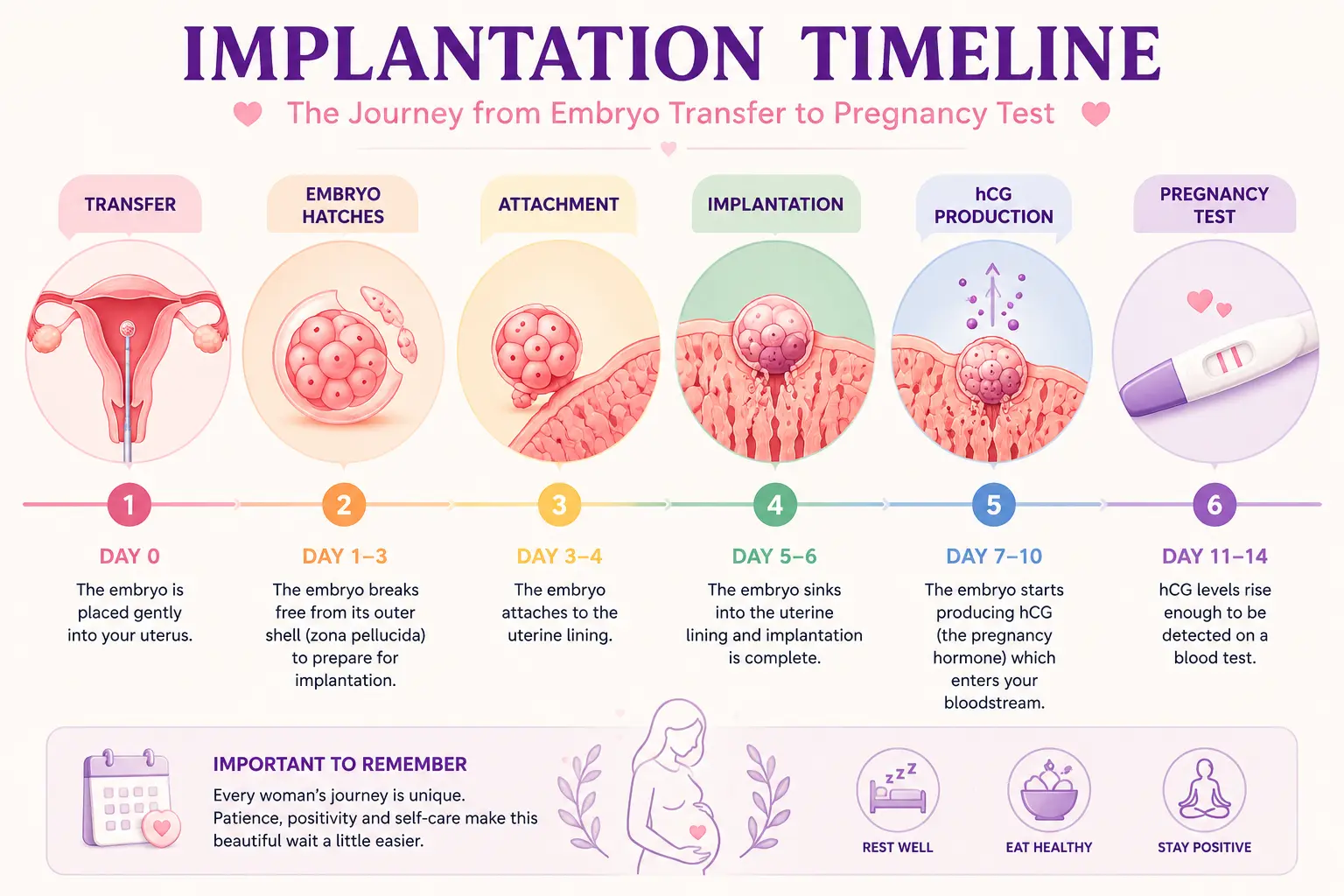
Some women notice subtle signs of implantation between day 6 and day 10 after transfer, though many notice nothing at all. Possible signs include:
- Very light pink or brown spotting for 1 to 2 days
- Mild cramping, different from period cramps
- Fatigue
- Breast tenderness
None of these is definitive. Absence of symptoms is not a bad sign, and presence of symptoms is not a guarantee. The only reliable confirmation is your beta hCG blood test.
When Should You Take a Pregnancy Test?
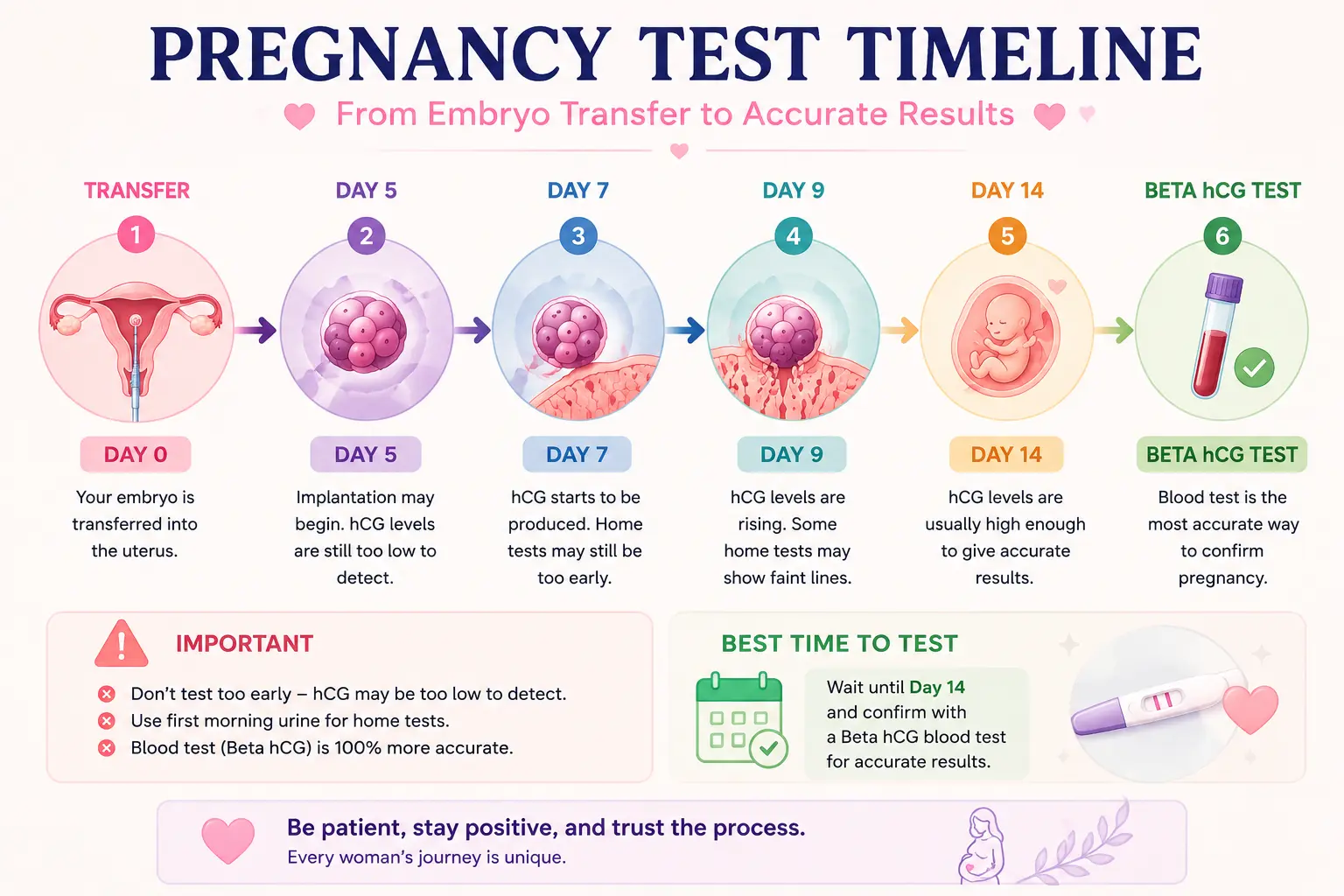
The single hardest rule to follow during the 2WW is this: do not test early. Home pregnancy tests taken before day 10 often show false negatives, because hCG has not yet reached detectable levels in urine. Testing too early can cause unnecessary heartbreak.
Wait for the blood test your fertility clinic has scheduled, usually 9 to 14 days after transfer, depending on the transfer type. The blood test measures hCG far more sensitively than a home test. For a deeper look at the timing, our detailed guide onwhen to take a pregnancy test after implantation walks through the science.
If your beta hCG comes back positive, welcome to the next chapter. Our guide onfirst-trimester pregnancy symptoms will help you understand what comes next.
Care After Embryo Transfer at Delhi IVF
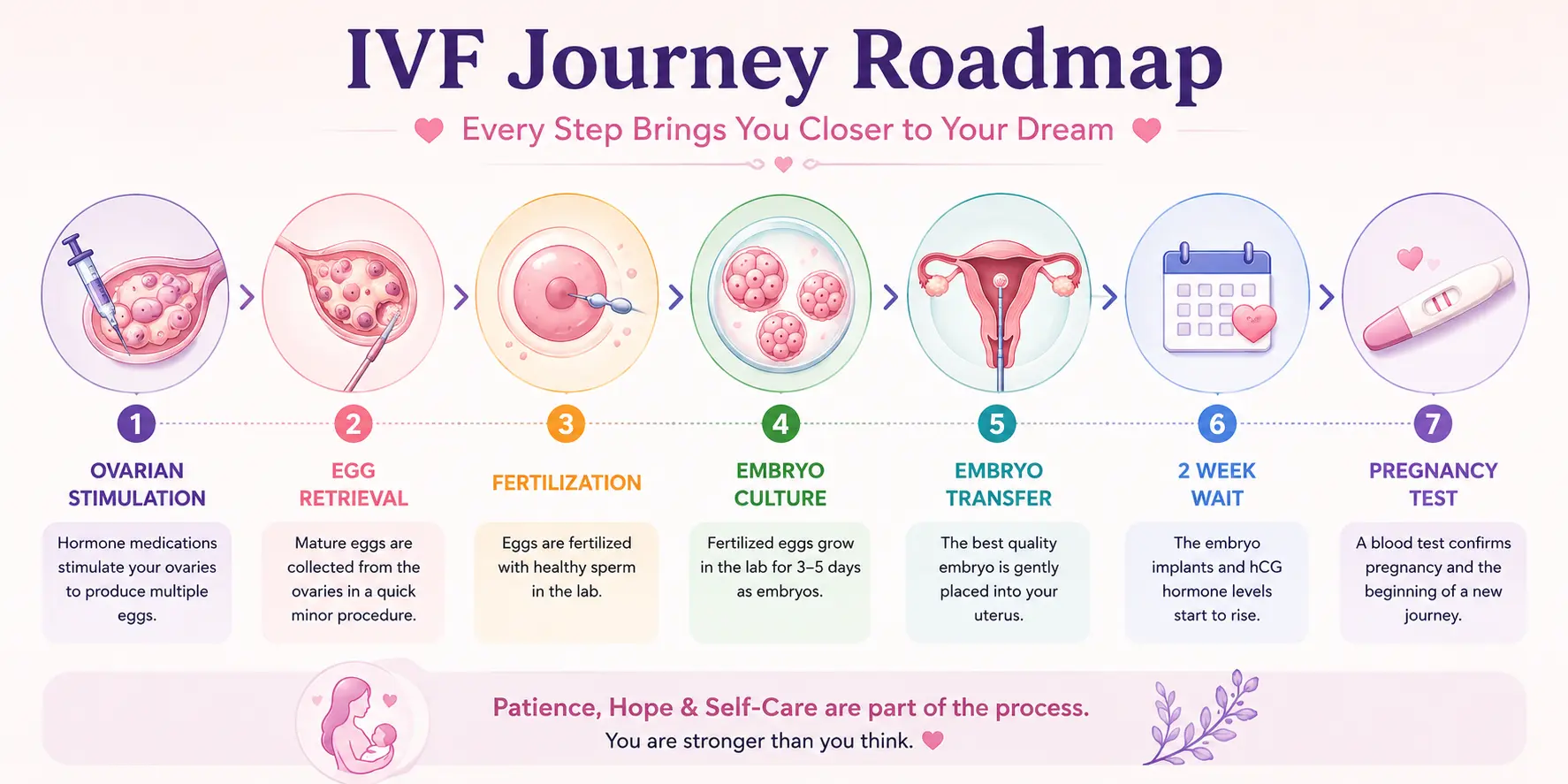
At Delhi IVF & Fertility Research Centre, our care does not end at embryo transfer. We stay with you through every day of the 2-week wait, with post-transfer instructions, symptom guidance, and dedicated phone support whenever anxiety strikes.
Since 1993, Delhi IVF has supported over 25,000 successful pregnancies for couples from India and 66 countries worldwide. OurIVF treatment protocols andICSI care are matched with warm, calm patient support led byDr. Anoop Gupta and his team.
If you are in your 2-week wait and have questions, do not hesitate to call. That is exactly what we are here for. Contact Delhi IVF for post-transfer support

