
For decades, men living with HIV, Hepatitis B or Hepatitis C were told biological fatherhood was too risky. Modern fertility medicine has quietly turned that story around. The single most important reason is a laboratory procedure called sperm washing.
Sperm washing separates healthy motile sperm from the surrounding seminal fluid, which is where these viruses live. The processed sperm is then used with ICSI to fertilise the egg, and the couple can go on to have a healthy, virus-free baby. Global cohort data covering thousands of cycles has documented near-zero transmission to female partners and babies when the protocol is followed correctly.
At Delhi IVF and Fertility Research Centre, under the direction of Dr. Anoop Gupta, sperm washing is offered as part of a fully integrated fertility programme for positive fathers. This blog explains exactly how the procedure works, how it differs for HIV, Hepatitis B and Hepatitis C, what it costs and how safe it really is.
What is Sperm Washing and Why is it Used for Positive Fathers?
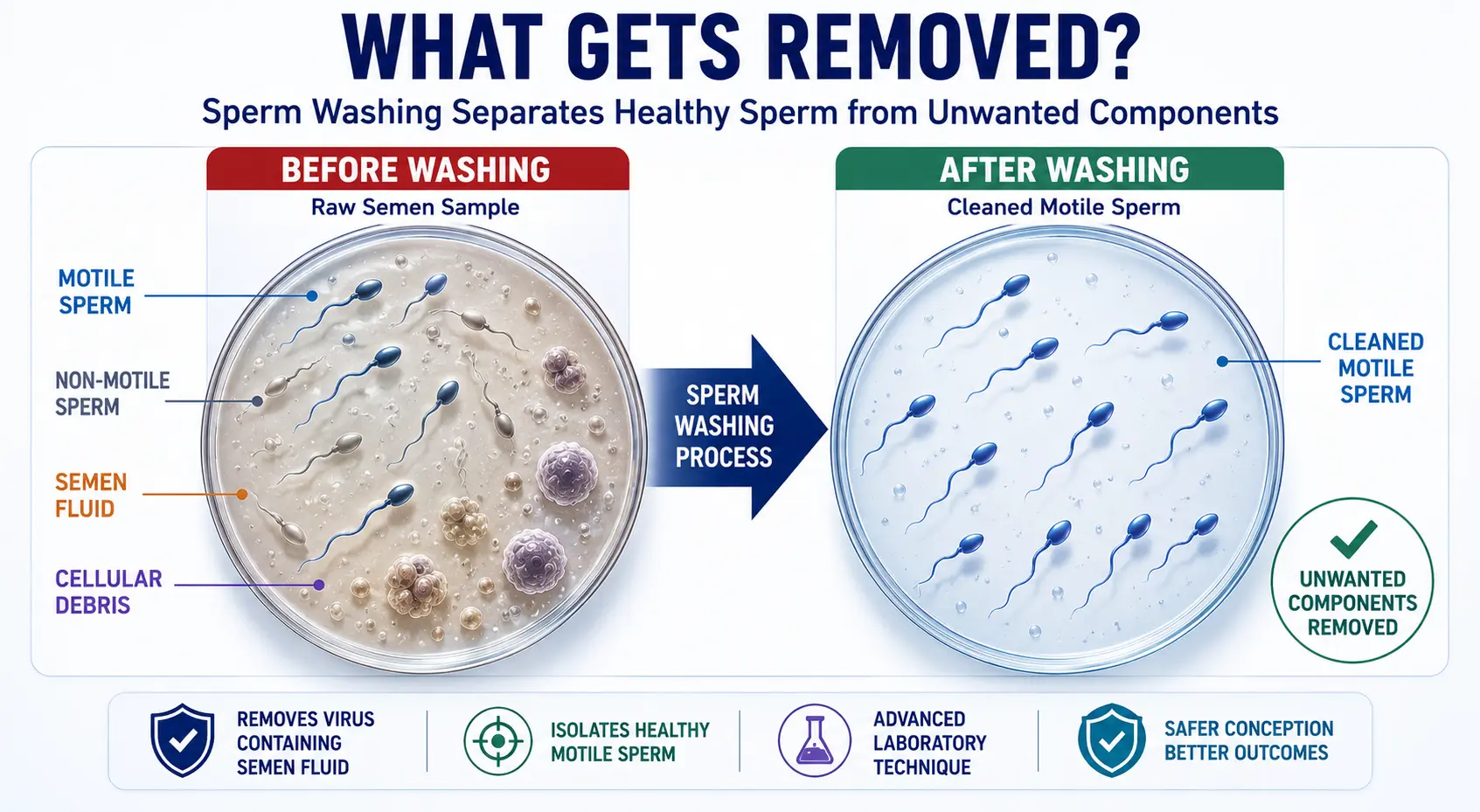
Sperm washing is a laboratory technique that separates individual sperm cells from the semen fluid, cellular debris, and non-motile sperm around them. In IVF and IUI, it is a routine preparation step for every patient. For fathers living with HIV, Hepatitis B, or Hepatitis C, it takes on an additional and much more important role.
HIV and Hepatitis C do not live inside sperm cells. They live in the seminal plasma, the fluid that carries the sperm. By separating the sperm from this fluid, sperm washing physically removes the vast majority of viral particles before the sample is ever used to fertilise an egg. This turns what was once considered a high-risk conception into a controlled, medically supervised process.
For Hepatitis B, the picture is slightly different (explained further below), but sperm washing is still performed as a standard part of preparing the sample for ICSI.
How Does Sperm Washing Actually Work? The Step-by-Step Procedure
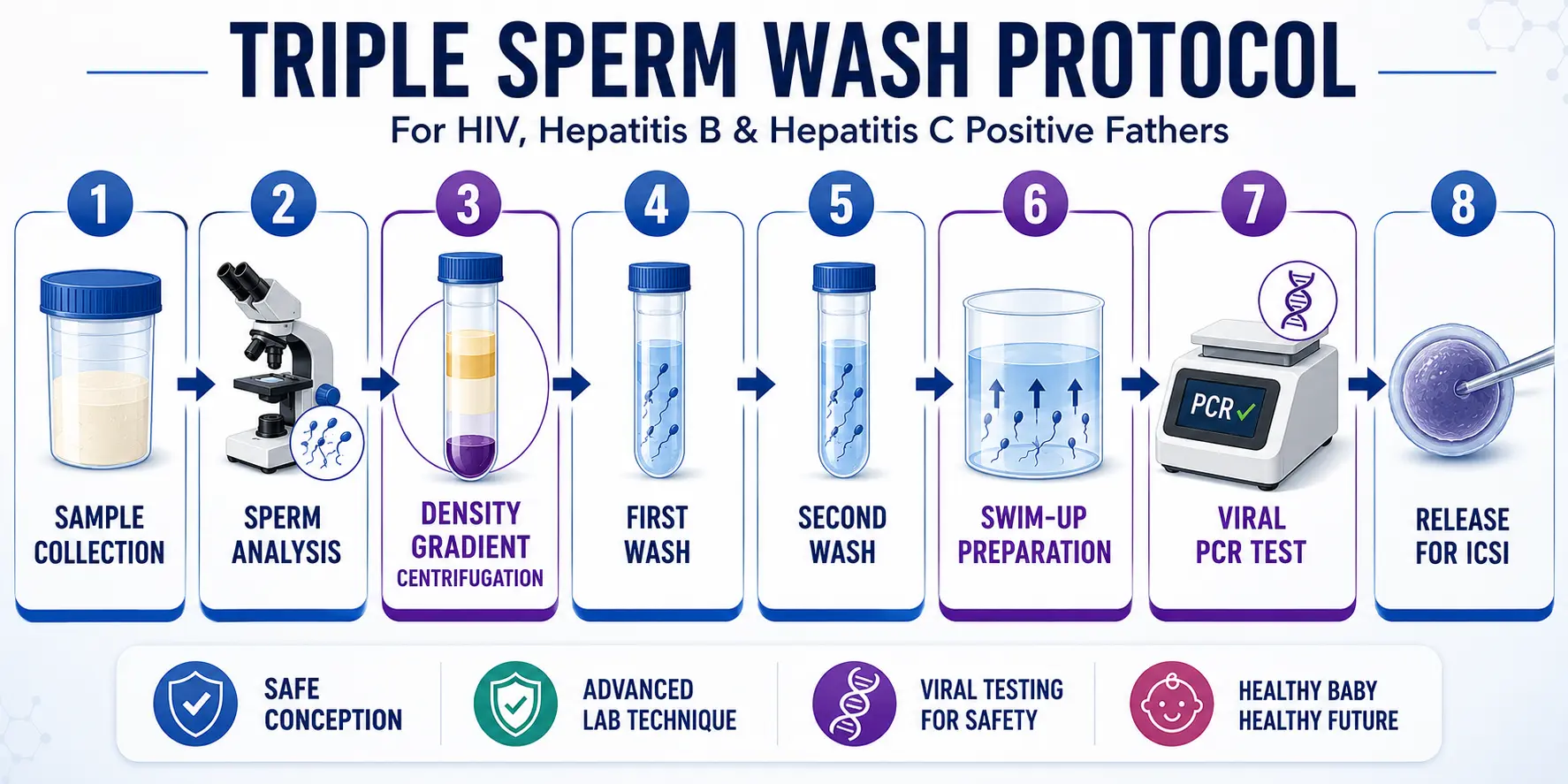
Sperm washing takes place inside a specialised andrology laboratory. The entire process typically takes 60 to 90 minutes and uses a combination of specialised media, centrifugation, and controlled migration.
The Three Main Sperm Washing Techniques
- Simple wash: Semen is diluted with culture media and spun in a centrifuge. Useful for basic sperm preparation but does not separate sperm by quality.
- Density gradient centrifugation: The sample is layered over a viscous protein gradient and centrifuged. Healthy motile sperm move to the bottom while debris, immotile sperm, white blood cells, and virus-containing fluid remain in the upper layers.
- Swim-up: After centrifugation, the sperm pellet is overlaid with fresh media. The most active sperm swim up into the clean media, leaving behind anything that cannot move.
For viral infection cases, all three principles are combined into a triple wash protocol.
The Triple Sperm Wash Protocol for HIV, Hepatitis B and C Positive Fathers
- Sample collection in a sterile private room at the andrology laboratory
- Initial analysis of sperm count, motility and morphology
- Density gradient centrifugation to separate motile sperm from seminal plasma and non-sperm cells
- First wash cycle with fresh culture media
- Second wash cycle to further reduce residual viral particles
- Swim-up preparation to isolate the most active, healthy sperm
- Viral nucleic acid testing (HIV RNA, HCV RNA or HBV DNA by PCR) on a portion of the processed sample
- Release for ICSI only if the tested portion returns viral-negative
The processed sperm is used the same day for ICSI, where a single washed sperm is injected directly into a mature egg.
Does Sperm Washing Work Equally for HIV, Hepatitis B and Hepatitis C?
Scientifically, the effectiveness of sperm washing varies slightly by virus. Understanding this helps couples know what to expect.
| Virus | Where it lives in semen | Sperm washing effectiveness | Additional protection required |
| HIV | Seminal plasma and non-sperm cells | Highly effective (undetectable in ~98% of washed samples) | Partner PrEP where indicated, ART for positive partner |
| Hepatitis C | Seminal plasma | Highly effective (density gradient plus swim-up eliminates HCV RNA) | DAA cure before IVF where possible |
| Hepatitis B | Seminal plasma and possibly integrated in sperm chromosome | Complementary, not primary | Partner vaccination (main protection), HBIg plus birth-dose vaccine for baby |
For Hepatitis B specifically, the American Society for Reproductive Medicine (ASRM) 2023 guidance is clear: once the female partner is fully vaccinated and has protective antibody titres, a modified sperm wash is not required solely for viral risk reduction. However, sperm washing is still performed at Delhi IVF as part of standard ICSI preparation, and the vaccination and newborn immunoprophylaxis plan sits alongside it as the primary safeguard.
What Happens After Sperm Washing? Using ICSI to Fertilise the Egg Safely
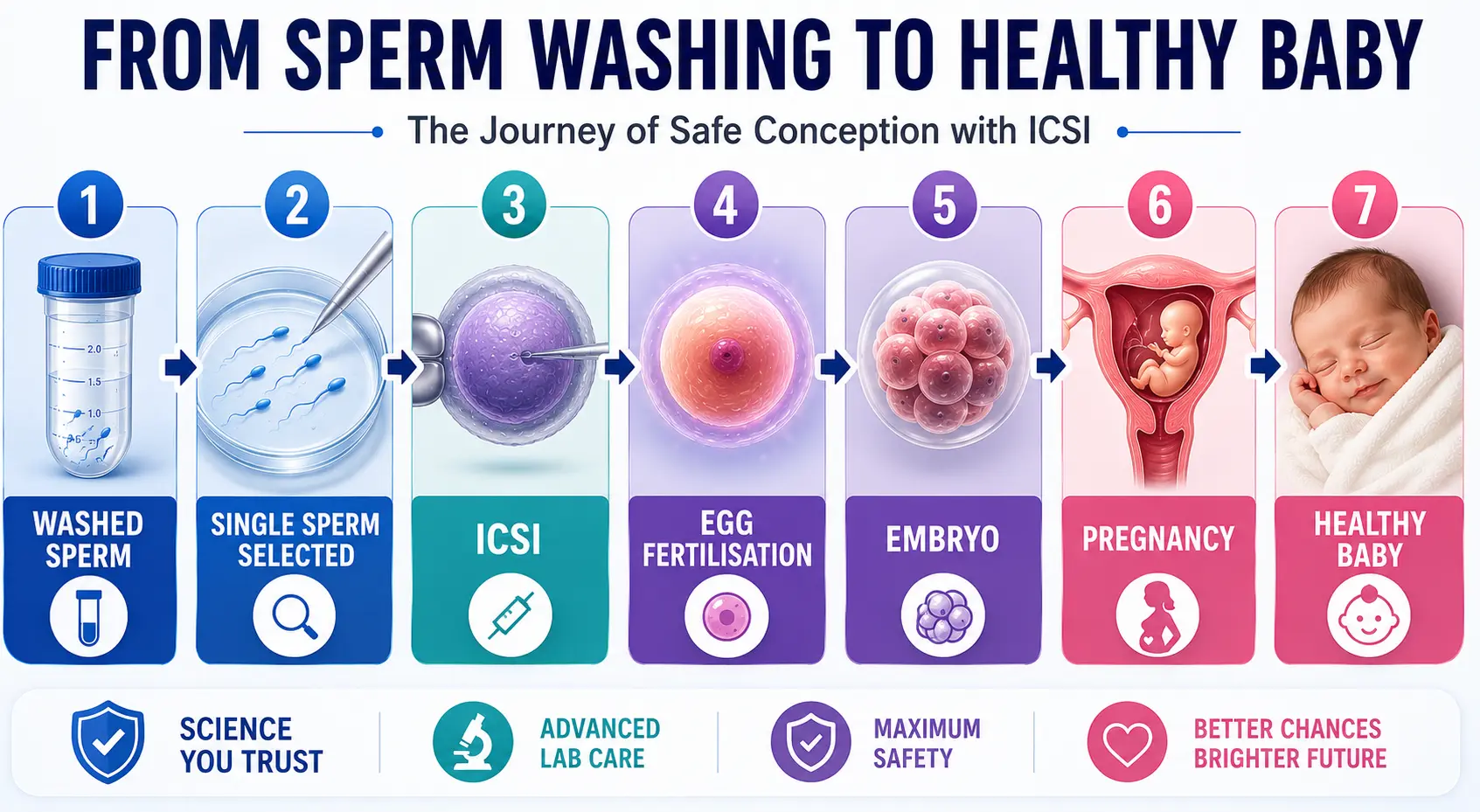
Sperm washing on its own is only half the equation. What comes next is ICSI, where the embryologist selects a single washed sperm under a high-magnification microscope and injects it directly into a mature egg. This bypasses the need for many sperm around the egg and further minimises any residual risk.
ICSI is particularly important for positive fathers because:
- It uses only one sperm per egg, from an already virus-cleared sample
- It removes reliance on natural sperm binding to the egg surface
- It provides consistent fertilisation rates even when sperm quality is affected by chronic viral illness
Delhi IVF has been performing ICSI since delivering Delhi's first ICSI baby in 1996, giving our embryology team over three decades of hands-on expertise in this exact protocol.
How Effective is Sperm Washing at Preventing Transmission to the Baby?
The published evidence is powerful.
- For HIV positive fathers: Global cohort data from over 11,000 cycles using sperm washing plus IUI, IVF, or ICSI reports zero horizontal transmissions to female partners and zero vertical transmissions to babies.
- For Hepatitis C-positive fathers: Density gradient washing followed by swim-up has been shown to reduce HCV RNA to undetectable levels in the motile sperm fraction across multiple studies.
- For Hepatitis B-positive fathers: When combined with maternal vaccination and newborn HBIg plus birth-dose vaccination, the risk of mother-to-child transmission is reduced to under 5%.
Sperm washing is not a lone solution. It is part of a layered safety approach that includes ART for HIV, DAA therapy for HCV, and vaccination protocols for HBV. Together, these layers make safe biological fatherhood a realistic outcome.
What is the Cost of Sperm Washing in India?
Sperm washing costs vary based on whether it is performed alone (rare) or as part of a full IVF cycle with ICSI (typical for positive fathers).
| Component | Estimated cost (INR) |
| Standalone sperm washing with viral testing | 25,000 to 60,000 |
| Complete IVF cycle with ICSI (includes preparation) | 1,50,000 to 2,50,000 |
| Viral load and additional monitoring tests | 8,000 to 20,000 |
| Optional genetic screening (PGT) | 60,000 to 1,20,000 |
| Sperm freezing (if backup samples needed) | 10,000 to 20,000 |
These are general costs. At Delhi IVF, all costs are quoted transparently at the first consultation. There are no hidden fees, and couples receive a written treatment plan before starting any cycle.
Who Should Consider Sperm Washing?
Sperm washing is medically recommended for:
- Men who are HIV positive and want to father a biological child
- Men with chronic Hepatitis C infection, particularly before completing DAA therapy
- Men with chronic Hepatitis B infection, as part of standard ICSI preparation
- Serodiscordant couples where the male partner carries a viral infection
- Any couple undergoing ICSI where the male has a known viral or bacterial infection
- Men whose semen shows high white blood cell counts or evidence of infection
For a broader look at fertility options across all three infections, read our detailed piece on IVF for HIV positive patients in India.
Why Choose Delhi IVF for Sperm Washing and Safe Fertility Treatment?
- 34+ years of fertility expertise under Dr. Anoop Gupta, with Delhi's first ICSI baby delivered in 1996
- Advanced andrology laboratory performing semen analysis and sperm preparation to WHO 2021 standards, led by Mrs. Alka Gupta, Chief Embryologist with 32+ years of experience
- 25,000+ successful deliveries including couples with complex medical histories
- Coordinated care managed by Dr. Aastha Gupta, integrating your fertility treatment with your existing HIV physician, hepatologist or infectious disease specialist
- Complete confidentiality across records, consultations and cycle documentation
- Full range of assisted reproduction services including IVF, ICSI, male infertility treatment, and surgical sperm retrieval where required
- Patients from 66+ countries, including many international couples referred specifically for infectious disease-related fertility care
Book Your Confidential Consultation
If you are living with HIV, Hepatitis B or Hepatitis C and want to know whether sperm washing and IVF can help you have a biological baby, the Delhi IVF fertility team is ready to help. Our first consultation covers a full clinical assessment, honest discussion of your options, and a written treatment plan tailored to your medical picture.

