
The best PCOS diet plan for Indian women focuses on low glycemic index foods, high fibre, and lean protein, using everyday foods like millet rotis, dal, paneer, curd, and vegetables to manage insulin resistance and support hormone balance. A balanced 7-day meal plan can help ease symptoms, support weight loss, and, for many women, improve the chances of natural conception.
Polycystic ovary syndrome (PCOS) affects roughly 1 in 5 Indian women of reproductive age, and diet is one of the most powerful tools to manage it. In this guide, the specialists at Delhi IVF & Fertility Research Centre share a practical PCOS diet chart tailored to Indian kitchens, with a full 7-day meal plan for both vegetarians and non-vegetarians, plus clear foods to eat and avoid, and honest guidance on when diet alone is not enough.
Why Diet Matters in PCOS
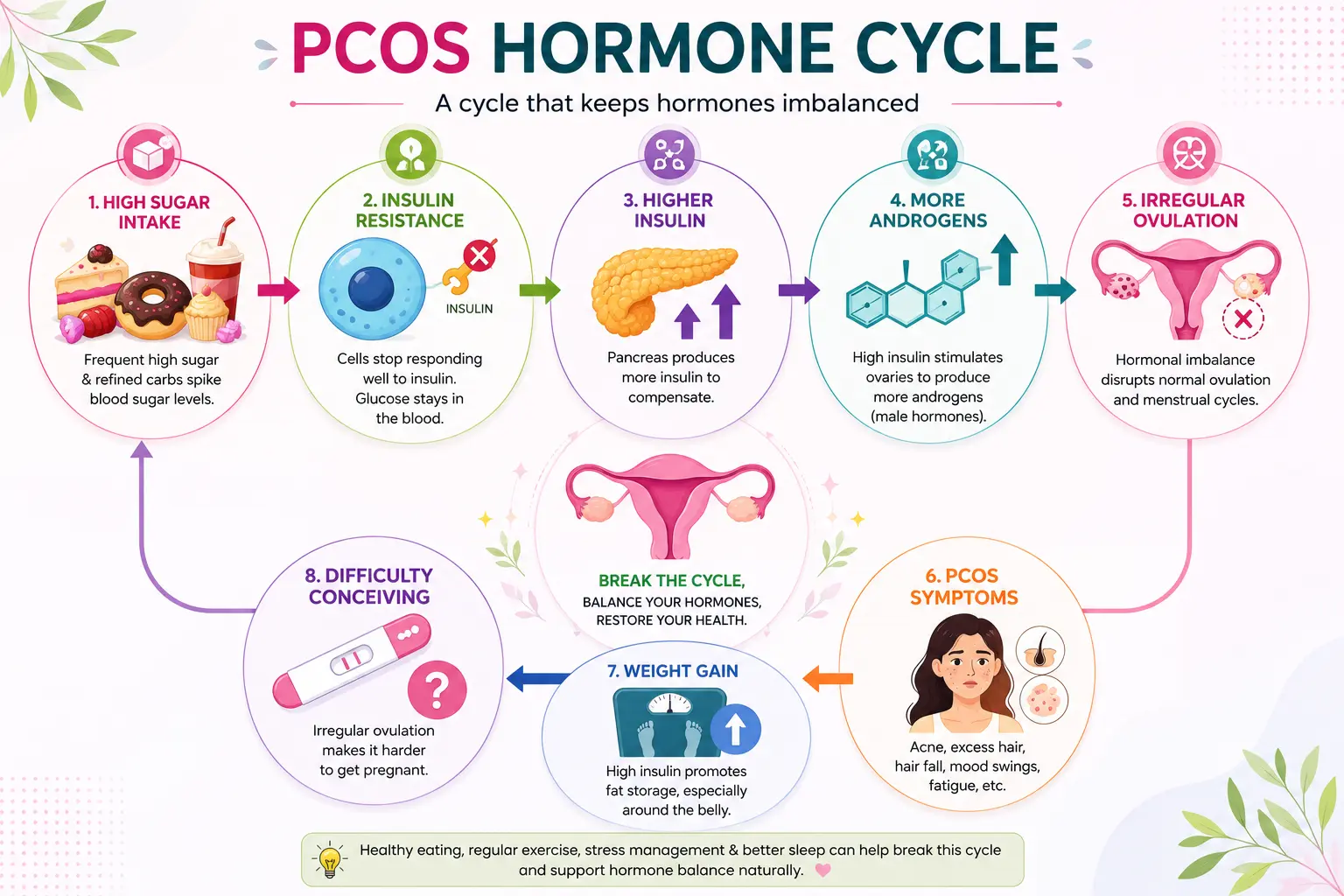
Most PCOS symptoms are driven by insulin resistance, where the body produces more insulin to manage blood sugar. High insulin levels increase male hormones (androgens), which disturb ovulation and lead to irregular periods, weight gain, acne, and difficulty conceiving.
A well-planned PCOS diet works on the root of the problem. Low glycemic index (GI) foods release glucose slowly, which lowers insulin spikes. Fibre and lean protein keep you fuller for longer and support steady weight loss. Even a 5 to 10% reduction in body weight can improve cycle regularity and ovulation, which is one of the most important reasons diet is considered a first-line PCOS management step.
Core Principles of a PCOS Diet Plan for Indian Women
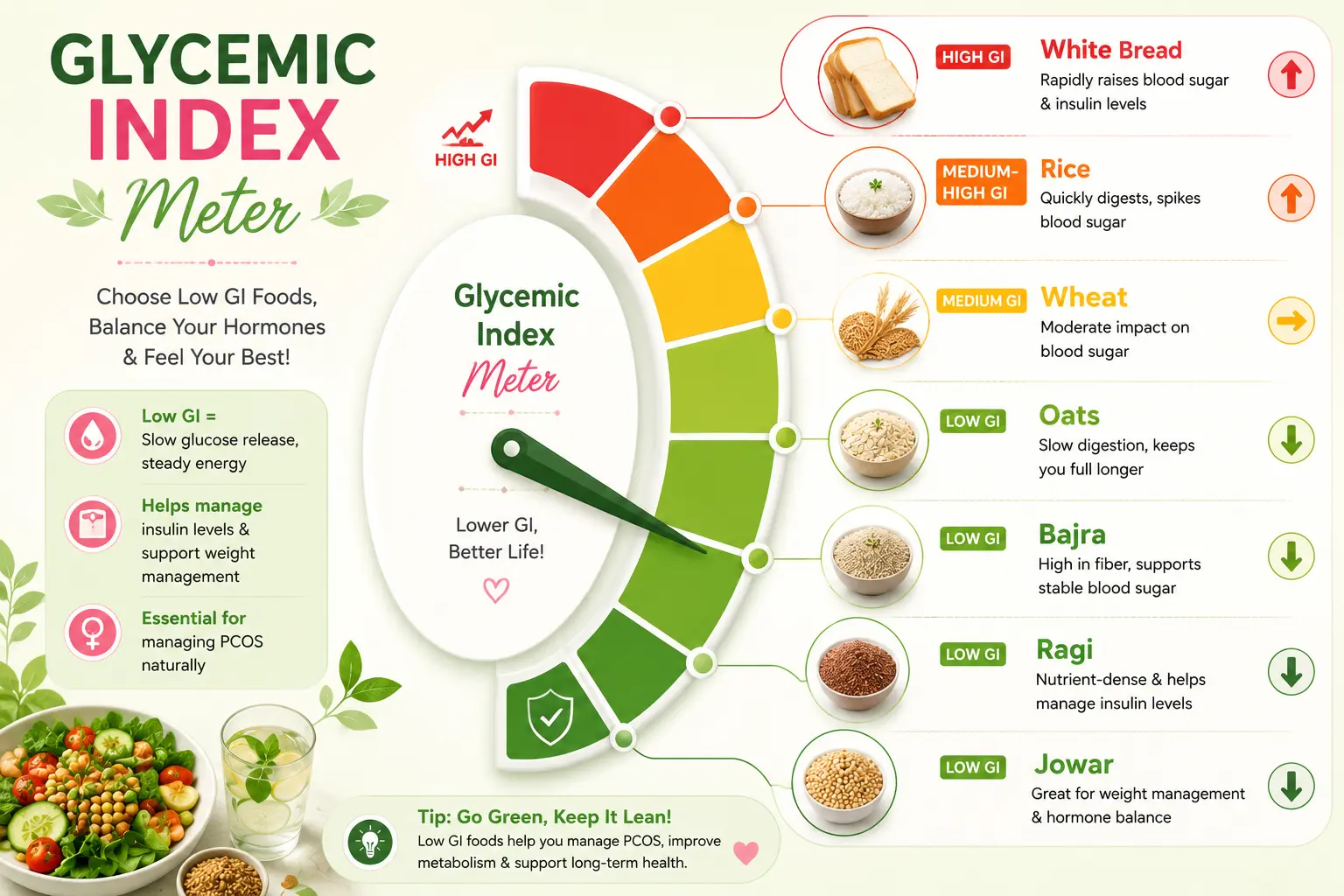
A good PCOS diet is less about restriction and more about balance. The following principles form the foundation of every meal in this plan.
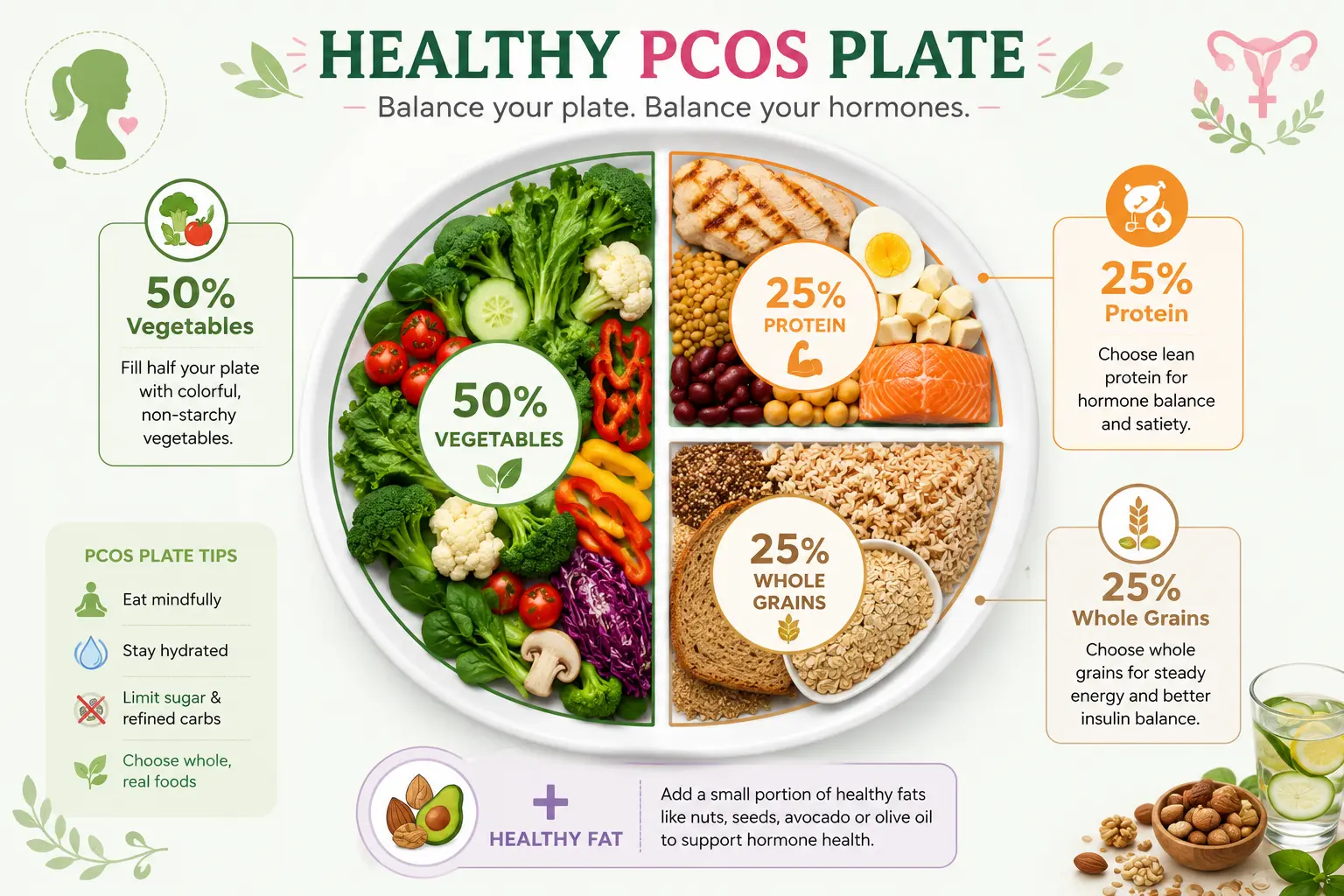
- Build a low GI plate: half vegetables, one quarter protein (dal, paneer, tofu, eggs, chicken, fish), one quarter smart carbs (millet or multigrain roti, brown rice).
- Prioritise millets and whole grains: ragi, jowar, bajra, oats, and brown rice over white rice and maida.
- Include protein at every meal: dal, paneer, curd, tofu, sprouts, eggs, chicken, or fish.
- Eat healthy fats mindfully: 1 to 2 teaspoons of ghee, mustard, or groundnut oil, plus a small handful of nuts and seeds daily.
- Never skip breakfast: it steadies insulin for the rest of the day.
- Keep meal timings consistent: eat every 3 to 4 hours, and finish dinner at least 2 hours before bed.
- Stay hydrated: 8 to 10 glasses of water, buttermilk, or infused water each day.
Foods to Eat in PCOS
Focus on nutrient-dense Indian foods that keep blood sugar stable and hormones supported:
- Whole grains and millets: ragi, jowar, bajra, brown rice, oats, daliya, quinoa
- Pulses and legumes: moong dal, chana dal, masoor dal, rajma, chickpeas, sprouts
- Vegetables: all green leafy vegetables, lauki, tori, karela, tinda, broccoli, cauliflower, capsicum
- Fruits (in moderation): apple, pear, guava, papaya, berries, oranges (with the skin where possible)
- Protein: paneer, tofu, curd, eggs, chicken, fish
- Healthy fats: almonds, walnuts, flaxseed, chia seeds, pumpkin seeds, ghee
- PCOS-friendly extras: methi (fenugreek), cinnamon, amla, turmeric, green tea
Foods to Avoid in PCOS
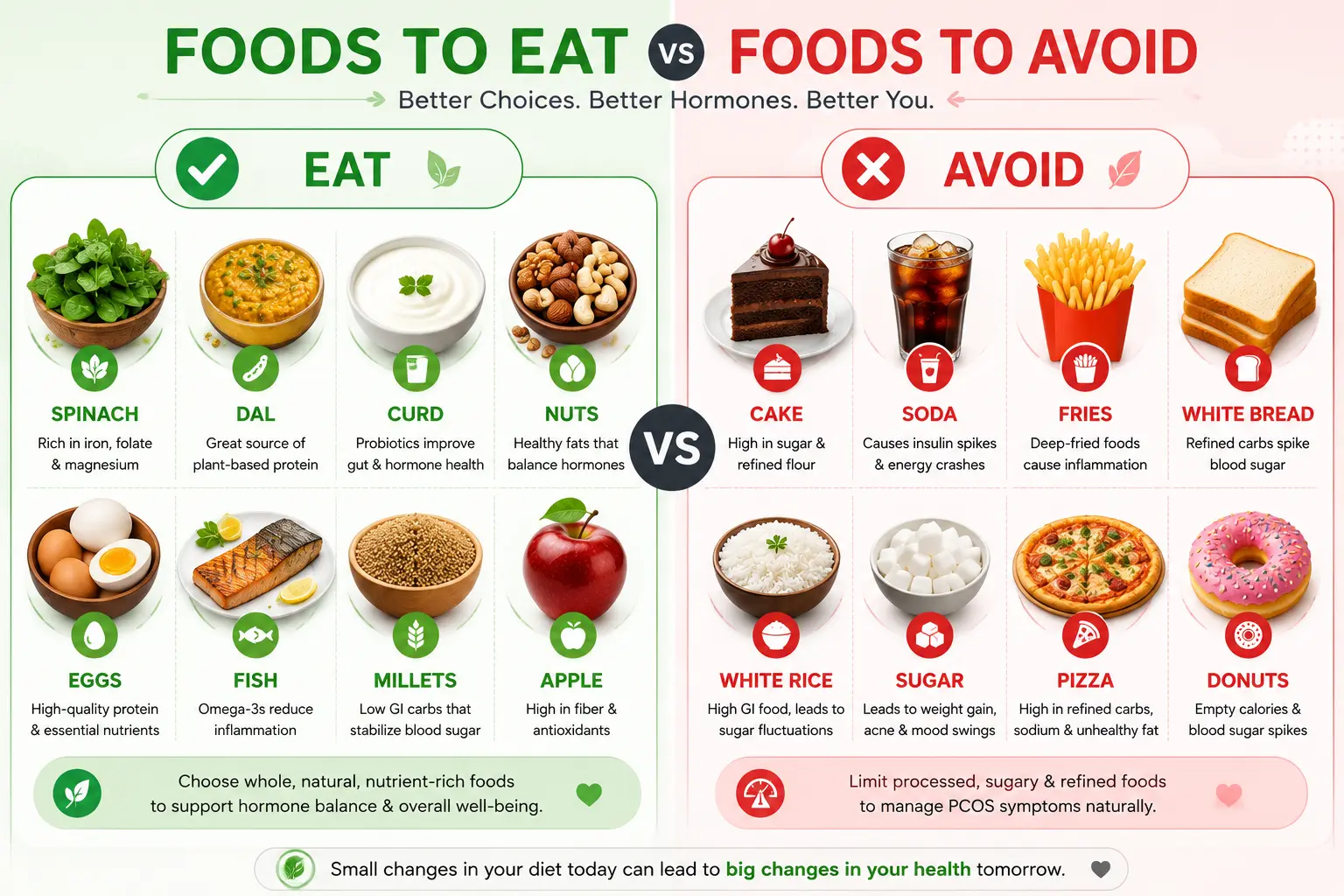
Cutting back on these makes a bigger difference than any single "superfood":
- Refined carbs: maida, white bread, white rice, sugary cereals
- Sugary drinks, sodas, and packaged fruit juices
- Fried snacks like samosas, pakoras, and chips
- Sweets, mithai, cakes, and biscuits
- Processed and packaged foods, instant noodles
- Full-fat and sweetened dairy in large amounts
- Trans fats and reused cooking oil
- Excess caffeine and alcohol
7-Day PCOS Diet Chart: Indian Vegetarian Plan
This vegetarian PCOS meal plan uses easily available Indian foods and is designed around low GI carbs, lean protein, and plenty of vegetables. Portions are a general guide; adjust to your appetite and activity.
| Day | Breakfast | Mid-morning | Lunch | Evening snack | Dinner |
| Monday | Vegetable oats upma + green tea | 1 apple | 2 bajra rotis + palak paneer + salad + curd | Roasted chana (1 katori) | Moong dal khichdi + lauki sabzi |
| Tuesday | Moong dal chilla (2) + mint chutney | Handful of almonds | 1 katori brown rice + rajma + cucumber salad | Buttermilk + 2 walnuts | 2 jowar rotis + mixed veg sabzi + curd |
| Wednesday | Vegetable poha + green tea | 1 pear | 2 multigrain rotis + chana masala + salad | Roasted makhana | Paneer bhurji + 1 multigrain roti + salad |
| Thursday | Ragi dosa (2) + sambar | 1 orange | 1 katori quinoa pulao + tofu bhurji + salad | Curd + flaxseed (1 tsp) | Vegetable daliya + sautéed spinach |
| Friday | Besan chilla (2) + coriander chutney | Handful of walnuts | 2 bajra rotis + bhindi sabzi + dal + salad | Cucumber + carrot sticks | Palak khichdi + curd |
| Saturday | Vegetable uttapam + green tea | 1 guava | Brown rice (1 katori) + kadhi + salad | Roasted peanuts (small handful) | 2 multigrain rotis + methi paneer + salad |
| Sunday | Sprouts + vegetable sandwich (multigrain) | 1 apple | 2 jowar rotis + mixed dal + lauki sabzi + curd | Buttermilk + roasted chana | Vegetable soup + paneer tikka + salad |
7-Day PCOS Diet Chart: Indian Non-Vegetarian Plan
This non-vegetarian PCOS diet plan follows the same low GI, high-protein structure, with the addition of eggs, fish, and lean chicken.
| Day | Breakfast | Mid-morning | Lunch | Evening snack | Dinner |
| Monday | 2 boiled eggs + 1 multigrain toast + green tea | 1 apple | 2 bajra rotis + grilled chicken curry + salad | Buttermilk + 2 walnuts | Moong dal khichdi + curd |
| Tuesday | Vegetable oats upma + 1 boiled egg | Handful of almonds | Brown rice (1 katori) + fish curry + salad | Roasted chana | 2 jowar rotis + mixed veg sabzi + curd |
| Wednesday | Egg bhurji + 1 multigrain roti | 1 pear | 2 multigrain rotis + grilled chicken + dal + salad | Roasted makhana | Vegetable soup + egg salad |
| Thursday | Chicken sandwich (multigrain) + green tea | 1 orange | 1 katori quinoa pulao + baked fish + salad | Curd + flaxseed (1 tsp) | Palak paneer + 1 multigrain roti |
| Friday | 2 egg omelette (with vegetables) + green tea | Handful of walnuts | 2 bajra rotis + chicken curry + dal + salad | Cucumber + carrot sticks | Grilled fish + vegetable soup + salad |
| Saturday | Moong dal chilla + 1 boiled egg | 1 guava | Brown rice (1 katori) + fish curry + salad | Roasted peanuts | 2 multigrain rotis + chicken curry + salad |
| Sunday | Vegetable poha + 1 boiled egg | 1 apple | 2 jowar rotis + grilled chicken + dal + salad | Buttermilk + roasted chana | Vegetable soup + paneer or egg salad |
PCOS Diet Tips for Sustainable Weight Loss
Losing even a modest amount of weight can dramatically improve PCOS symptoms and restore ovulation for many women. A few habits make weight loss more sustainable:
- Follow the plate rule at every main meal: half vegetables, one quarter protein, one quarter smart carbs.
- Watch portions, not just food choices: two rotis and one katori of dal is usually enough; refill with vegetables and salad, not more carbs.
- Add movement daily: 30 to 45 minutes of walking, yoga, or strength training on most days makes the biggest difference alongside diet.
- Sleep 7 to 8 hours: Poor sleep raises insulin resistance and cravings.
- Manage stress: high cortisol worsens PCOS. Yoga, breathing, and consistent routines help.
- Be patient: aim for 2 to 4 kg per month rather than crash diets, which usually rebound.
PCOS, Diet, and Fertility: The Connection
For women trying to conceive, diet is one of the most important levers you can pull. PCOS is one of the most common causes of ovulation problems and infertility in India, and diet works precisely where the problem starts. Better insulin sensitivity means lower androgens, which means more regular ovulation and a better chance of conception.
Research consistently shows that a 5 to 10% reduction in body weight can restore ovulation in many women with PCOS and improve response to fertility treatment. Alongside the meal plan above, a fertility-focused PCOS diet emphasises folate-rich foods (spinach, beans, fortified grains), iron (dal, leafy greens, eggs), and healthy fats (walnuts, flaxseed) to support egg quality and early pregnancy.
If you have been trying to conceive with PCOS, dietary changes are an excellent starting point, but they are only one part of the picture. A fertility assessment can identify how PCOS is specifically affecting your ovulation and rule out other factors.
When Diet Alone is Not Enough: PCOS Fertility Treatment
Diet and lifestyle should always come first, but if you have PCOS and have been trying to conceive without success for 6 to 12 months, it is time to speak with a fertility specialist. A stepwise approach usually works well:
- Ovulation induction: medication such as letrozole or clomiphene helps trigger regular ovulation
- Intrauterine Insemination (IUI): often the next step if ovulation induction alone does not lead to pregnancy
- In Vitro Fertilisation (IVF) orICSI: recommended for women who do not conceive with simpler treatments, or when other factors are involved
At Delhi IVF & Fertility Research Centre, our team, led byDr. Anoop Gupta, has helped thousands of women with PCOS conceive successfully. If your diet and lifestyle changes are on track and you are ready to explore fertility treatment, our specialists can guide you through the right next step for your situation.

