

If you have just collected a semen analysis report and the numbers look like a foreign language, you are not alone. A sperm analysis report is packed with values for count, motility, morphology, volume, and pH, and most people have never been shown what any of it means. This guide walks you through the whole journey, from how to prepare for the test to how the sample is processed and how to read every line of your result against the latest World Health Organisation reference values.
A semen analysis is usually the very first investigation when a couple is struggling to conceive, because male factors contribute to roughly half of all fertility problems. Understanding your own report puts you in a far better position to have a useful conversation with your fertility specialist.
What is a Semen Analysis and Why Is It Done
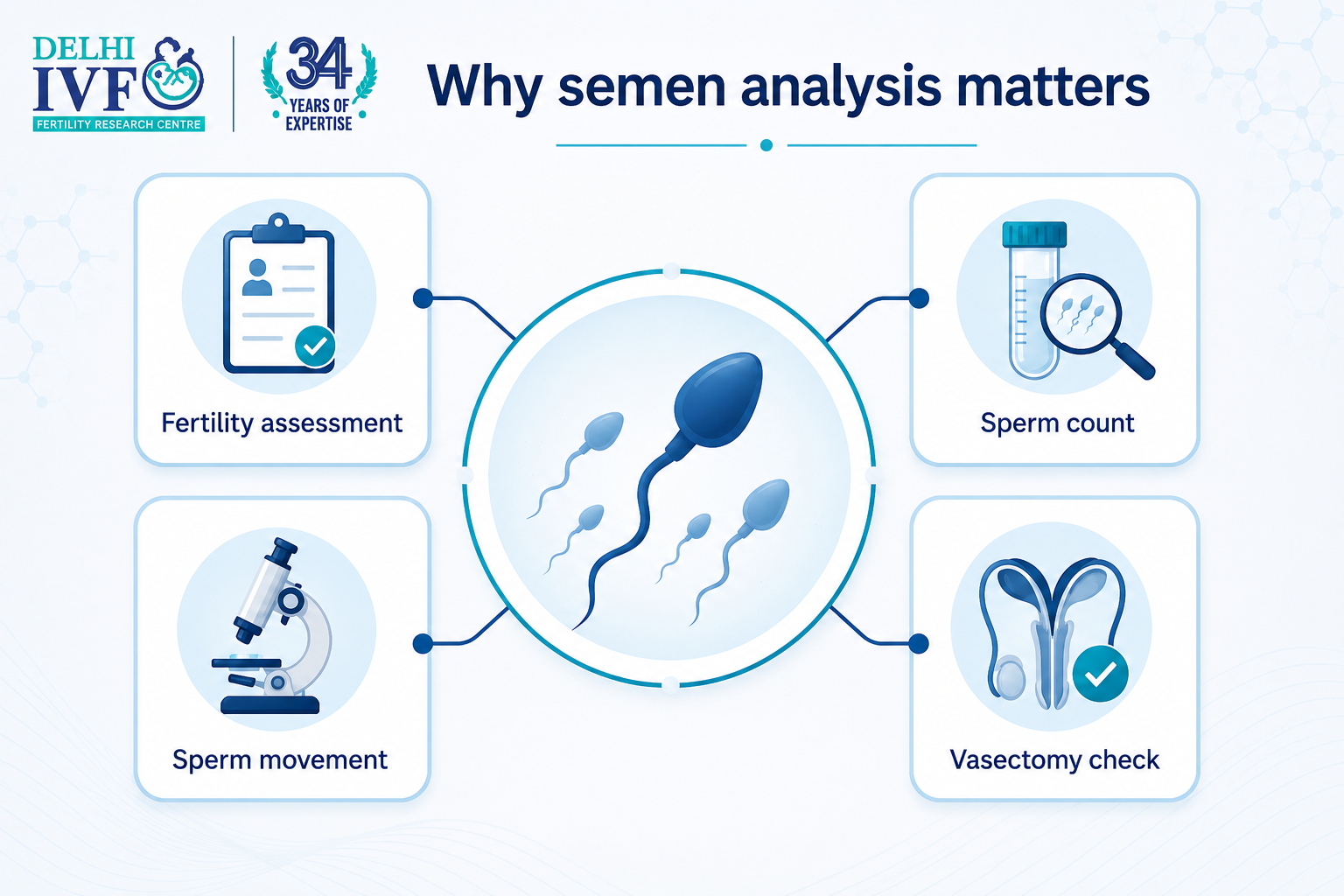
A semen analysis, also called a sperm count test or seminogram, is a laboratory test that examines the quality and quantity of a man's sperm. A fresh semen sample is studied to measure how many sperm are present, how well they move, what shape they are, and the chemistry of the fluid that carries them.
The test serves two main purposes:
- Assessing male fertility in couples who have been trying to conceive without success.
- Confirming the success of a vasectomy, the laboratory simply checks whether any sperm remain in the semen.
A low or absent sperm count does not automatically mean a man is infertile. It often points to a treatable issue with sperm production or with the pathway that delivers sperm, rather than a permanent barrier to fatherhood.
Who Should Consider a Semen Analysis

A male fertility test is generally recommended when:
- A couple has not conceived after twelve months of regular, unprotected intercourse, or after six months if the female partner is over 35.
- There is a known history of testicular injury, undescended testes, mumps, or previous surgery in the groin area.
- A man is checking the result of a vasectomy.
- A couple is preparing for assisted reproduction, such as IUI, IVF, or ICSI and needs a baseline assessment.
Because both partners contribute to fertility, a semen analysis is most useful when the female partner is being assessed at the same time.
How to Prepare for a Semen Analysis
Preparation has a real effect on accuracy, so it is worth following the instructions closely. Poor preparation is one of the most common reasons for a misleading result and an unnecessary repeat test.
Observe the Right Abstinence Period
Abstain from ejaculation for two to five days before the test. This window matters. A shorter gap can lower the volume and concentration, while a much longer gap can reduce motility and increase the number of dead sperm. Two to five days gives the most representative sample.
Avoid Substances That Affect Sperm
In the two to five days before your appointment, try to:
- Avoid alcohol, caffeine, and recreational drugs.
- Avoid herbal supplements and any hormone-based medication unless your doctor has advised otherwise.
- Tell the laboratory about any prescription medicines or recent fever or illness, as these can temporarily affect results.
Do Not Use Lubricants
Many lubricants are toxic to sperm and can distort the reading. If a sample is collected at home, do not use any lubricant, and use only a collection container or a special non-spermicidal condom provided by the clinic.
How the Semen Analysis Procedure Works
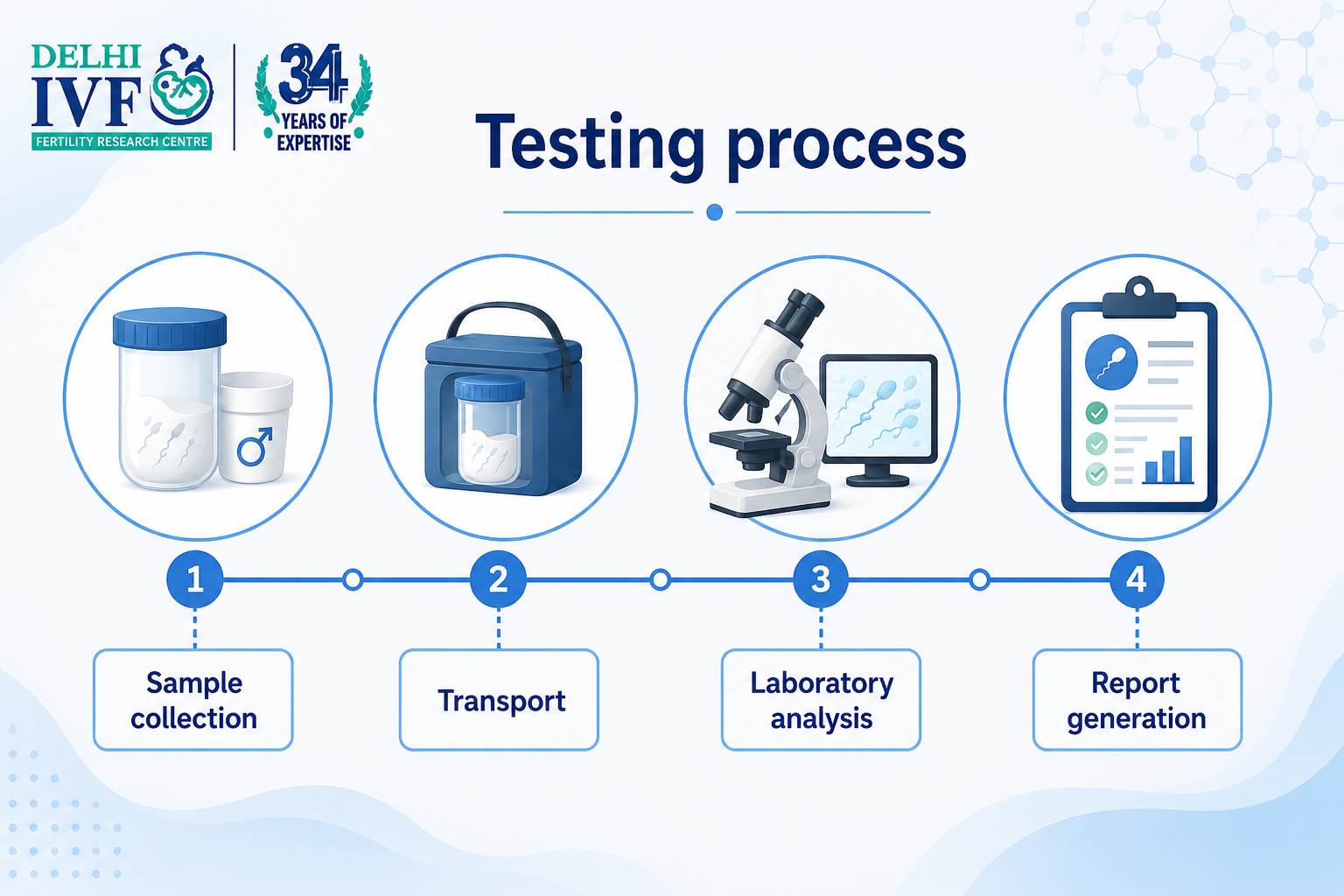
Knowing what to expect removes a lot of the anxiety around the test.
Collecting the Sample
The most reliable method is to provide the sample by masturbation into a sterile container in a private room at the clinic. This keeps the sample fresh and avoids contamination. If you are uncomfortable collecting at the clinic, the laboratory may allow collection at home using a special non-spermicidal condom or by withdrawal before ejaculation. A complete sample matters because the first part of the ejaculate is the richest in sperm.
Transporting the Sample
If collected at home, the semen must be kept close to body temperature and delivered to the andrology laboratory within one hour. Sperm are sensitive to cold and to delay, so transport time directly affects the motility reading.
How the Laboratory Processes It
Once the sample liquefies, it is examined either manually under a microscope or by computer-assisted semen analysis (CASA). For a post-vasectomy check, the technician simply looks for the presence or absence of sperm. For a fertility assessment, every parameter is measured and compared against standardised reference values published by the World Health Organisation.
How to Read Your Semen Analysis Report
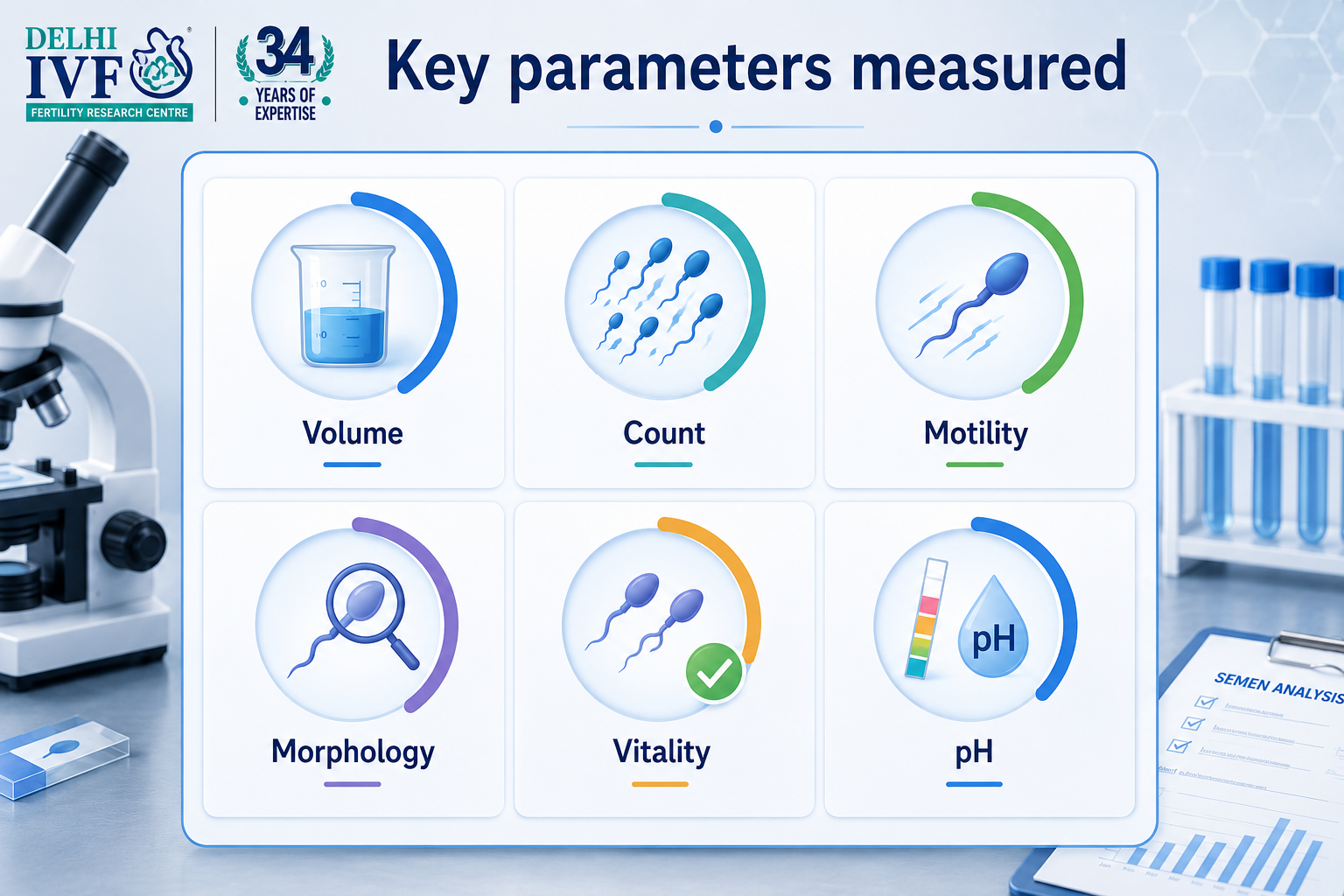
This is the part most people want explained. At a reputable centre such as Delhi IVF and Fertility Research Centre, results are reported against the WHO 2021 sixth-edition reference values, which represent the current international standard. The table below summarises the lower reference limits that a healthy result should reach.
ParameterWHO 2021 lower reference limit
| Semen volume | 1.4 ml or more |
| Sperm concentration | 16 million per ml or more |
| Total sperm number | 39 million per ejaculate or more |
| Total motility | 42% or more |
| Progressive motility | 30% or more |
| Vitality (live sperm) | 54% or more |
| Normal morphology | 4% or more |
| pH | 7.2 or higher |
A value at or above these limits is reassuring. A value below a limit does not by itself confirm infertility, but it does flag an area to investigate. Here is what each line actually tells you.
Semen Volume
This is the total amount of fluid produced in one ejaculation, normally 1.4 ml or more. A low volume can result from incomplete collection, a very short abstinence period, a blockage, or a problem with the ducts that carry sperm. Always mention if any of the sample was lost during collection, as this is a frequent and easily explained cause of low volume.
Sperm Concentration and Total Count
Concentration is the number of sperm in each millilitre of semen, ideally 16 million per ml or more. Total sperm number multiplies concentration by volume and should reach 39 million per ejaculate. A count below the reference range is called oligospermia, and a complete absence of sperm is called azoospermia. Counts naturally fluctuate, which is why a single low reading is rarely the final word.
Sperm Motility
Motility measures the proportion of sperm that are moving, and it is just as important as the count. It is reported in two ways:
- Total motility (any movement), which should be 42% or more.
- Progressive motility (active forward movement), which should be 30% or more.
Sperm need strong forward movement to travel through the female reproductive tract and reach the egg. Reduced motility is termed asthenozoospermia.
Sperm Morphology
Morphology describes the shape and size of the sperm, looking at the head, midpiece, and tail. Under the strict WHO 2021 criteria, a sample with 4% or more normally shaped sperm is considered normal. That figure surprises many people, but it is normal for the large majority of sperm in any sample to have minor irregularities. A high proportion of abnormal forms is called teratozoospermia.
Vitality
Vitality measures the percentage of live sperm, which should be 54% or more. This test becomes especially useful when motility is low, as it distinguishes sperm that are alive but sluggish from sperm that are dead.
pH, Liquefaction, and Appearance
These supporting measurements help interpret the main results:
- pH should be 7.2 or higher. An abnormal pH can point to infection or a duct blockage.
- Liquefaction normally happens within 15 to 30 minutes and should be complete within 60 minutes. Semen is thick when first produced and then turns liquid.
- Appearance is normally a whitish to grey, slightly opalescent fluid. A red or brown tinge can suggest blood, while a very clear sample may indicate a low sperm count.
Understanding an Abnormal Semen Analysis Report
If one or more values fall outside the reference range, try not to panic. A single abnormal result is common and frequently corrects itself. Your specialist will usually recommend a repeat semen analysis after two to three weeks, since sperm production is heavily influenced by recent illness, stress, heat exposure, and lifestyle.
The terms you may see on an abnormal report include:
- Oligospermia: low sperm count.
- Asthenozoospermia: poor sperm motility.
- Teratozoospermia: high proportion of abnormally shaped sperm.
- Oligoasthenoteratozoospermia (OAT): a combination of all three, which is one of the most common patterns.
- Azoospermia: no sperm detected in the ejaculate.
- Normozoospermia: all parameters within the normal range.
It is also worth knowing that a normal report does not guarantee fertility. Some men have normal count and motility yet a high level of sperm DNA fragmentation, which can affect fertilisation and embryo quality. This is why an experienced fertility team looks at the whole picture rather than a single number.
What Happens After the Report
If a finding is confirmed on repeat testing, the next step is to identify the underlying cause and match it to the right treatment. Many causes are highly treatable. Hormonal problems respond to medication, varicocele can be surgically corrected, and lifestyle changes can improve sperm quality over three to six months.
For more significant issues, assisted reproduction offers strong options. ICSI, where a single healthy sperm is injected directly into an egg, can achieve fertilisation even with very low counts or poor motility. For men with azoospermia, surgical sperm retrieval techniques such as PESA and MESA can recover sperm for use with ICSI. Where a genetic cause is suspected, genetic testing and counselling are arranged before treatment.
You can read more about diagnosis and the full range of options in our detailed guide to male infertility treatment.

