
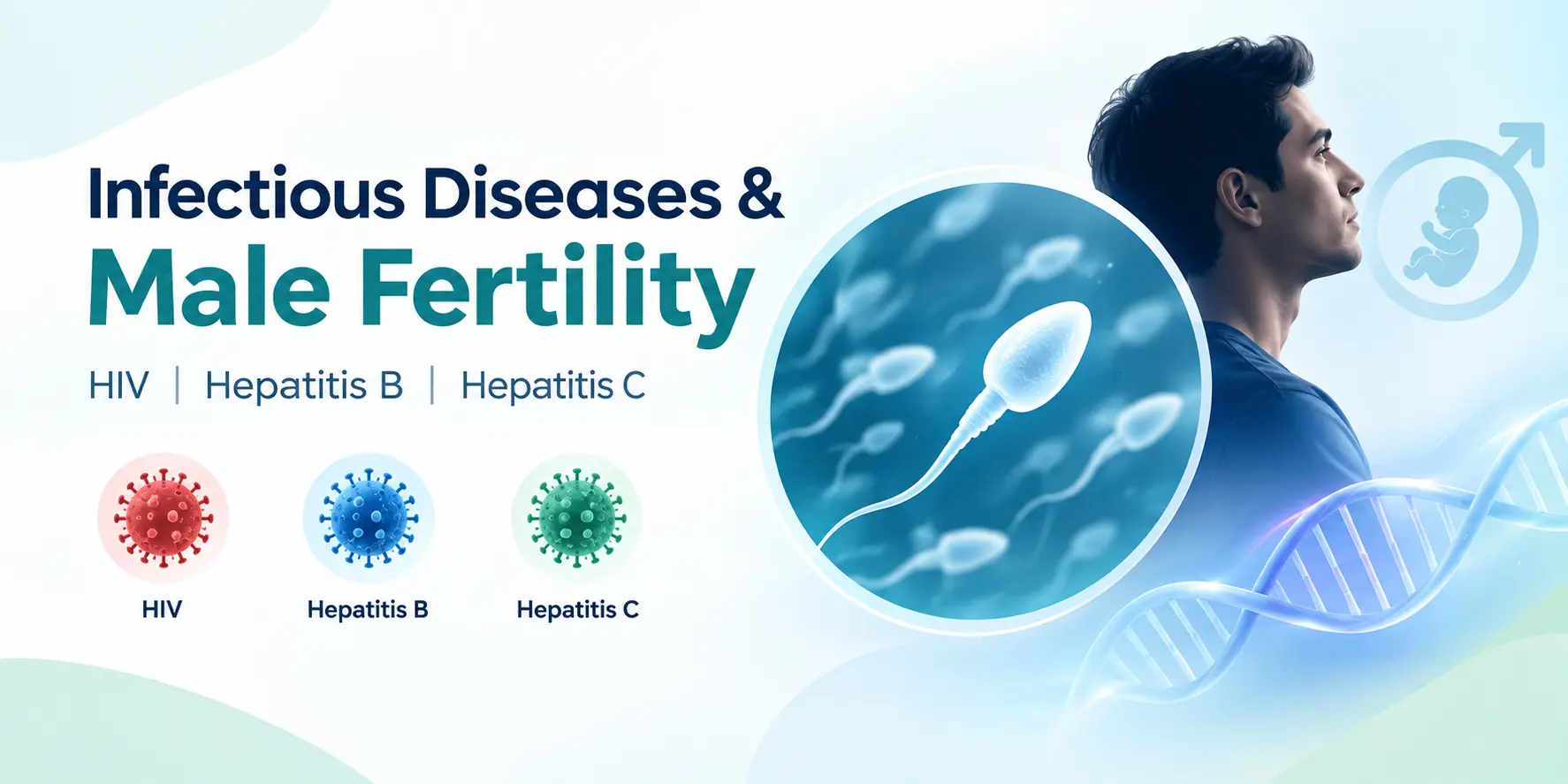
Most conversations about HIV, Hepatitis B, and Hepatitis C focus on the female partner and the baby. What is rarely discussed, and what confuses many men living with these infections, is how the virus itself affects their own fertility. Does it lower sperm count? Does it damage sperm DNA? Will the semen analysis ever look normal again? And most importantly, can something be done about it?
The honest answer, backed by recent systematic reviews and large cohort studies, is that chronic viral infections do affect sperm quality in measurable ways. A 2024 meta-analysis of 11 studies confirmed that Hepatitis B positive men show reduced sperm concentration, motility, and morphology. A 2025 cohort of 1,566 infertile men found similar patterns. Hepatitis C shows comparable effects, sometimes with added antisperm antibodies. HIV, when untreated, can affect sperm parameters, but sustained antiretroviral therapy meaningfully preserves reproductive function.
The better news is that modern fertility medicine has effective answers for every one of these situations. From advanced male infertility treatment to sperm washing, ICSI, and surgical sperm retrieval, Delhi IVF and Fertility Research Centre under Dr. Anoop Gupta offers the full pathway for men living with these infections. This blog explains exactly what the research shows and what your options are.
Do Chronic Viral Infections Really Affect Male Fertility?
Yes. Decades of research now confirm that HIV, Hepatitis B and Hepatitis C can measurably affect several aspects of male reproductive health. The impact varies by virus, by disease stage, by viral load, and by whether the patient is on treatment, but the pattern is consistent enough that any man living with these infections who is trying to conceive should have a full semen analysis and fertility assessment.
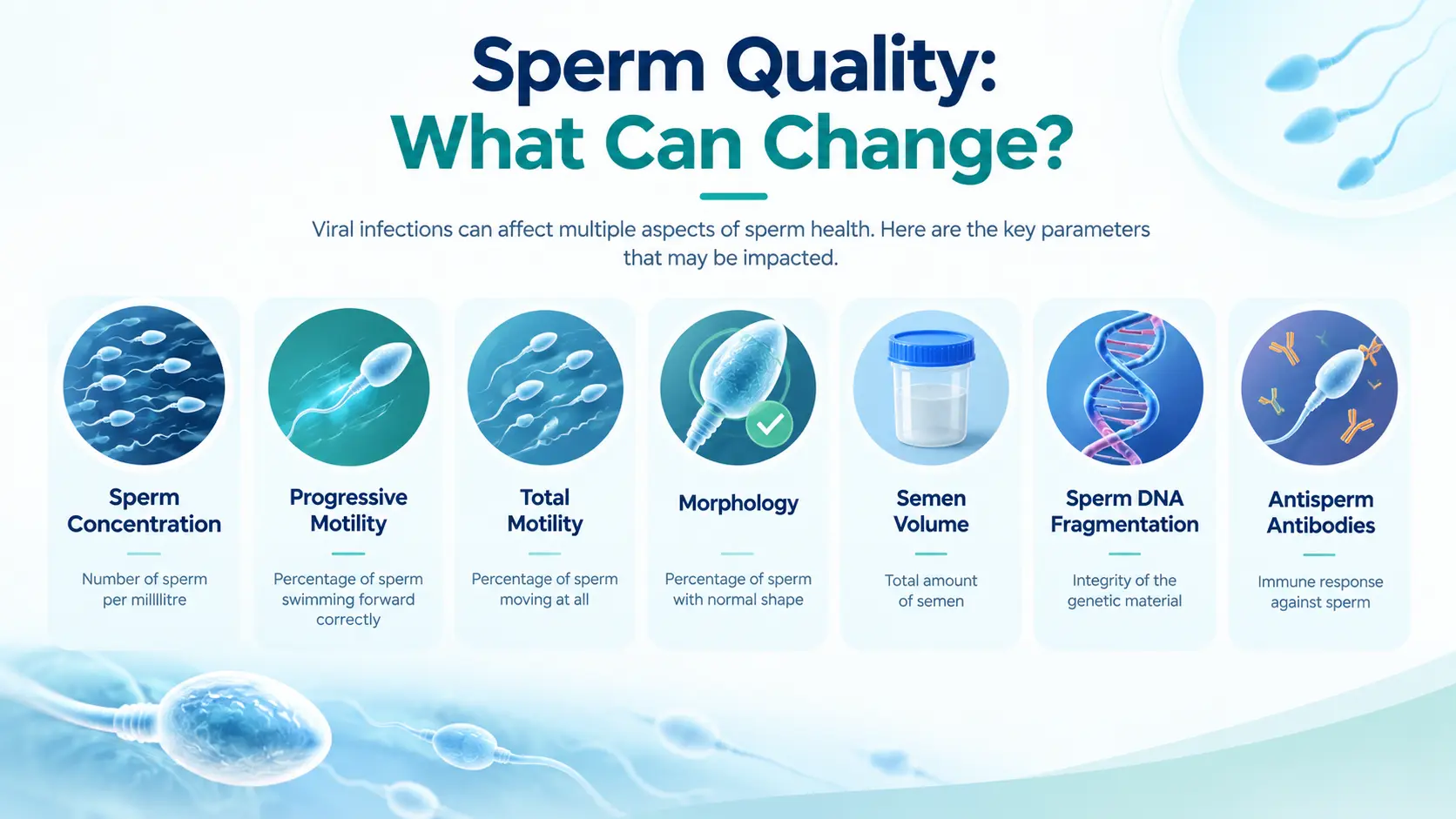
The main parameters that can be affected are:
- Sperm concentration (number of sperm per millilitre)
- Progressive motility (percentage of sperm swimming forward correctly)
- Total motility (percentage of sperm moving at all)
- Sperm morphology (percentage of sperm with normal shape)
- Semen volume
- Sperm DNA fragmentation (integrity of the genetic material)
- Presence of antisperm antibodies
Understanding which of these is affected in your case is the first step toward a fertility treatment plan that actually works.
How Does HIV Affect Sperm Quality?
HIV can affect sperm quality through several pathways, but sustained antiretroviral therapy substantially preserves reproductive function.
The main documented effects include:
- Reduced semen volume, particularly in advanced or untreated HIV
- Lower sperm concentration in some untreated patients
- Reduced total and progressive motility in men with lower CD4 counts
- Increased sperm DNA fragmentation index (DFI) in some studies of untreated HIV
- Testicular changes including reduced testicular volume in long-standing untreated disease
- Hormonal effects including reduced testosterone in some patients
The single biggest protective factor is sustained highly active antiretroviral therapy (HAART). Men on stable ART with undetectable viral load and preserved CD4 counts show sperm parameters that are much closer to HIV negative men than to untreated HIV positive counterparts. HAART not only suppresses the virus, but it also protects the testicular environment where sperm are produced.
For HIV positive men trying to conceive, a full semen analysis at Delhi IVF is the first step. Where sperm quality is affected, ICSI combined with sperm washing overcomes most parameter deficits by requiring only one healthy motile sperm per egg.
How Does Hepatitis B Affect Sperm Quality?
The evidence for Hepatitis B is now very robust, thanks to a 2024 systematic review and meta-analysis of 11 studies published in BMC Urology, and a 2025 retrospective cohort study of 1,566 infertile men.
The 2024 meta-analysis showed that HBV positive men had:
- Lower semen volume (mean difference −0.20 mL)
- Lower sperm concentration (mean difference −4.46 million/mL)
- Lower sperm motility (mean difference −6.85 percentage points)
- Lower progressive motility (mean difference −6.63 percentage points)
- Lower normal morphology (mean difference −2.49 percentage points)
The 2025 cohort study of 1,566 infertile men (783 HBV positive vs 783 HBV negative) confirmed the same pattern, with reduced viability as well. Interestingly, the sperm DNA fragmentation index was not significantly different, meaning the virus affects motility, count, and shape more than genetic integrity.
The likely mechanism involves disruption of mitochondrial membrane potential in sperm cells, oxidative stress from chronic inflammation, and possible direct viral interaction with sperm. Some evidence suggests HBV DNA can even integrate into the sperm chromosome, though the clinical significance of this is still being studied.
Antiviral therapy for HBV, particularly tenofovir, can stabilise the picture and prevent further damage.
How Does Hepatitis C Affect Sperm Quality?
Hepatitis C shows a similar pattern to Hepatitis B, with some additional features.
Comparative research on infertile HCV positive men has documented:
- Significantly lower total sperm count compared to uninfected controls
- Reduced sperm motility
- Lower percentage of sperm with normal morphology
- Antisperm antibodies present in around 12% of HCV positive men in Egyptian studies
- Increased sperm DNA fragmentation in some patient subgroups
- Reduced ejaculate liquefaction time
Antisperm antibodies are particularly important because they bind to the surface of sperm cells and can impair natural conception by preventing sperm from binding to the egg. This is one of the mechanisms through which HCV can cause functional infertility even when basic semen parameters look reasonable.
The paradigm-changing news is that direct-acting antivirals (DAAs) now cure Hepatitis C in 8 to 12 weeks with a 96 to 99% success rate. Achieving sustained virologic response often improves sperm parameters over time and removes the antisperm antibody trigger. For couples where fertility cannot wait for cure, ICSI plus sperm washing at Delhi IVF delivers safe and successful outcomes.
What Are the Common Mechanisms Behind Virus-Induced Sperm Damage?
Across all three infections, the underlying biology is similar and well-studied.
- Oxidative stress: Chronic viral infection increases reactive oxygen species in the seminal environment, damaging sperm membranes, mitochondria, and DNA
- Mitochondrial dysfunction: HBV and other viruses reduce mitochondrial membrane potential in sperm cells, which impairs the energy production needed for motility
- Inflammatory response: Chronic inflammation in the reproductive tract raises seminal leukocyte counts, which release enzymes damaging to sperm
- Antisperm antibodies: Some viruses trigger the immune system to produce antibodies against a man's own sperm, blocking fertilisation
- Direct viral effects: HBV DNA has been detected in sperm cells, and HIV RNA is present in seminal fluid, with possible direct interaction affecting sperm function
- Systemic disease effects: Chronic illness, weight changes, hormonal disruption and medication side effects all contribute
Understanding which mechanism is dominant in a specific patient helps target treatment more effectively.
Can Sperm Quality Be Improved After Viral Suppression or Cure?
Yes, and this is one of the most encouraging aspects of modern management.
- HIV: Sustained HAART with undetectable viral load protects testicular function and often stabilises or improves sperm parameters over 6 to 12 months
- Hepatitis B: Tenofovir or entecavir suppresses viral replication, reduces oxidative stress and can improve sperm quality progressively
- Hepatitis C: DAA therapy cures the infection in 8 to 12 weeks. Post-cure follow-up often shows improved sperm parameters and reduction in antisperm antibodies
Alongside antiviral therapy, targeted lifestyle interventions such as antioxidant therapy (vitamin C, vitamin E, coenzyme Q10, L-carnitine), weight optimisation, alcohol reduction and smoking cessation can accelerate sperm quality recovery. Your Delhi IVF specialist can prescribe a personalised protocol based on your semen analysis and disease profile.
What Fertility Treatment Options Are Available for HIV or Hepatitis Positive Men?
Even where viral suppression alone does not fully restore fertility, modern reproductive medicine offers multiple effective pathways.
- ICSI (Intracytoplasmic Sperm Injection): A single healthy sperm is injected directly into the egg. This bypasses most sperm quality issues, including low motility, low concentration, and abnormal morphology.
- Sperm washing: Removes viral particles from seminal fluid before ICSI. Used for HIV positive men and HCV positive men as the gold standard safety layer.
- Surgical sperm retrieval: For men with azoospermia, PESA, MESA, and TESA allow sperm to be retrieved directly from the epididymis or testicle, then processed and used with ICSI.
- Egg and sperm freezing: For men undergoing intensive antiviral therapy or those with advancing disease, freezing sperm samples now preserves reproductive options for the future.
- IUI: In mild cases with well-preserved sperm parameters and no active transmission risk (such as DAA-cured Hepatitis C men), IUI may be an option.
- Advanced male infertility workup: A complete evaluation including hormonal profile, DNA fragmentation testing and antisperm antibody testing helps design a treatment plan tailored to the individual.
When Should HIV, HBV or HCV Positive Men See a Fertility Specialist?
Book a fertility consultation if any of the following apply:
- You have been trying to conceive for 12 months without success (6 months if partner is over 35)
- Your semen analysis shows abnormal parameters
- You have recently been diagnosed with HIV, Hepatitis B or Hepatitis C and are planning a family
- You are starting antiviral therapy and want to preserve fertility
- You have been advised to consider IVF or ICSI
- You are in a serodiscordant relationship and need safer conception planning
Early consultation gives you the most options.
Why Choose Delhi IVF for Male Infertility with Viral Infection?
- 34+ years of male infertility expertise under Dr. Anoop Gupta, with Delhi's first ICSI baby delivered in 1996
- 25,000+ successful deliveries across complex cases, including men living with HIV and hepatitis
- Advanced andrology laboratory performing semen analysis to WHO 2021 standards, sperm processing, and viral RNA testing
- Full surgical sperm retrieval pathway including PESA, MESA, TESA and TESE
- Coordinated multidisciplinary care by Dr. Aastha Gupta, integrating your fertility treatment with your HIV physician or hepatologist
- Complete confidentiality across all patient records and consultations
- Compassionate, non-judgemental counselling for both partners at every stage of the journey
Book Your Confidential Consultation
If you are living with HIV, Hepatitis B or Hepatitis C and worried about how it may be affecting your fertility, do not stay in the dark. A single consultation and semen analysis at Delhi IVF and Fertility Research Centre gives you a clear picture of where you stand and what your options are.

